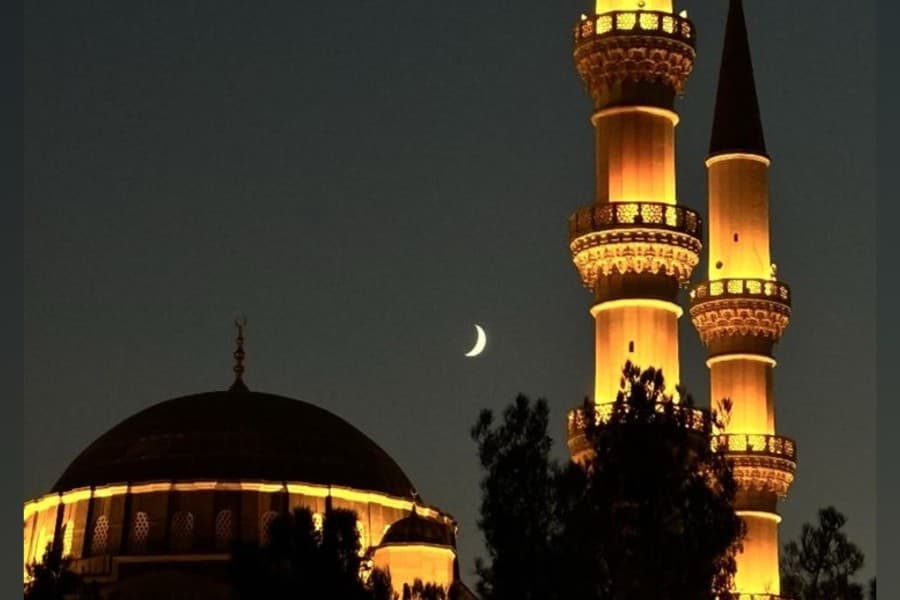



The month of Oraza is approaching - the ninth month of the Muslim calendar, which holds special significance for the Islamic world. According to tradition, during the days of this blessed month, the first revelations of the Quran were sent down to the Prophet Muhammad.
In Turkmenistan, the beginning of the month of Oraza (Ramadan) is determined by the country's Grand Mufti. Its arrival is heralded by groups of children who, in the lead-up to the fast, go from house to house reciting well-wishing verses and receive sweets in return.
During this month, a daily fast is prescribed, during which the faithful refrain from food and drink, smoking, entertainment, and anything else that detracts from piety from dawn until sunset. The history of Ramadan is believed to begin in the second year of the Hijra (622 AD). In the holy month, one should control their temper, behave nobly, and perform good deeds.
The meaning of the Oraza fast lies in spiritual growth and the person's re-evaluation of their lifestyle and values. Fasting, as one of the five pillars of Islam, is obligatory for all Muslims, but those who are unable to observe it are exempt, such as the elderly or ill, as well as children, pregnant and nursing women. If a Muslim is unable to fast for some reason, they must feed the poor or assist the needy. One of the good deeds is to host an agyz açar (iftar) to feed those who are fasting after sunset. Muslims are also obliged to give alms – fitr.
The night preceding the 27th day of the month of Ramadan is filled with special meaning. It is called the Night of al-Qadr or the Night of Power and Predestination, because it was on this night that the first surahs of the Holy Quran were revealed to the Prophet Muhammad. According to Quranic interpreters, Surah al-Qadr is dedicated to this Night. It states: "The Night of Decree is better than a thousand months. The angels and the Spirit descend therein by permission of their Lord for every matter. Peace it is until the emergence of dawn."
It is believed that on the Night of Power and Predestination, Allah decrees the fate of every person, taking into account their piety and the requests made in their prayers. Therefore, on the Night of al-Qadr, it is customary to read the Quran and offer supplications and requests to Allah and the angels, and many faithful spend it in mosques.
In Turkmenistan, this night is called Gadyr gijesi and is celebrated with relatives and neighbors, sharing treats prepared for the occasion. At the state level, large-scale pardon actions are held in honor of the sacred Gadyr gijesi, also known as the Night of Omnipotence.
The holy month and the fast conclude with the second most important Muslim holiday of breaking the fast – Oraza Bayramy (Eid al-Fitr).
This year, Oraza will last from February 18 to March 19. Oraza Bayramy is expected on March 20.