We are guided by what unites people




News
Articles
Media
Announcement
Technology
About Us
Contacts
…The roads of war. Long and seemingly endless. And also – songs of the turbulent times of war. How many of them there were during the Great Patriotic War!
When these painfully familiar melodies are heard, time seems to falter. It begins to flow backward. The line between "now" and "then" blurs, and that strange, inexplicable memory awakens in the subconscious, the one sung about in the song: " Everything that never happened to me, I remember..."
Listening to the music of the Great Victory, we cease to be mere listeners from another, enlightened age. A voice from an old speaker or a modern performance suddenly pierces our personal "armor," and we begin to feel the chill of a damp dugout, the scent of bitter wormwood, and the weight of a wet overcoat.
The melodies and lyrics of songs from the Great Patriotic War are more than just heartfelt words and melodies beautiful in their simplicity. They are the heartbeat of a soldier who knew that tomorrow's dawn may not come for him.
These songs are piercing, overflowing with life. We hear not the roar of metal, but the quiet whisper of love, louder than shells. And then, it seems, our own memories come alive, standing in that line, next to them.
And we sense how the music of the Great Victory leads us to the understanding that everything they died for lives within us. We remember this not because these songs make our hearts beat in unison with the hearts of the simple and guileless victorious soldiers, many of whom will never return from the bloody fields.
There is a sense that the life of another person, who did not return from battle, becomes part of your own destiny. A mysterious feeling, as if we are trying to remember events in which we did not participate.
…Film and photo footage from 1941. Exhausted soldiers, retreating under the Nazi onslaught, abandon their hometowns and villages. Their eyes show weariness. A hint of doom, even. But you can also sense the stirrings of faith in their souls—not blind, but stubborn and hard-won. And also, fortified by righteous fury: “Arise, great country! Arise for mortal combat!”
And the famous, tragic photograph: a soldier, raising his hand, calls on his fellow soldiers to attack, and the very next moment after the picture is taken, the courageous soldier is struck down by an enemy bullet.
And then, after the battle, the short night falls silent. A dugout, the flickering flame of a candle from an artillery shell. And in the rare lull for wartime, a voice is heard:
Dark night, only bullets whistle across the steppe,
Only the wind hums in the wires, the stars twinkle dimly.
In the dark night, my beloved, I know, you're not sleeping,
And by the child's crib, you secretly wipe away a tear...
And we see a soldier bent over a small piece of paper. His frozen fingers clutch the stub of a pencil tightly. He writes to his family—his mother, his wife, his sisters: “Don’t worry. I’m fine. Take care of yourself and wait. I will return! I will definitely return!”
These lines are not just consolation, but a vow. They contain all the power of love, capable of overcoming distance, time, and even death itself. The soldier moves his pencil across the paper, his lips barely moving as he reads what he’s written. But we hear this whisper. We can physically feel how these soldiers, with death constantly looming, desperately believe that these words will reach their closest ones. That they will read and reread just a few words written on a tiny scrap of paper.
And we also feel that piercing tenderness and faith that love will save loved ones from bullets: “Wait for Me
Wait for me, and I’ll return, in spite of all deaths.
And let those who did not wait say that I was lucky.
They will never understand that in the midst of death,
You with you waiting saved me.
During the war, songs were also a weapon, a spiritual armor for soldiers, and a link to home. These melodies miraculously combined the incompatible—the harsh truth of war and an incredible thirst for life.
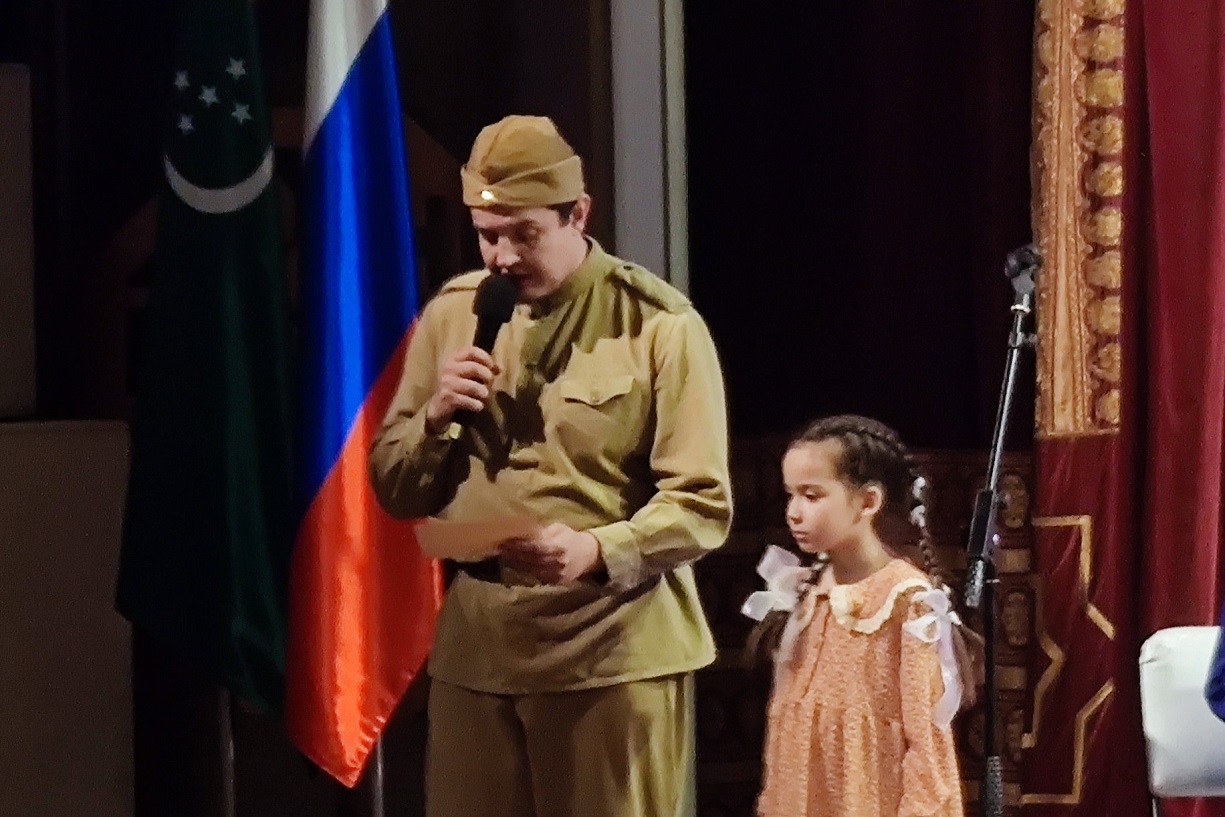
...And with the dawn, one can see how the land all around is brutally torn, ripped apart, and scarred by bomb and shell explosions. But one can hear the sounds of an out-of-tune guitar and the hoarse, heart-rending voice of Gleb Zheglov:
Motherhood cannot be taken from the Earth,
It cannot be taken away, just as the sea cannot be scooped out.
Who believed that the Earth was burned?
No, it has turned black with grief.
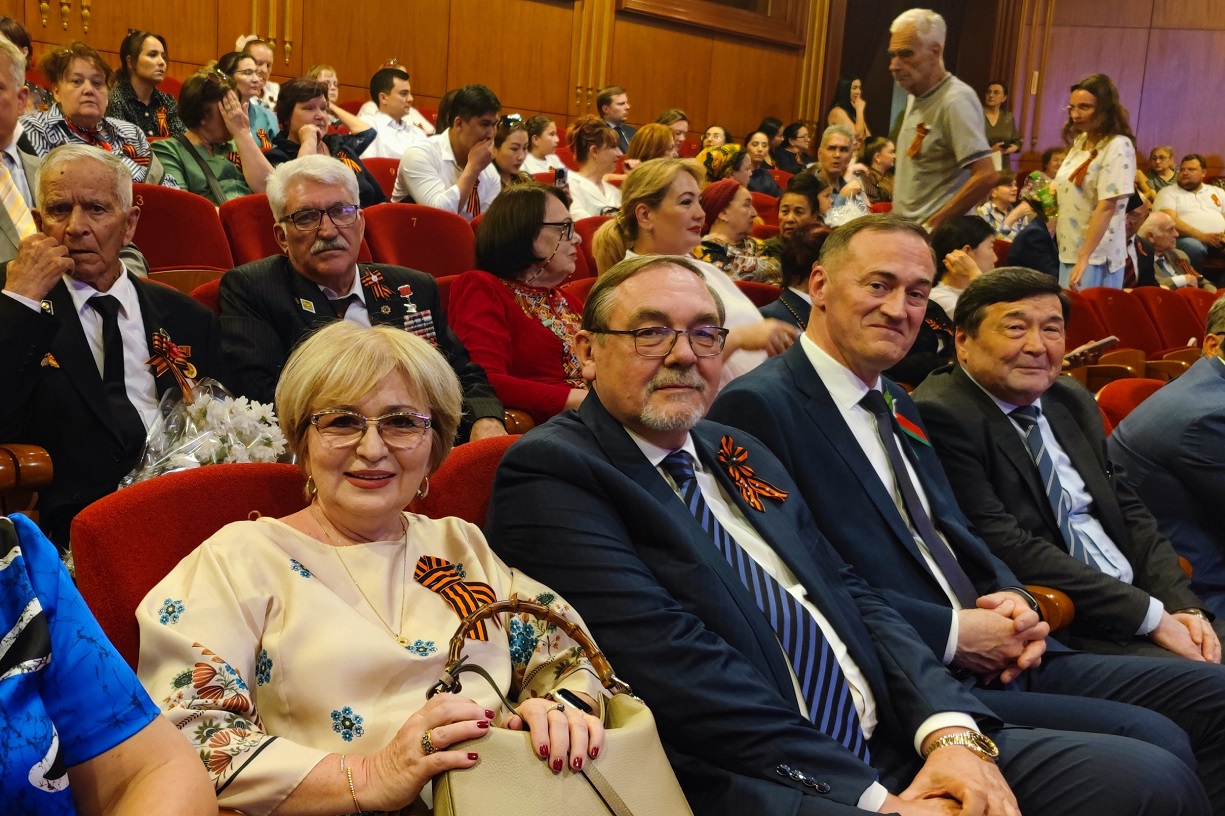
…Film and photo footage. Here they are—the same soldiers, but years later, after the war. They are now confident in their cause, brave, straightforward, and open-faced. At a short rest stop, they share some tobacco and a piece of stale bread. And, of course, with them is the ever-cheerful Private Vasily Tyorkin, who can be found at the front in almost every battalion and even company.
The dashing lads sit atop a fearsome T-34. Nearby are sailors in striped vests, nicknamed "striped death" by the Nazis. They are ready to rush headlong into battle at any moment, without a second thought about death:
Just a little bit more, just a little bit more.
The last fight is the hardest.
Daring French aces from the Normandie-Niemen squadron patrol the skies, doggedly pursuing the Nazi Messerschmitts.
War is cruel, but there are also happy moments of sincere fraternization with ordinary American soldiers on the Elbe. They, unlike politicians, will not betray the memory of friendship forged in the trenches, truly honest and sincere... Although Fulton's speech is already brewing in someone's head, in a rough draft.
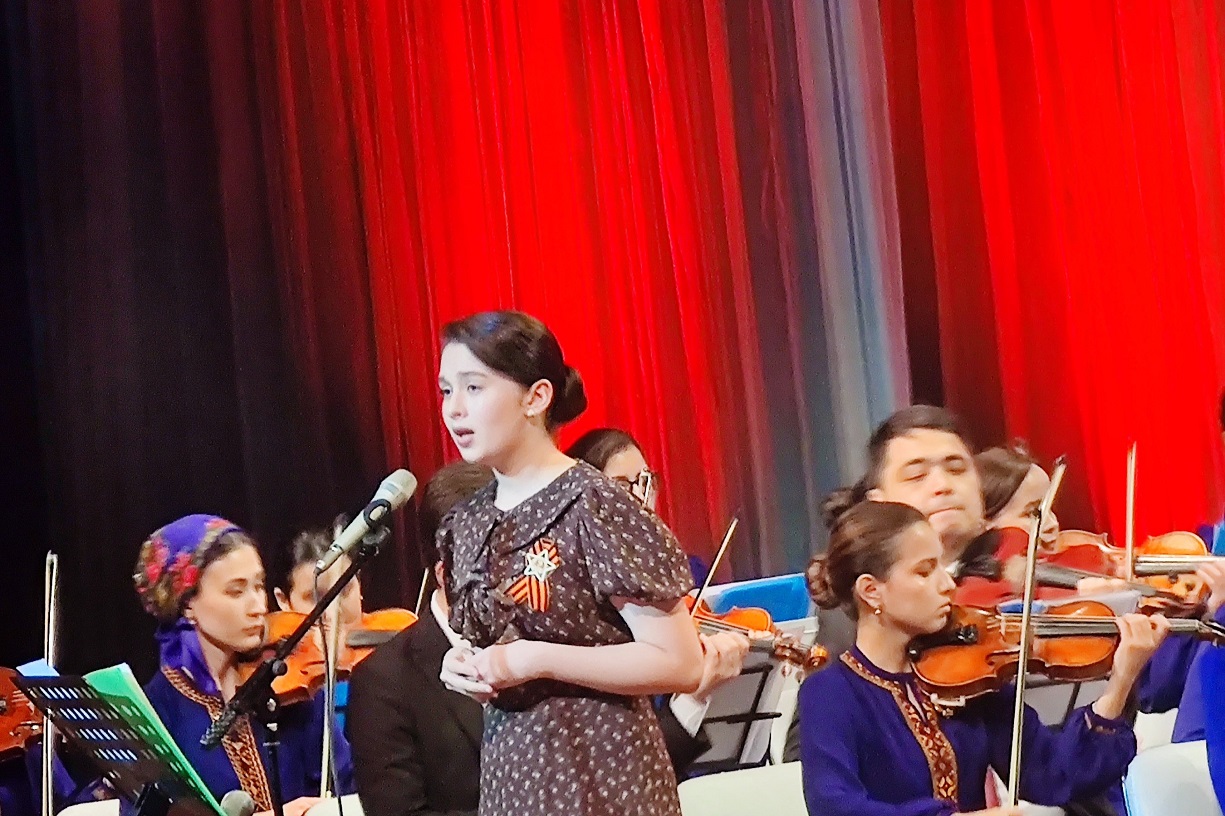
…An old, worn photograph: soldiers from different countries exchange simple war souvenirs. Someone gives a trophy lighter, someone a trusty paratrooper knife that has saved them more than once in hand-to-hand combat, and still another carefully hands over a photograph of soldier fraternization. On the back of the photograph is the inscription: "Don't remember when you look, but look when you remember." Then you feel that these words are addressed to us, too, decades from now.
The music of the Great Victory. In these songs and melodies, in these black-and-white photographs, there is a memory that doesn't belong only to veterans. It is ours. And we accept it as a gift of understanding, the immeasurably high price we paid for the peace we live in. Peace not as the absence of war, but as an unconditional spiritual value.
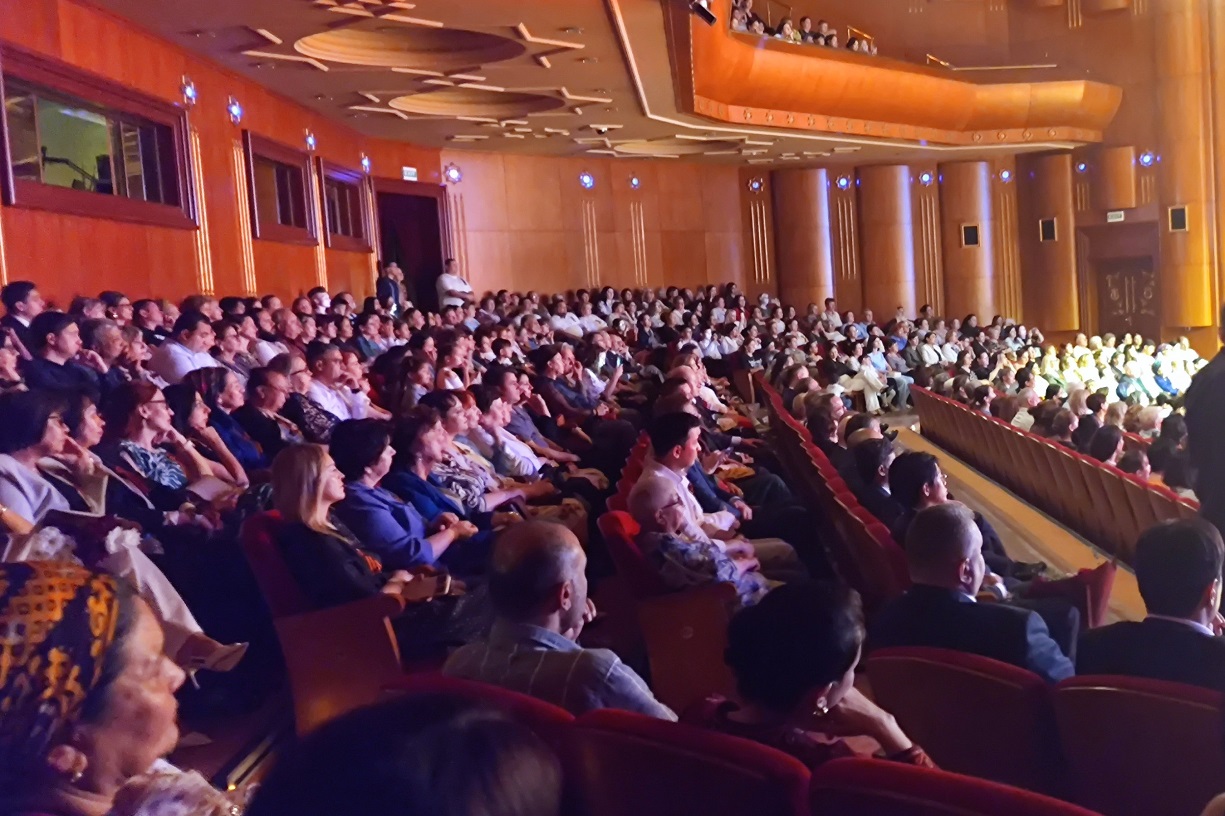
The final voices and melodies fade into the air, but something lingers in this unexpected pause. And in my ears, that whisper from the past still continues to sound:
As if I were with them again
Standing on a fiery line -
Near an unfamiliar village
On a nameless height
…Yes, these dreams continue to torment our tattered memories. And not only for veterans. But for us too. We hear echoes of those letters, those campfire conversations, those vows made in the trenches, in wartime songs. And we realize that this is no longer history from textbooks and books. It is part of our moral code.
And then a mysterious, almost mystical feeling arises that all this happened to us too:
I'll get up before dawn today,
I'll walk across the wide field,
Something's happened to my memory,
I remember everything that didn’t happen to me…
Bekdurdy AMANSARYEV
