



On May 9, the Maya Kulieva Turkmen National Conservatory hosted a musical evening dedicated to Victory Day. It became a poignant tribute that made time seem powerless. The concert, prepared by international competition winner Stella Faramazova, was woven from grief, tenderness, and eternal memory. Each song and composition performed that evening burned like a memorial candle lit in deep silence, and in each note, one could hear the footsteps of those who remained forever in the spring of 1945.
Stella Faramazova and Enejan Nuryeva accompanied the orchestra on the piano. The program opened with composer Aina Shirova's song "My Sunny Homeland," performed by Aidzheren Abdullaeva. The vocalist's voice was filled with tenderness and a declaration of love for her native land, for which the best sons gave their lives.
Next, Honored Artist of Turkmenistan Ayna Seyitkulieva and Altyn Asyr Award laureate Begench Moshiev performed the legendary song "Echo of Love" by Yevgeny Ptichkin. It was a hymn to the feeling that lives on even when the heart stops beating, connecting the living and the dead with an invisible thread.
When the sounds of Yan Frenkel's "Cranes," performed by Begench Gayipov, floated over the hall, the air in the auditorium seemed to freeze. In each flap of these birds' invisible wings, the audience saw the faces of their loved ones, departed for eternity. In Mikhail Nozhkin's song "The Last Battle," Begench's voice sounded like the prayer of a soldier exhausted by war, mentally standing on the very threshold of home, to which only one, the most difficult step remained.
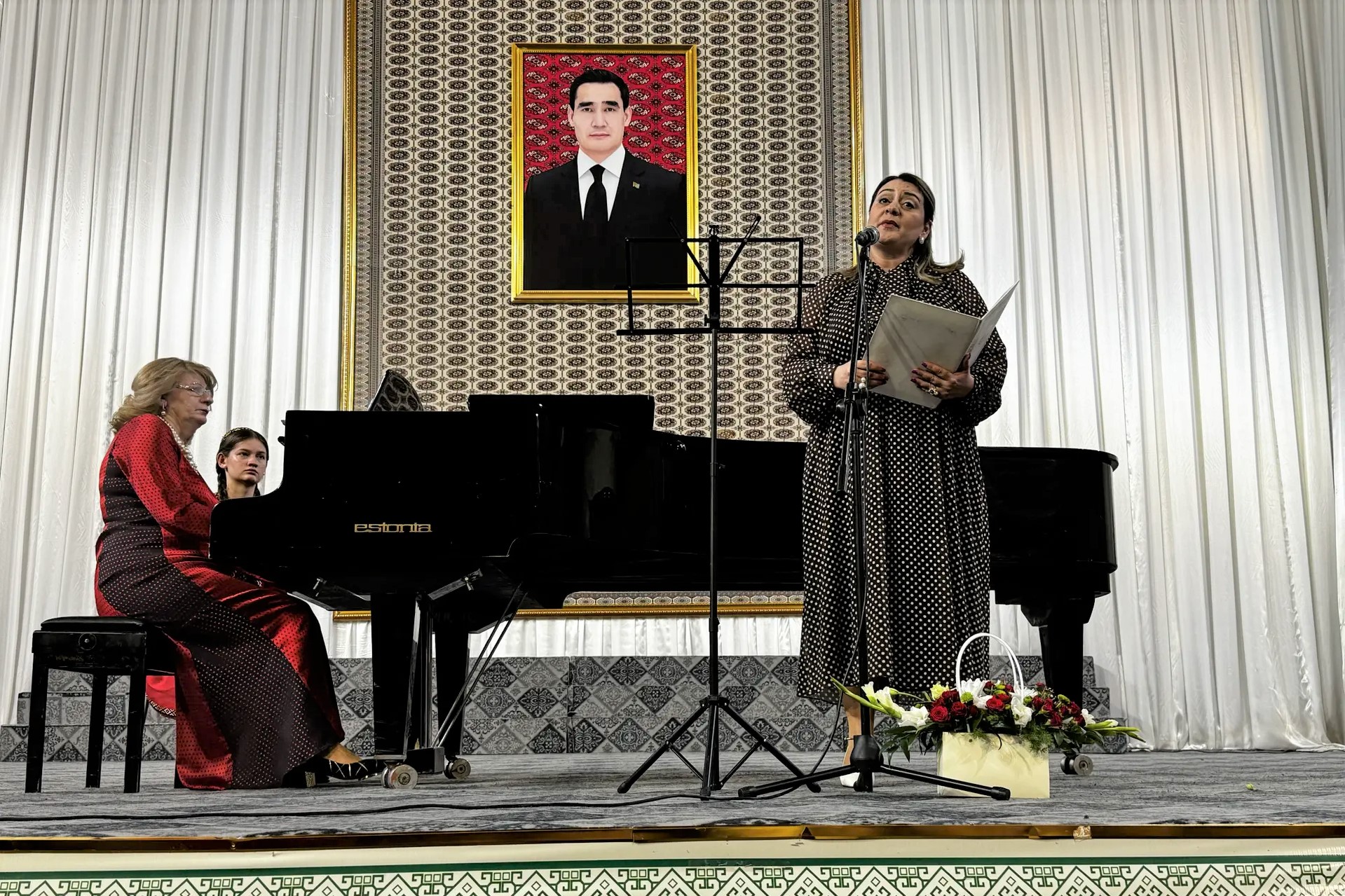
Bakhar Durdyeva touched the deepest chords of the soul with Konstantin Listov's "In the Dugout," making everyone feel the chill of the trench silence. She also performed Aina Shirova's profound composition, "Heroes of the Immortal Regiment," with lyrics by Khemra Shirov. As the first performer of this song in Turkmenistan, Bakhar conveyed its poignant meaning to the audience, for which the composers received the Grand Prix at the David Krivitsky International Competition.
Begench Moshiev transported the audience back to those brief moments of respite from the front with Aman Agadzhikov's "Mirasdary" and Nikita Bogoslovsky's "Dark Night." Jemal Takhyrova's poignant violin solo, performing John Williams' "Angel's Lullaby" from the Oscar-winning film "Schindler's List," seemed to sing of the quiet, inconsolable cries of children whose lullabies remain unfinished.
When the violin fell silent, a silence fell over the hall—so heavy and sacred that it was louder than any sobbing. In this pause, everyone was left alone with their loss. The tears in the audience's eyes were the only true acknowledgment that this pain was shared and would never subside.
Then the host reminded the guests that even during the most difficult war years, people found salvation in classical music. Leyli Salikhova performed "Lensky's Aria" from Tchaikovsky's opera on the violin. Pianist Ainur Otuzova's raging étude by Scriabin conveyed a desperate will to live, and Seyran Ataniyazov, performing Aina Shirova's "Love," spoke of a tenderness that is stronger than oblivion and ashes.
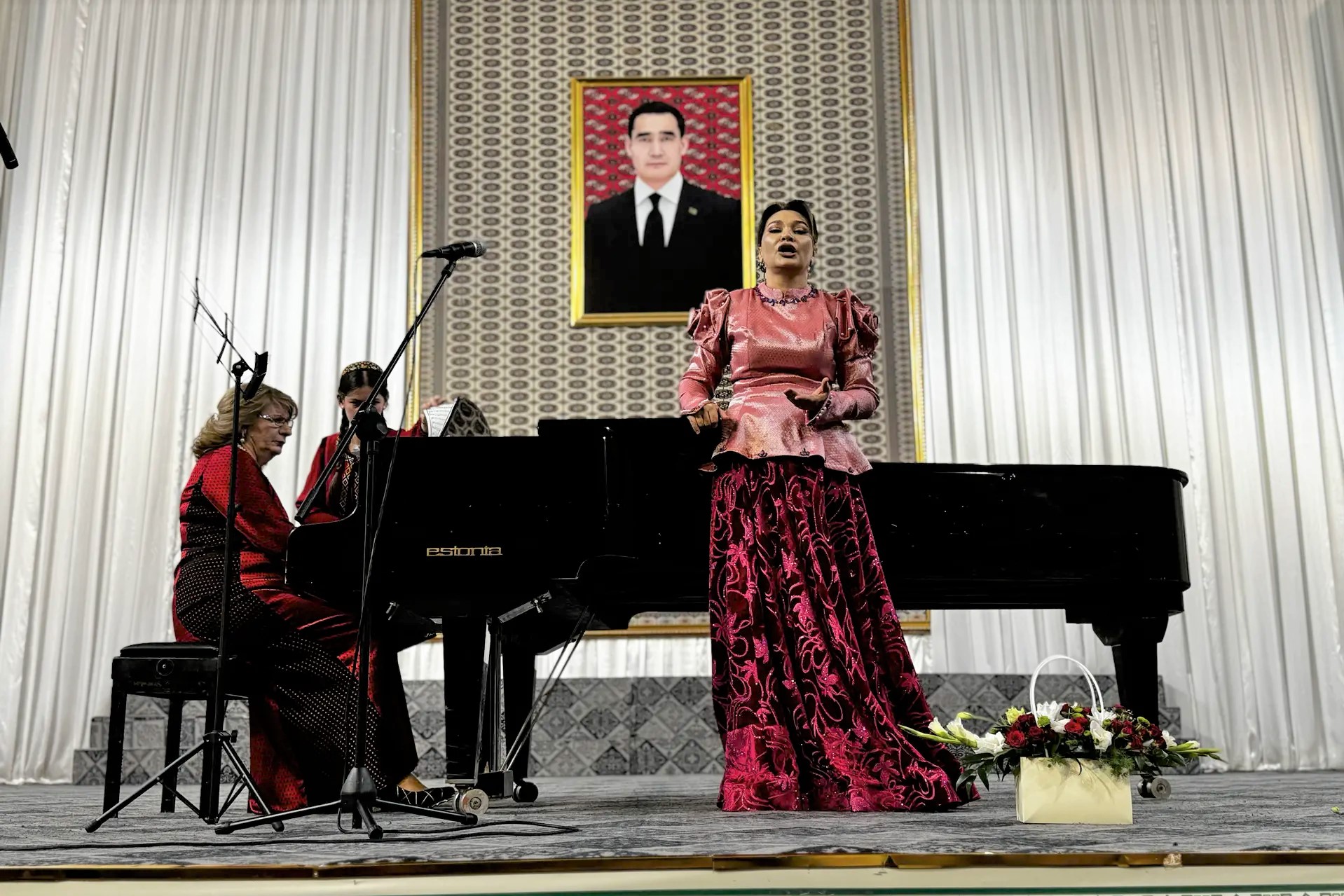
Begench Moshiev continued the concert with the playful strains of "Smuglyanka." Honored Artist of Turkmenistan Leyli Okdirova transported listeners back to the fragile, flower-scented pre-war world with her songs "Playing in the City Garden." And in Nury Khalmammedov's song "Durnalar," Leyli's crystalline soprano echoed the cry of cranes—the eternal, insatiable yearning of the Turkmen land for its children.
People's Artist of Turkmenistan Gulnar Nuryeva filled the conservatory's vaults with the fire of a “Katyusha”, then performed "In the Frontline Forest" and "Blue Handkerchief." These songs reminded listeners of the thin thread of loyalty that protected soldiers in the damp trenches. Aina Seyitkulieva continued the theme of women's plight in Durdy Nuryev's song "Waiting for You" and the piercing arioso "Aknabat" from Aman Agadzhikov's opera "Anxious Night." The artist's voice conveyed the very anxiety of mothers, wives, sisters, and fiancées that lived in their hearts for years, awaiting news.
The final revelation was Nury Khalmammedov's "Memories of a Soldier," performed by Begench Gayipov. It was a majestic and bitter reflection of a man who had gone through hell, but managed to preserve the light in his soul in order to bring it to us.
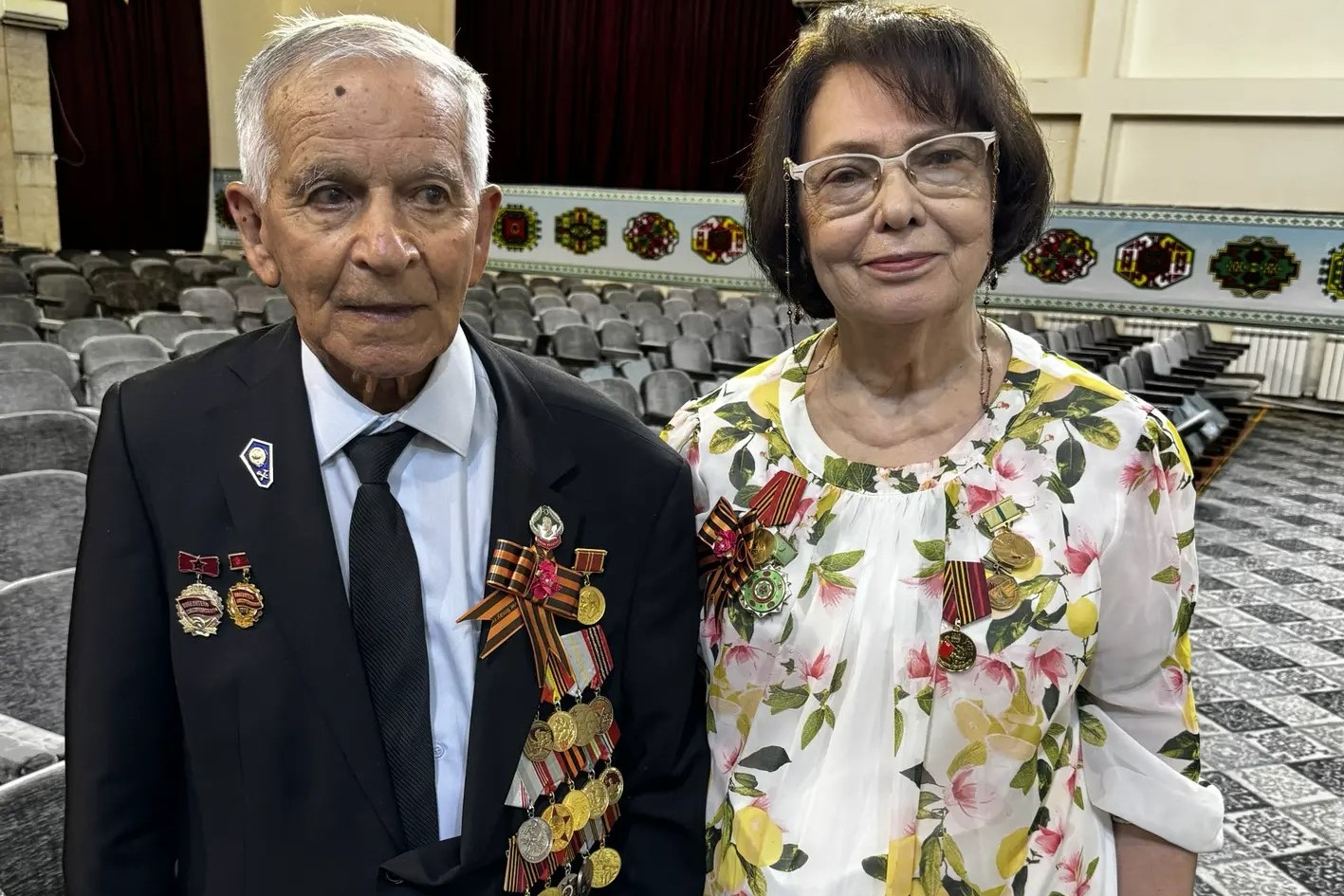
This concert, woven from pain and tenderness, reminded everyone present: we are the continuation of those who did not live, did not love, did not sing to their full potential. That evening, the boundaries between past and present disappeared, and those sung about in this concert stood invisibly beside us.
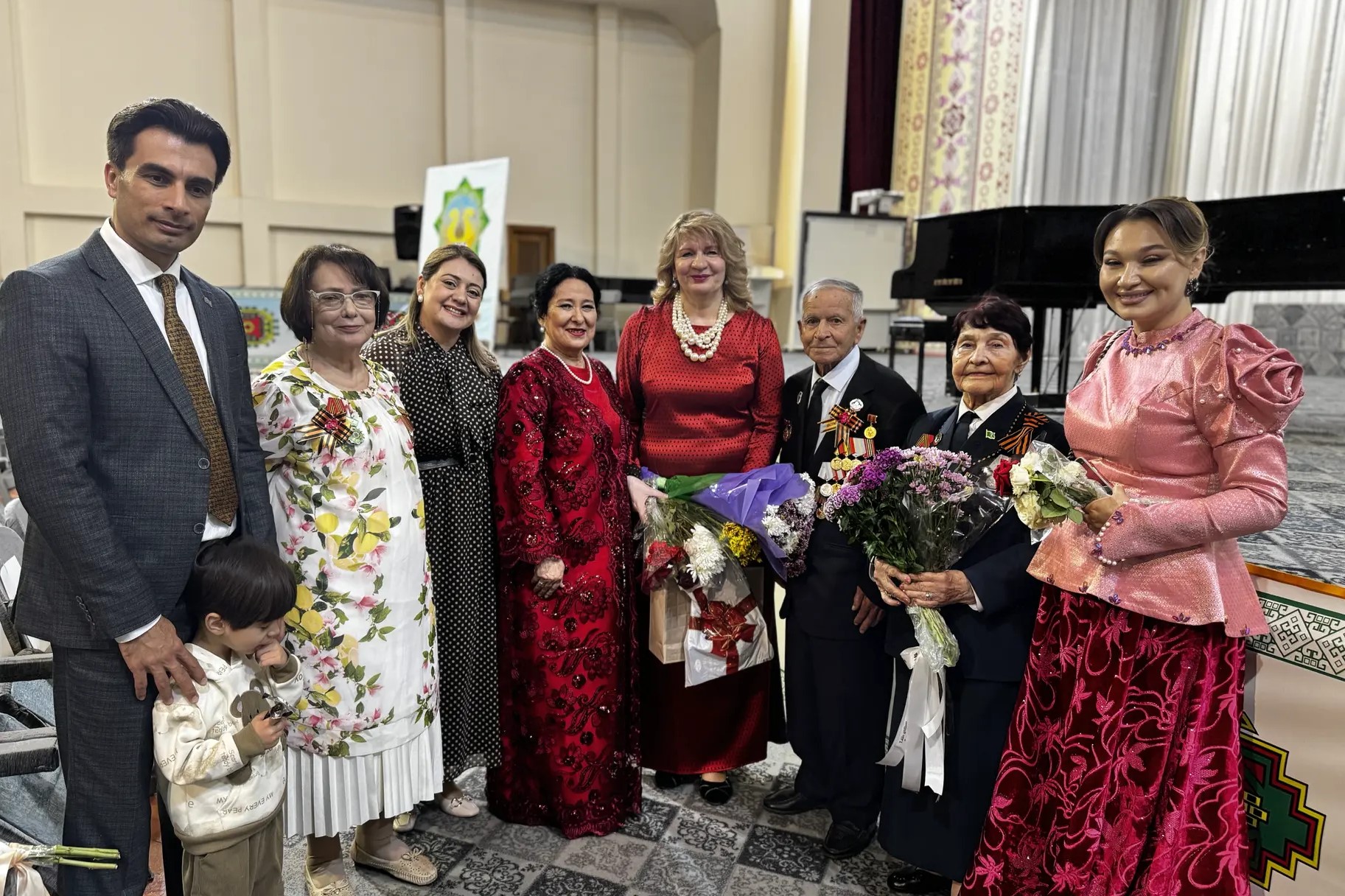
People left the hall a little different—with slightly heavier hearts, but with enlightened souls, carrying within them this tiny candle flame, which they are now obligated to pass on. For as long as we cry to these songs, their heroism remains immortal.
Aina Yolbarsova
