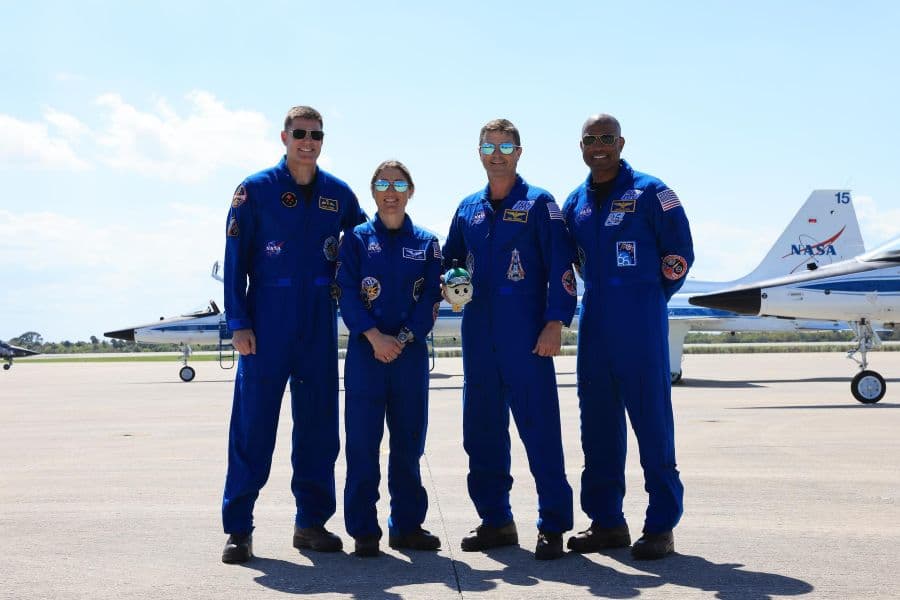



A historic moment for global space exploration: more than 50 years after the Apollo program, humanity is returning to the Moon. On March 27, the Artemis II mission crew arrived at the Kennedy Space Center in Florida for final preparations, with the launch scheduled for April 1.
Heroes of the new lunar program
The international crew consists of experienced space explorers. NASA representatives Reid Wiseman (commander), Victor Glover (pilot), and Christina Koch (mission specialist) are part of the team, along with Jeremy Hansen from the Canadian Space Agency.
The mission will last 10 days. This is a critical test: the Orion spacecraft will orbit the Moon without landing and return to Earth. Success will confirm the reliability of the technology ahead of the next major step—human landing on the lunar surface.
Final preparations and the “lunar talisman”
Astronauts are currently in strict quarantine, undergoing final medical checks and briefings. Engineers at the launch site have started the official countdown procedure. The preparation schedule is timed to the second: from fueling the SLS rocket to checking the life support systems on the capsule.

A special highlight is Rise, the plush “lunar talisman” created by a school student from California. Once the spacecraft reaches orbit, the floating toy in the cabin will provide the crew with the first visual cue of weightlessness.
The rocket launch is scheduled for April 1 at 6:24 p.m. local time. If all systems give the go-ahead, Artemis II will lay the foundation for a permanent Moon base and pave the way for future Mars exploration.
ORIENT