



A significant working breakfast was held at the Egmont Palace in Brussels, bringing together Belgian Foreign Minister Maxime Prévost and the ambassadors of Central Asian countries and Mongolia. Notably, this important diplomatic meeting, aimed at rebooting regional partnerships, was organized on the initiative of the Embassy of Turkmenistan in cooperation with the Belgian Foreign Ministry. The discussion focused on pragmatic economic interests: logistics, energy, the green transition, and the supply of critical raw materials.
Belgian Foreign Minister Maxime Prévost bluntly stated that Brussels views the Central Asian region and Mongolia as promising partners whose high economic growth and demographic potential cannot be ignored. According to the Belgian minister, it is time for European businesses to move from framework declarations to concrete commercial results. In particular, Belgium is ready to offer its advanced high-tech competencies in the processing and recycling of raw materials, which are critically needed by Europe to implement its ambitious technological and environmental development program.
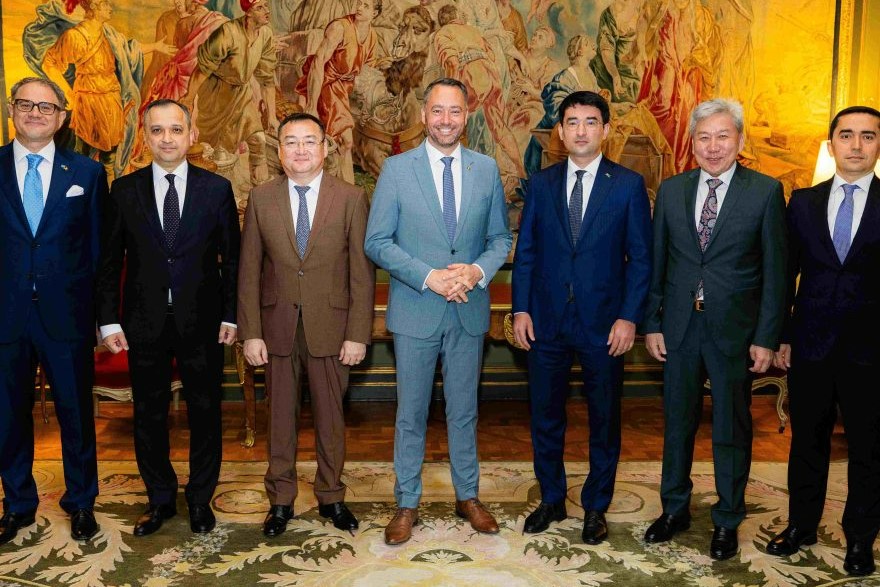
The keynote speech of the meeting was delivered by Turkmen Ambassador Sapar Palvanov, who proposed rethinking the geographic status of Central Asia. The head of the Turkmen diplomatic mission emphasized that the region is no longer landlocked (an isolated space)—it has now transformed into a land-linked (connecting link) between East and West. This land, which for centuries was perceived merely as a geopolitical buffer, is, through the efforts of the region's states themselves, being transformed into a strong economic bridge.
To support his argument, the Turkmen diplomat cited compelling macroeconomic statistics. Six states (five Central Asian countries and Mongolia) comprise a vast territory of over 5.5 million square kilometers with a population of nearly 86 million, where more than half the population is under 30. The region's combined GDP has already surpassed $500 billion, and intraregional trade has nearly doubled over the past five years, reaching a significant $12.3 billion by 2025.
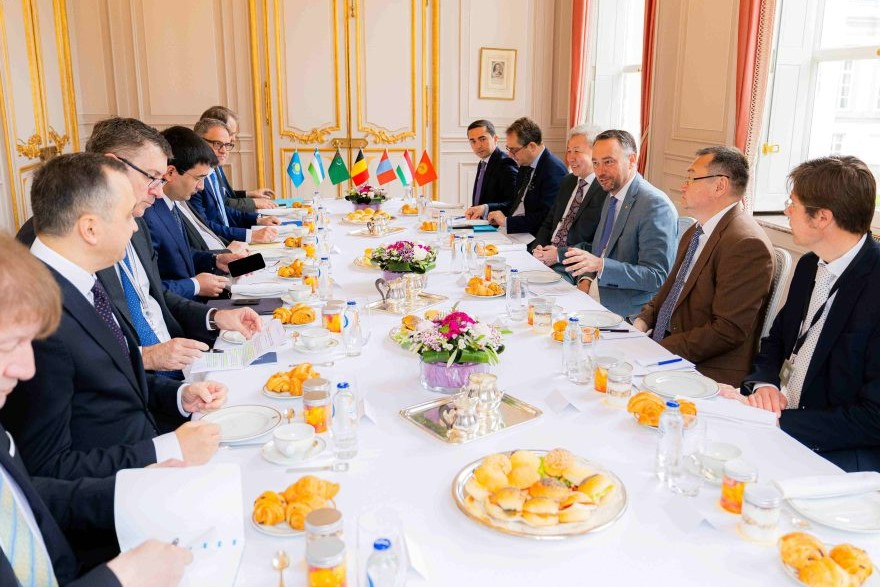
The European side placed particular emphasis on factors of regional stability: Turkmenistan's UN-recognized status of permanent neutrality and Ashgabat's active role as the headquarters of the UN Regional Centre for Preventive Diplomacy.
Speaking about the transport framework, the Ambassador highlighted the rapid growth of the Trans-Caspian route, noting that the Turkmenbashi International Seaport and the Belgian port giant Antwerp-Bruges are natural partners on this Eurasian axis. Sapar Palvanov also recalled that Belgian technology has long been a key part of the success of Turkmen industry: it was Picanol's high-tech equipment that laid the powerful foundation for the textile industry of independent Turkmenistan.
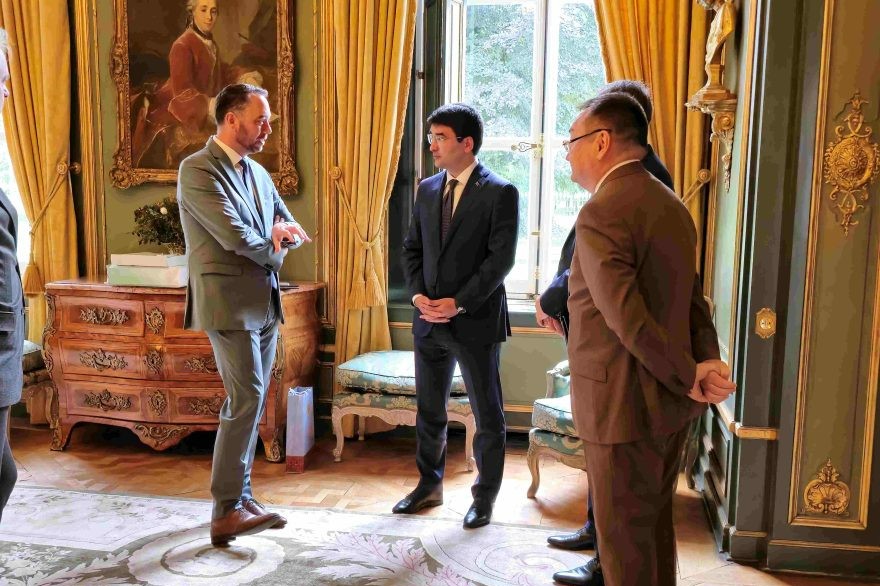
The meeting in Brussels confirmed the parties' mutual desire to move away from general statements and toward project-based realism. The region's ambassadors presented their national priorities—from water and glacier issues to academic exchange—but the main outcome of the discussion was a consensus that future joint projects should be built solely on mutual benefit, trust, and deep respect for each other's strategic interests.
