||
NVIDIA, a developer of graphics processors and systems on a chip, has developed a cloud platform for research in the field of the sixth generation of mobile communications (6G).
The 6G Research Cloud platform provides a comprehensive set of tools for implementing AI in radio access networks (RAN). As the company notes, the platform allows organizations to accelerate the development of 6G services that will connect a large number of devices to cloud infrastructures.
NVIDIA's new development includes three key components.
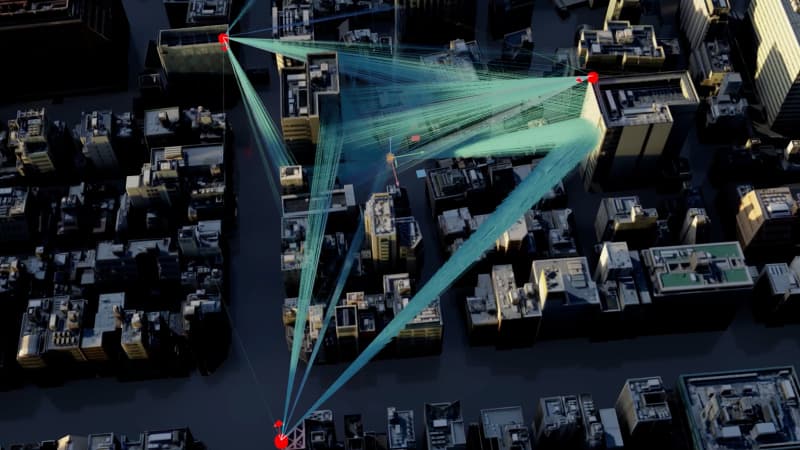
The first component is the NVIDIA Aerial Omniverse Digital Twin for 6G subsystem. It is a specialized “digital twin” that allows you to physically accurately simulate 6G systems - from a single tower to the scale of an entire city.
The twin consists of software-defined RAN and user equipment simulators, as well as a set of realistic terrain and object properties. Based on site-specific data, the system allows researchers to model and create base station algorithms, as well as train AI models in real time to improve the efficiency of information transfer.
Another component is NVIDIA Aerial CUDA-Accelerated RAN, a software-defined RAN stack that is designed to configure, program and test 6G networks in real time. The third element is the NVIDIA Sionna Neural Radio Framework, which provides seamless integration with popular platforms such as PyTorch and TensorFlow.
Researchers can use NVIDIA 6G Research Cloud for a variety of 6G projects. These include services for autonomous transport, smart spaces, extended reality, and teamwork.
Early adopters include Ansys, ETH Zurich, Fujitsu, Keysight, Nokia, Northeastern University, Rohde & Schwarz, Samsung, SoftBank and Viavi.
ORIENT news




 Hytaýyň Täze ýyly