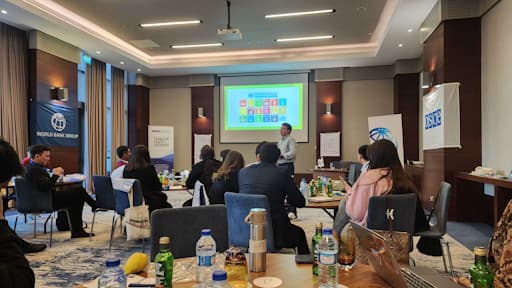
The Central Asia Youth Talks conference was held in Istanbul at the end of the last year, from December 18 to 22. Organized with the support of the World Bank and the OSCE, this meeting brought together 25 young leaders from Kazakhstan, Kyrgyzstan, Tajikistan, Turkmenistan and Uzbekistan. The main goal of the conference was to exchange innovative ideas and develop solutions to global and regional issues on tracks such as gender equality, climate change, human capital and job creation.
The participants spent five intense days filled with discussion of important aspects of the development of Central Asia. On the first day there was an introduction to the work of the World Bank and the OSCE in the field of development and youth policy. Next, the participants took up the topic of design thinking with passionate interest and considered how ideas can be transformed into projects.
Each of the 25 participants gave a unique presentation on one of the topics. These individual presentations added diversity and depth to the discussions, highlighting the relevance of young people's approaches to global challenges. For example, Nailya Musaeva from Kazakhstan focused on climate change and shared her experience of organizing events and active participation in COP-27 and COP-28.
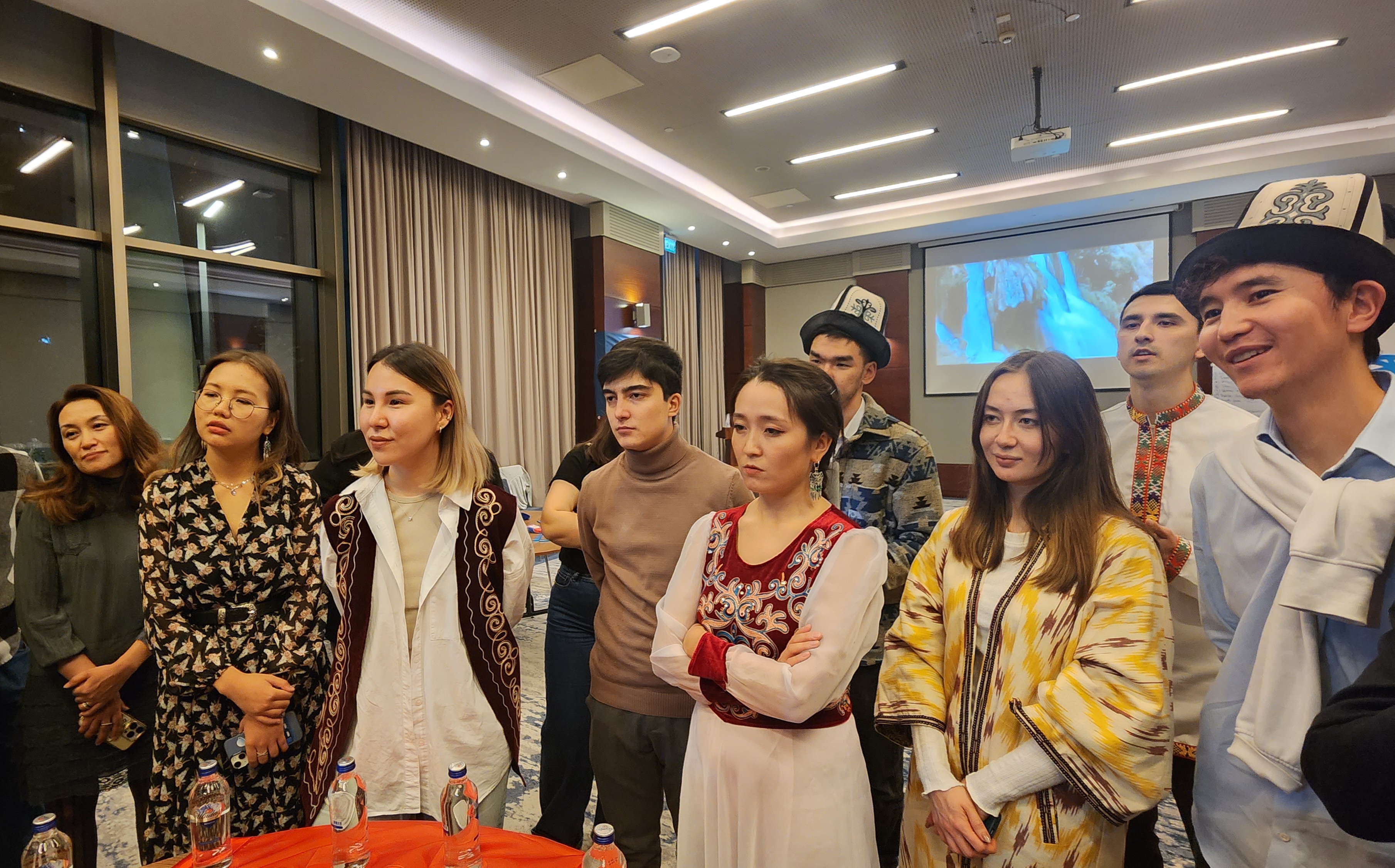
In an interview, she answered the question: “How do youth in Central Asia interact with the world community in solving climate change problems?”:
– In fact, the role of youth in the issue of climate change cannot be overestimated. Young people play a key role, because the consequences of climate change are what our generation will have to face. At the moment, decision-makers, organizations, countries are increasingly listening to the ideas and supporting the initiatives of young professionals and activists, which is good news. Young people initiate their own projects, write blogs, bring information to the masses, and I am sure that as we grow older, we will continue to work on this issue and do it even more effectively. Absolutely any profession can be combined with the issue of climate change. Medicine? The impact of climate change on human health and new diseases can be studied. IT? Platforms can be created that test various factors (such as greenhouse gas emissions) that affect the climate. Law? There are a lot of unresolved issues regarding climate change regulation. Therefore, every young specialist should study climate change issues and work in their field through the prism of climate change.

As one of the participants, I also made a presentation at the forum, which related to one of the three main topics of the forum - “Jobs of the future”. In my speech, I discussed the topic of mastering the professions of the future without financial investments and indicated specific resources that will help you gain the necessary knowledge along the way of study. The topic of artificial intelligence was raised and I expressed my opinion on this matter, because... Nowadays, worries among specialists about losing their jobs do not fade away.
I think people's fear that artificial intelligence will take their jobs is exaggerated because the purpose of technology is to make people's lives better. Artificial intelligence is as innovative as the world's first computer text editor, Wordstar, which was released in 1979. It eliminated the need for the profession of a typewriter operator. People who did not refuse to develop new technology in the form of a computer editor did not lose their demand in the labor market, and their work became easier. Only those specialists who refused to accept and master new things could lose their relevance. Over time, owning a computer editor has become an industry standard and basis; now almost every one of us uses a text editor even in everyday life.
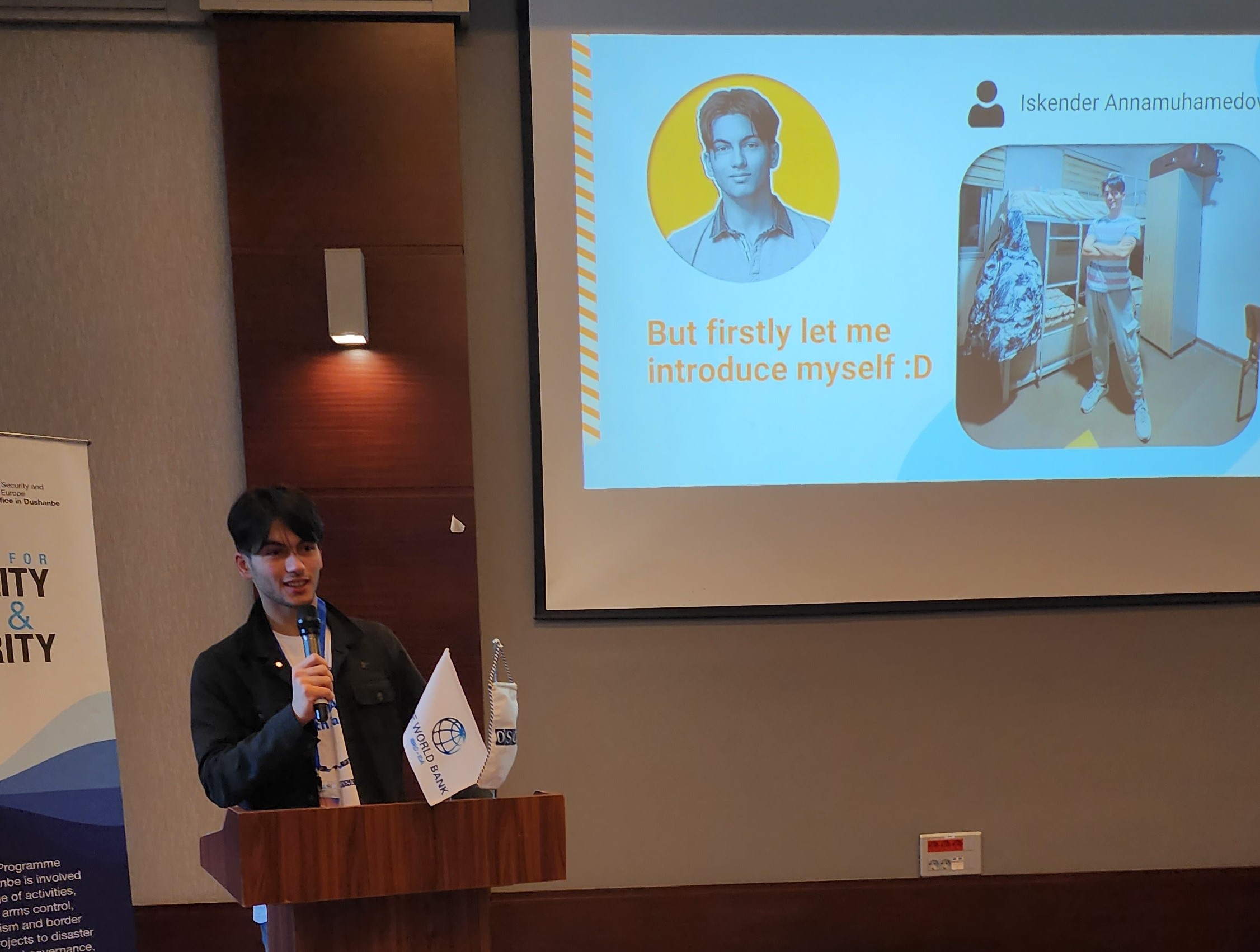
I would also like to mention that the emergence of one innovation can generate demand for new professions. As a graphic designer and computer engineering student, I always try to keep abreast of the latest events in the IT world and thanks to this I see how new professions are emerging and the demand for labor is growing, but in a new format. All this thanks to the spread of artificial intelligence in our lives.
The Central Asia Youth Talks conference has become a key moment for young leaders in Central Asia. Discussions on climate change, future professions and gender development led to the formation of innovative approaches. Participants put forward projects that not only received international support, but also contributed to strengthening cooperation in the region. The signed Declaration of Central Asia Youth Talks encourages youth to actively participate in the development of strategies and promises support for young leaders. The conference leaves a legacy of new ideas and an established community ready to act for the benefit of Central Asia.
With a focus on innovation and active development, the Central Asia Youth Talks conference brought a fresh perspective on the future of Central Asia. This is what young activist from Kyrgyzstan Nurlan Nogoibaev says when answering the question “What specific initiatives have been proposed by participants to combat climate change in Central Asia?”

– The conference participants identified the problem associated with the disappearance of endemic flora and fauna in the border areas of Central Asia. To solve this problem, it was argued that the cooperation of neighboring communities should be holistic and proposed to jointly create and jointly manage mini water reservoirs. These bodies of water could potentially become a starting point for developing cooperation between communities and further policies aimed at preserving the ecosystem.
The final days of the conference were devoted to developing projects in small groups. The final chord was the presentation and adoption of the Central Asia Youth Talks Declaration, emphasizing the commitment of youth in the region to achieve sustainable development.
Iskander ANNAMUKHAMMEDOV