NewsArticlesAnnouncementAbout UsContacts
About us Contact

We are guided by what unites people

News
Articles
Announcement
About Us
Contacts

Copyright 2017-2026 ORIENT - NEWS AGENCY

About us | Contact |

Tiny "panda skeletons": what kind of outlandish creatures live in the ocean off the coast of Japan?

February 24, 2024 | 20:57 |9497
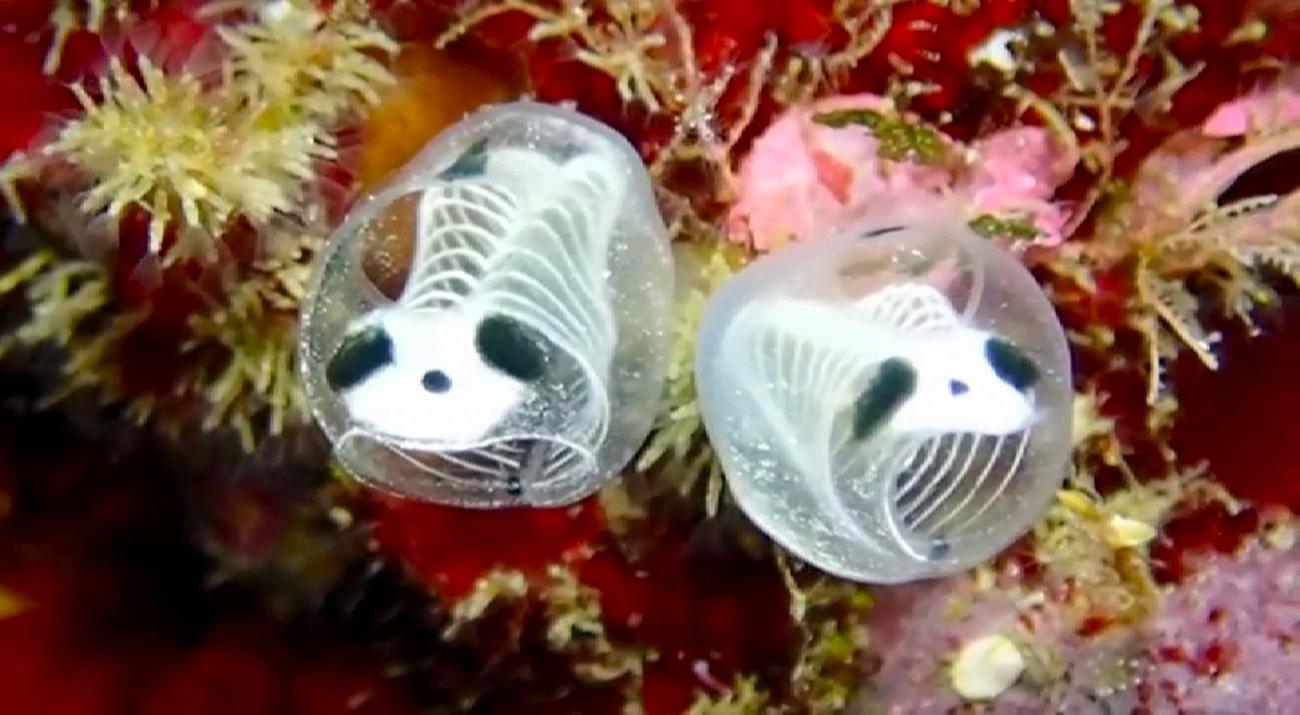
In the last few years, divers diving in the Pacific Ocean, off the coast of the small tropical island of Kume belonging to Japan, have noticed colonies of funny, strange-looking sea creatures resembling pandas in their coloring. When photos of marine "pandas" appeared on the Internet, biologists became interested in them, whose article was published in the journal Species diversity.In the last few years, divers diving in the Pacific Ocean, off the coast of the small tropical island of Kume belonging to Japan, have noticed colonies of funny, strange-looking sea creatures resembling pandas in their coloring. When photos of marine "pandas" appeared on the Internet, biologists became interested in them, whose article was published in the journal Species diversity.
Source: Diving Shop Plus Alpha via Reuters / YouTube

In the last few years, divers diving in the Pacific Ocean, off the coast of the small tropical island of Kume belonging to Japan, have noticed colonies of funny, strange-looking sea creatures resembling pandas in their coloring. When photos of marine "pandas" appeared on the Internet, biologists became interested in them, whose article was published in the journal Species diversity.

It was retold in "Around the World": It turned out that this is still an undescribed species of ascidia — marine invertebrates that lead a sedentary lifestyle, growing to underwater rocks or rocky areas of the bottom. Ascidia filter out seawater and feed on the organic particles contained in it.
2()3.jpg

The new species received the scientific name Clavelina ossipandae. Scientists have established that these two—centimeter creatures belong to the genus Clavelina (translated from Latin - a bottle, which resembles the body shape of such ascidians).

Ossipandae consists of two words: ossi — bone, because the white stripes running horizontally along the body of these ascidians make them look like skeletons. In fact, these "bones" are blood vessels. The black spots in the upper part of the ascidian body are arranged in such a way that they resemble the eyes and nose of a panda (pandae).

In the future, scientists plan to study the habitats, behavior and role of Clavelina ossipandae in the giant ocean ecosystem. Perhaps this will help to understand why they are so unusually colored.

ORIENT news

More news

tmcell
TNGIZD
toyota banner
orient mobil gosyndy
orient mobile ios
Bilelik HUB
Uzbekistan’s Central Bank Will Issue Commemorative Coins Honoring the National Team’s Qualification for the 2026 FIFA World Cup

Uzbekistan’s Central Bank Will Issue Commemorative Coins Honoring the National Team’s Qualification for the 2026 FIFA World Cup

23:50 June 18, 2026
Dana Pikir Offers Comprehensive Logistics Solutions for International Transportation

Dana Pikir Offers Comprehensive Logistics Solutions for International Transportation

23:30 June 18, 2026
New Issue of ECONAMEH Magazine Highlights Cultural Heritage and Initiatives of ECO Member States

New Issue of ECONAMEH Magazine Highlights Cultural Heritage and Initiatives of ECO Member States

22:48 June 18, 2026