



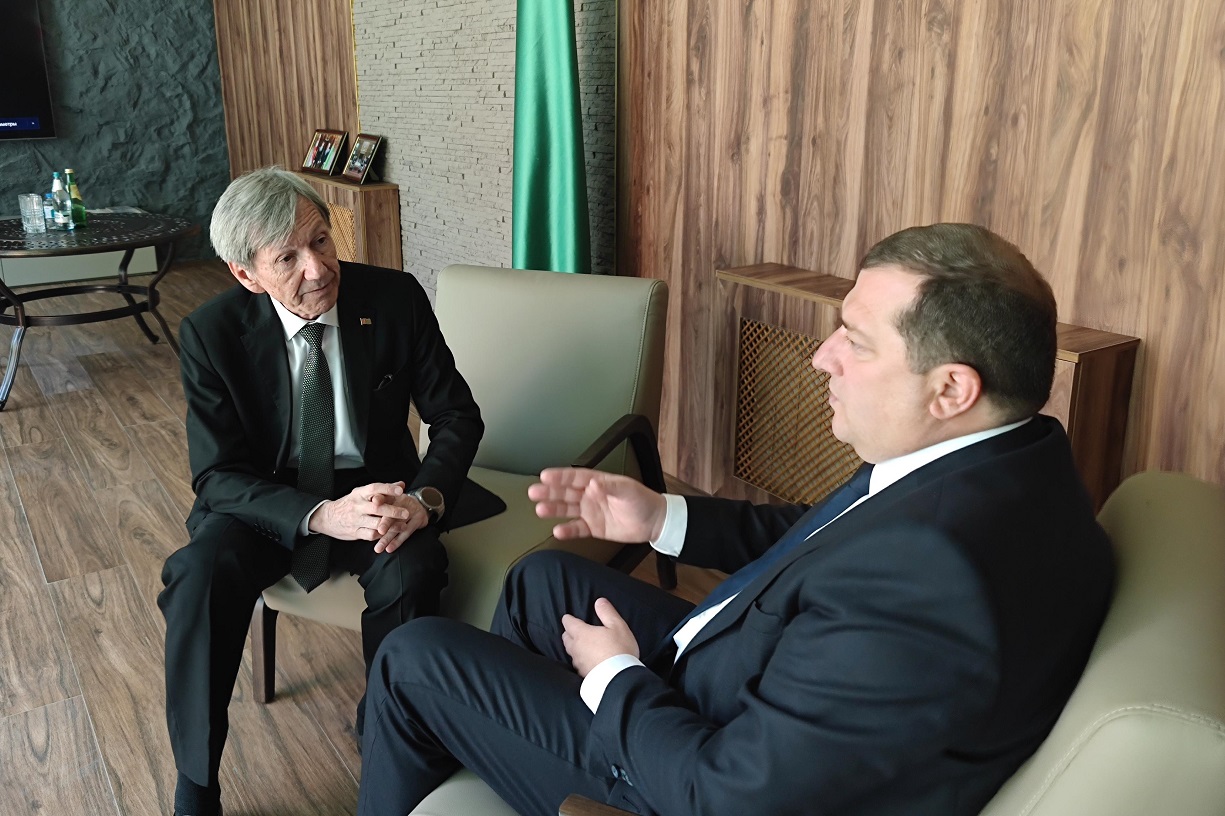
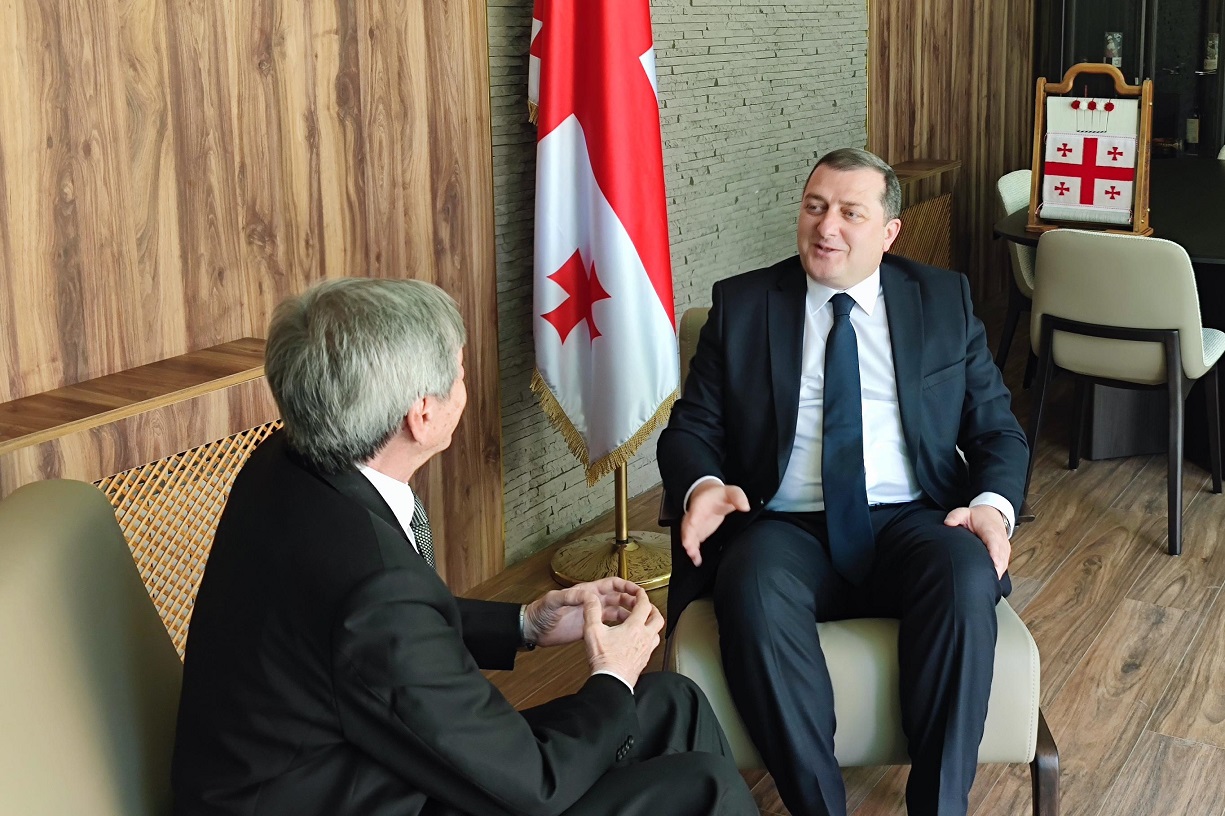
On the eve of Georgia's Independence Day, Georgian Ambassador to Turkmenistan Konstantin Sabiashvili gave an exclusive interview to ORIENT News Agency. In a detailed conversation, the head of the diplomatic mission discussed the main areas of trade and investment cooperation at the new stage of diplomatic and economic dialogue between Ashgabat and Tbilisi, as well as the strategic preferences Georgian seaports offer Turkmen businesses in billion-dollar markets, and the "invisible thread" that mentally connects the two fraternal nations.
- Mr. Ambassador, we welcome you. Thank you for taking the time to meet with us – we greatly appreciate it. This is your fourth year in Ashgabat representing Georgia's interests. Could you please say a few words about this?
-First of all, thank you for your interest and for visiting the new building of the Georgian Embassy. It is a great honor for us to welcome you to this new space, which is a symbol of the growing relations between our countries.
Georgia places particular importance on relations with partner countries, including Central Asia, where Turkmenistan plays a key role. Diplomatic relations between our countries were established in 1992, and since then, Georgia and Turkmenistan have consistently developed cooperation. Next year, we will celebrate the 35th anniversary of diplomatic relations, and the Embassy is planning a series of cultural and educational events.
You correctly noted that I represent Georgia's interests in Turkmenistan, but this does not mean working unilaterally. On the contrary, it is a dual responsibility. My goal has always been and remains the alignment and realization of mutual interests. Diplomacy is only successful when it is based on mutual benefit and trust. Of course, this is impossible without the support of our capitals, and the leaders of our countries play a vital role here.
-You once mentioned in a conversation that the Turkmen and Georgian peoples are united by some kind of "invisible thread." What did you mean?
-As for the "invisible thread" that brings our peoples together on a mental level, it's a special respect for diverse cultural and family traditions, shared moral values, and a cherished attitude toward our own identities.
The Georgian and Turkmen peoples equally value their historical roots and look to the future with hope, as well as the tradition of hospitality for which our countries are distinguished. This is what makes our relations so strong.
This year, Georgia is celebrating the 1700th anniversary of the adoption of Christianity at the state level. This date once again highlights the centuries-old culture, resilience, and spiritual values of our country, which are also highly valued in Turkmenistan.
-How do you assess the role of Turkmenistan's neutrality in today's reality, and what is Georgia's position on this issue?
-The value of peace has grown even more today. Georgia highly respects Turkmenistan's permanent neutrality as a crucial factor in regional stability. Given current developments, cautious and measured actions are necessary. Our countries share a common understanding: protecting national interests through mutual respect and development.
Georgia emphasizes Turkmenistan's significant contribution to strengthening security in both the regional and global contexts. We welcome Turkmenistan's active efforts to promote peace. I also express my gratitude for Turkmenistan's unwavering support for Georgia's territorial integrity and sovereignty, which is the undisputed foundation of our partnership.
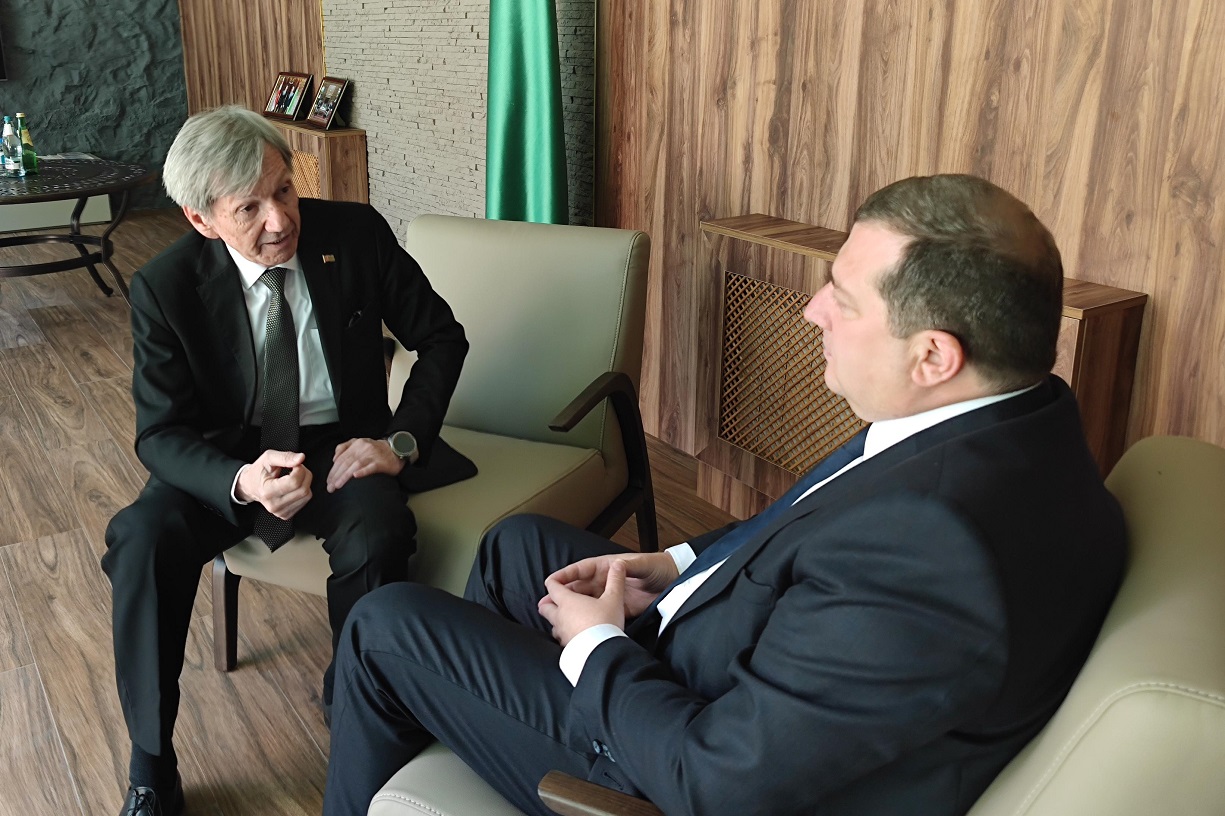
-The frequency of high-level visits has increased significantly recently. What does this mean for our countries?
-This is natural and logical, given the strategic geographic location of our countries and, as I already noted, the relationship between our leaders. Thus, 2025 was particularly active, with an official visit by Georgian Prime Minister Irakli Kobakhidze to Ashgabat and a meeting with Turkmen President Serdar Berdimuhamedov. The Prime Minister also participated in high-level forums, including a summit of landlocked countries and events dedicated to the 30th anniversary of Turkmenistan's neutrality.
It is important to note that in October 2025, Deputy Prime Minister and Minister of Foreign Affairs of Turkmenistan Rashid Meredov paid an official visit to Georgia. He met with Georgian Foreign Minister Maka Bochorishvili and the country's political leadership. During his visit to Georgia, the minister participated in the Tbilisi Silk Road Forum. In this context, it's also worth noting that the two foreign ministries regularly hold political consultations, which continually maintains the dynamic nature of bilateral relations.
I would especially like to highlight 2026, which began with an official visit to Georgia by Speaker of the Mejlis of Turkmenistan Dunyagozel Gulmanova, followed by Deputy Chairman of the Cabinet of Ministers Nokerguly Atagulyev, on the invitation of Speaker of the Georgian Parliament Shalva Papuashvili. It is worth noting that the Deputy Prime Minister personally visited the port infrastructure in Poti and Anaklia, underscoring the importance of our practical cooperation.
In early May, a Georgian delegation headed by Minister of Economy and Sustainable Development Mariam Kvrivishvili visited Ashgabat. Meetings were held with President of Turkmenistan Serdar Berdimuhamedov, the Deputy Prime Minister, and fellow ministers, as well as a regular meeting of the Intergovernmental Commission on Economic Cooperation, which discussed important aspects of trade, economic, transport, transit, and humanitarian cooperation.
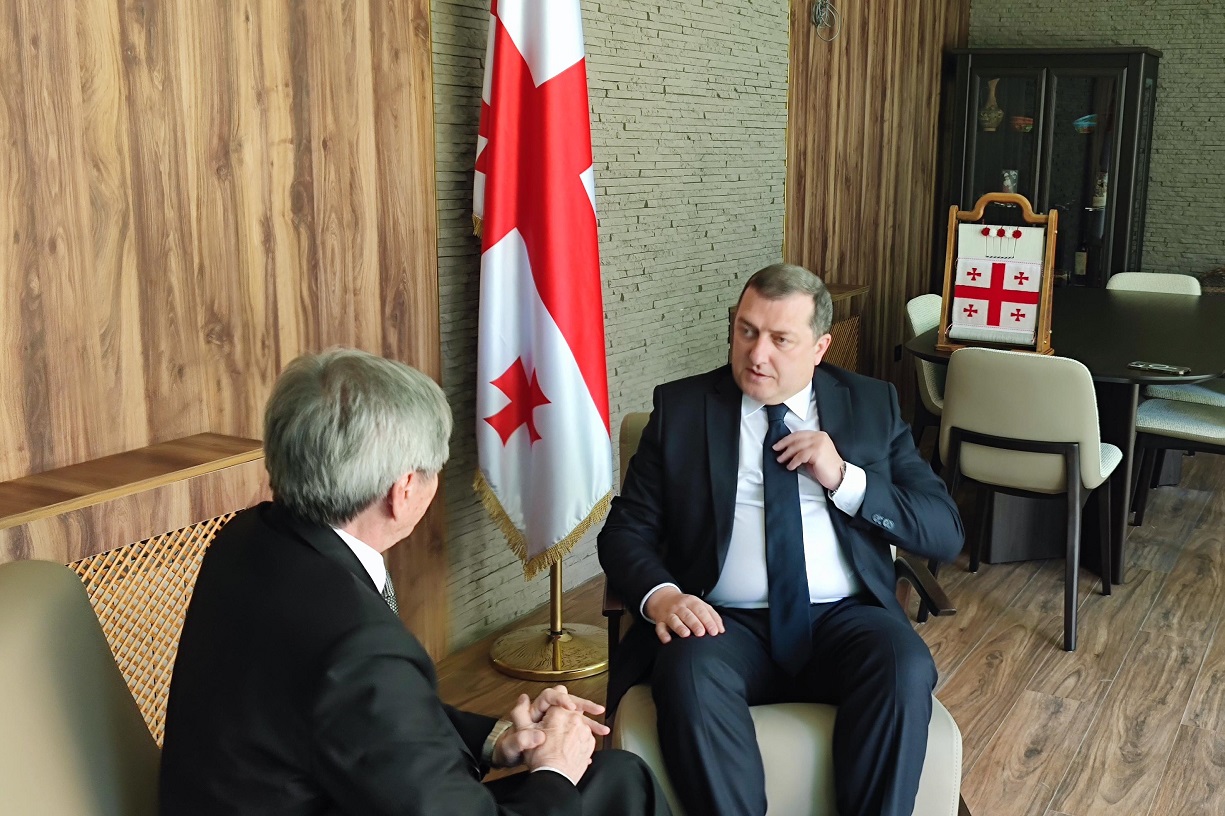
-Diplomatic activity has indeed been quite intense in recent years, but what are the plans for the near future?
-To deepen trade relations between our countries, a large-scale business forum is planned for July in Tbilisi. Georgia is currently one of the most attractive countries for investment, with a favorable business climate, low operating costs, several free economic zones, and an efficient economic environment.
At the same time, another important event is expected this year, which I am confident will further boost the development of bilateral relations. However, I will refrain from providing further details at this stage – let's wait for interesting developments.
-Georgia is increasingly positioned as a link between Europe and Asia. What role does geography play in this process?
-Georgia is a bridge of sorts, connecting two parts of the Eurasian continent. It is a country that blends diverse cultures and religions, harmoniously combining European and Eastern traditions, but most importantly, it brings people together. Furthermore, the geographic proximity of our countries, located at the crossroads of Asia and Europe, and the Black and Caspian Seas create unique opportunities for global logistics routes, and the Middle Corridor is a prime example of this.
Georgia actively cooperates with the countries of Central Asia, as well as with its neighbors and strategic partners – Azerbaijan, Armenia, and Turkey – to strengthen peace and regional connectivity.
It is worth noting that Georgia serves as a gateway for seven landlocked countries. Accordingly, our role in ensuring their access to global markets is quite significant. The fact that my country has successfully managed this task for decades and established itself in the international community as a reliable transit partner speaks volumes. We recognize the growing trends in the global economy, which require the safe and timely movement of greater volumes of goods.
-I know that Georgia is doing a lot in this area – a few words about this for our readers...
-You are right. The Georgian government is making major investments, developing infrastructure, the East-West Highway is nearing completion, a new airport is planned for Tbilisi, and preparatory work on the Anaklia deep-water port is in the active phase.
Georgian ports offer the shortest route to Europe for Turkmen cargo. We are ready to assist our Turkmen friends in creating and developing their own terminals and warehouse infrastructure in Georgian ports.
During his official visit to Ashgabat, the Prime Minister also proposed to the President of Turkmenistan facilitating the transportation of Turkmen energy resources through Georgia to the west. Green energy – an underwater power cable in the Black Sea and a digital hub – will create the shortest and safest route between Asia and Europe.
In addition, Georgia's free trade agreements provide Turkmen businesses with access to a $2.3 billion market, which is an important component for business development.
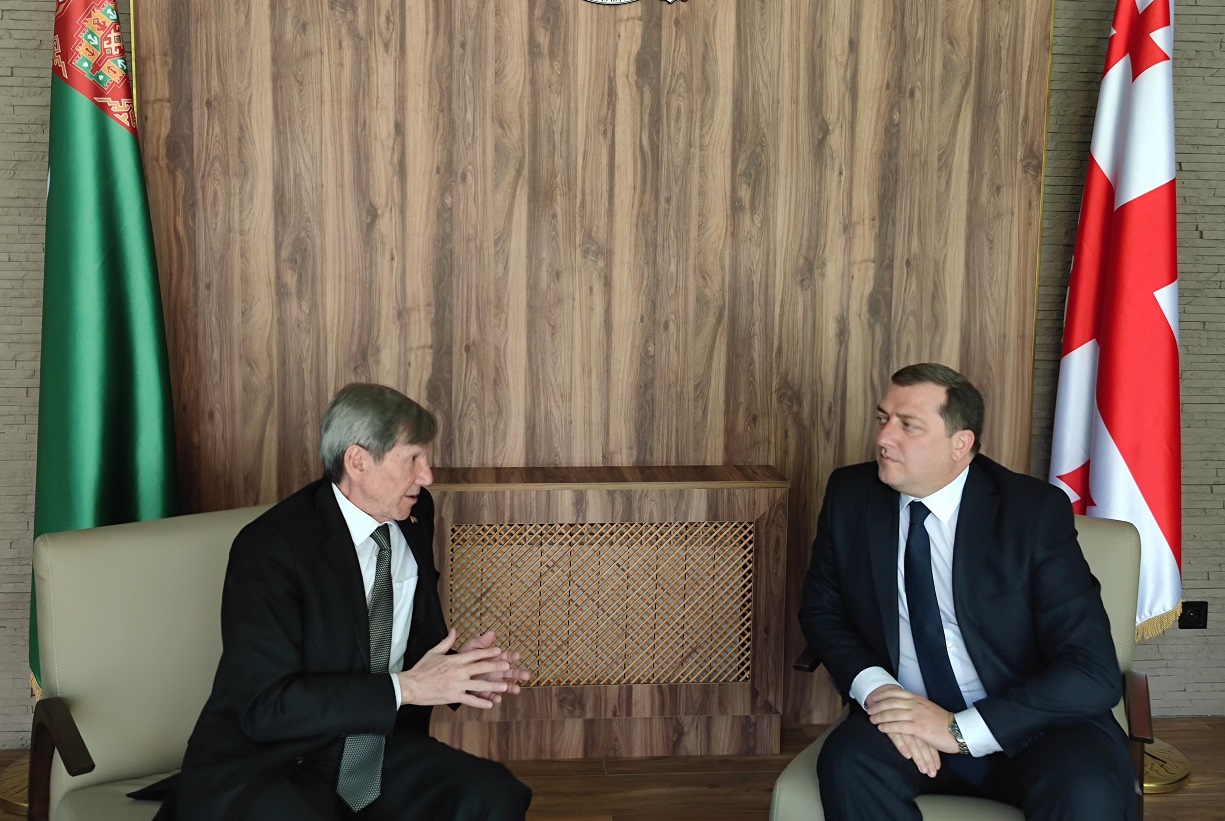
-There's been a lot of talk lately about new transport corridors. Some believe that the emergence of routes like the South Caucasus Transport Corridor (TRIPP) could diminish Georgia's role in the region. What's your assessment?
-Thank you very much for your question. First of all, it should be noted that peace has been established in the South Caucasus, and peace is the only undisputed foundation for prosperity. We've been waiting for this for over 30 years, and Georgia has always put forward peace initiatives in this direction. I would view the new route as an alternative, a natural development process for the region.
For decades, Georgia has been an experienced partner, offering a well-established, stable, and predictable environment. The Baku-Tbilisi-Ceyhan oil pipeline, the Baku-Tbilisi-Kars railway, and the planned undersea power cable in the Black Sea are projects that make Georgia a necessary component of any corridor, not to mention transport and transit routes and shipments.
At the same time, any initiative that increases the transit potential of Central Asian countries automatically increases cargo volumes in our direction. Georgia is the shortest route connecting Asia with Europe. Any route from East to West ultimately seeks access to the sea, and here our ports—Poti, Batumi, and, soon, the deep-water port of Anaklia—play a crucial role.
-And such projects will contribute to strengthening our relations...
-Absolutely! After all, we are more partners and friends than competitors. Our countries are important links in a single, larger chain. Therefore, new routes do not diminish Georgia's role; on the contrary, they provide additional impetus for even more rapid infrastructure development and strengthening its status as a regional hub. I am confident that, within the regional context, relations will further strengthen.
Beyond bilateral relations with the Central Asian countries, which Georgia is successfully developing, I personally see greater opportunities in deepening interregional economic cooperation. And such interaction could further strengthen the partnership between the two macro-regions – the South Caucasus and Central Asia. Moreover, the C5+ format is an excellent platform for interregional cooperation.
-Mr. Ambassador, against the backdrop of this important political and economic dialogue, how actively is cooperation developing in the humanitarian sphere—in education, science, sports, and medicine?
These areas are our priority. A robust legal framework for partnership in these areas has been created, numerous memorandums of cooperation have been signed, and this process continues to develop. Several dozen Turkmen students are currently studying at Georgian universities.
We are ready to further facilitate student exchanges. Furthermore, Georgia is renowned for its high-tech clinics. We see potential not only in medical tourism but also in the exchange of experience. Georgia is also proud of its unique spa resorts—such as Borjomi, Tskaltubo, Sairme, and others.
-What does Georgia offer Turkmen guests? And what role does culture play in this?
-The statistics speak for themselves. Recently, since 2022, we have seen a steady increase in Turkmen visitors. We offer guests a variety of itineraries – from the coast of Batumi to the vineyards of Kakheti. A trip to Georgia is unimaginable without its unique cuisine and 8,000-year-old wine tradition.
Culture is our "soft power." It is symbolic that, by decision of the President of Turkmenistan, a monument to Shota Rustaveli was erected in Ashgabat. The participation of Turkmen musicians in the Tsinandal Festival, as well as the sister city status of Telavi and Arkadag, exemplify the friendship between our peoples.
– What would you like to say in closing this interview?
– May 26th, Georgia's Independence Day, is approaching. I would like to congratulate our compatriots and all citizens of Georgia on this holiday and thank the leadership and people of Turkmenistan for their strong friendship. I wish our countries peace, stability, and prosperity.
I am confident that through joint efforts, our countries will be able to implement important, mutually beneficial projects that will contribute to the peaceful development of our regions.
I also take this opportunity to congratulate the residents and leadership of the Turkmen capital on Ashgabat Day, which will be widely celebrated these days. Ashgabat is truly a special city – with its beauty, grandeur, and people who captivate visitors from the very first visit.
I wish everyone success and peace. Thank you very much!
– Thank you very much for the interesting conversation, and on behalf of the readers of the ORIENT website, we congratulate you and, through you, the Government and the people on the upcoming holiday – Georgia's Independence Day.
Bekdurdy AMANSARIEV
