We are guided by what unites people




News
Articles
Media
Announcement
Technology
About Us
Contacts
ORIENTIR | April 24. In recent days, the situation surrounding the Persian Gulf has unfolded like a delicate yet unsettling drama, in which a formal lull in activity by no means signifies the arrival of true calm.
The declared pause in hostilities—announced by Donald Trump—brought no relief to the markets; rather, it caused them to hold their breath, as if awaiting the next signal—one that has yet to sound. In a recent comment, Trump himself emphasized that a "truce is an opportunity, not a guarantee of peace," thereby effectively confirming the temporary nature of the pause that has been achieved.
It is precisely for this reason that the close of trading on Friday—and the transition into Saturday—was marked by uncertainty. Investors were in no rush to revert to their customary strategies, opting instead for a wait-and-see approach and factoring into their decisions the risk that the current truce might prove to be nothing more than a brief respite. According to analyst estimates, the weekly rise in oil prices reached double-digit figures—a clear indication of the high degree of nervousness currently gripping the market.
The oil market has reacted most acutely to unfolding events, as the fate of the region is inextricably linked to the functioning of the Strait of Hormuz—a narrow yet vitally important corridor for global energy.
Even in the absence of an actual disruption to supplies, a so-called "fear premium" is already priced into the cost of oil. This is because the price per barrel is rising not so much due to an actual shortage, but rather due to the fear that one might emerge. Consequently, prices remain elevated: Brent has stabilized near the $100-per-barrel mark, while WTI hovers in the $90–$95 range, periodically reacting with sharp intraday fluctuations.
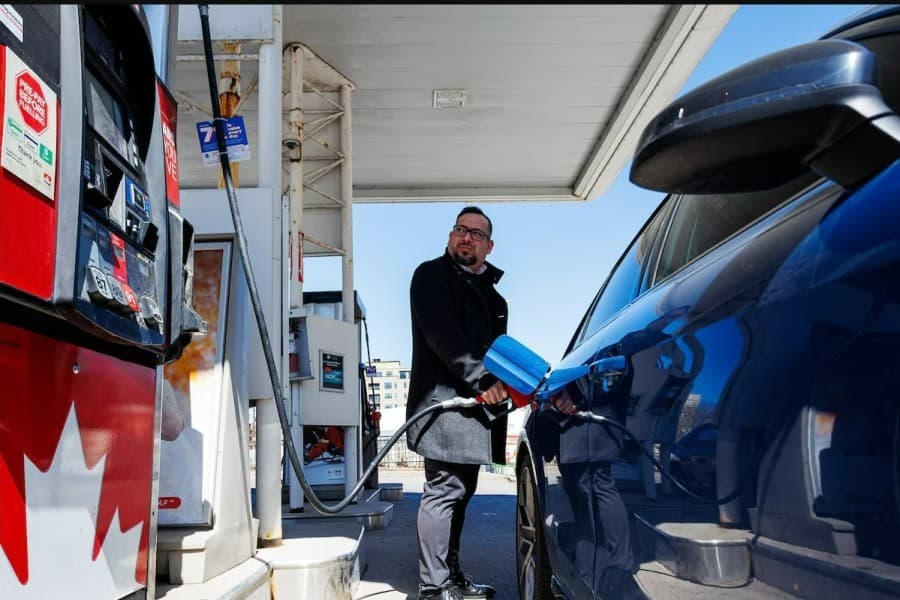
Under these conditions, prices across the U.S., Europe, and Asia remain at elevated levels; notably, Asian markets pay an additional premium due to their proximity to the source of the risk and their heavy reliance on maritime shipping routes. For the average person, this complex financial logic manifests itself in the simplest of terms: when fuel prices at the pump rise alarmingly, the cost of everything else follows suit—from groceries to shipping fees, utility bills, and airline tickets.
Notably, OPEC+ stubbornly maintains a public silence—a stance that, at first glance, might appear to be inaction, or worse, indifference. In reality, however, this constitutes a calculated strategy. In an environment where the market itself is driving prices upward, unnecessary statements could exacerbate turbulence, whereas cautious waiting allows exporters to reap benefits without direct intervention.
In an unofficial comment, a representative from one of the alliance’s member nations remarked that "the market is already doing part of the work for us"—a sentiment that only serves to underscore their chosen course of action.
This silence, however, does nothing to alleviate the tension. On the contrary, it heightens the sense that the situation remains fragile and unpredictable—particularly against the backdrop of rising marine insurance premiums and surging tanker freight rates, which on some days have jumped by tens of percentage points.
The global disparity in fuel prices is becoming increasingly pronounced. In cities such as New York, London, Berlin, and Hong Kong, gasoline prices remain among the highest in the world, whereas in Central Asian nations—including Turkmenistan—they are significantly lower, thanks to domestic resources and state regulation.
This discrepancy is already giving rise to tangible, everyday phenomena. For instance, while some countries are implementing restrictions on refueling, people in others are crossing borders in search of cheaper fuel. Thus, geopolitics is beginning to literally shape the routes of daily life.
An equally complex situation is unfolding in the gas market. Liquefied Natural Gas (LNG)—the supply of which relies heavily on the stability of maritime routes from the Gulf states—has come under pressure due to logistical constraints. In recent days, spot prices for LNG have surged by an average of 10–20%, reflecting concerns regarding potential supply disruptions.
The rise in prices over the past few days has been substantial, and—more importantly—doubts have emerged regarding the continuity of supplies. Europe is reacting to this with particular sensitivity. In a private comment, one European energy official noted that "the market is once again beginning to live in a state of constant anticipation of bad news"—a sentiment that aptly captures the prevailing mood.
Asia, meanwhile—traditionally a competitor for resources—is being forced to pay even higher prices. Consequently, natural gas is ceasing to be merely a commodity; it is becoming a source of strategic uncertainty.
This uncertainty extends to the fertilizer market as well, where production is directly tied to natural gas. Rising raw material costs are driving up the price of these "vitamins for the fields," which, in turn, is compelling farmers to cut back on their use. According to industry experts, even brief supply disruptions could lead to a decline in crop yields as early as the upcoming seasons.
The consequences of such a chain reaction do not manifest immediately, yet they are inevitable: declining crop yields, rising food prices, and escalating global food insecurity. In this sense, the crisis in the Persian Gulf extends far beyond the energy sector, beginning to undermine the very foundations of global food security.
Concurrently, nations and corporations are compelled to seek alternative supply routes, bypassing potentially hazardous zones. This lengthens logistics chains, drives up costs, and—once again—impacts the final price of goods. Even those far removed from the world of international trade feel the effects through the rising cost of everyday items—from concert tickets for major stars to daily groceries.
An additional source of pressure is the tightening of shipping controls; measures regarding the inspection and restriction of specific cargo shipments are constantly being reviewed and debated. Within expert circles, this phenomenon is already being termed the "politicization of logistics"—a scenario in which any given shipment can become a target for political pressure.
Amidst general instability, investors traditionally turn to defensive assets, bringing gold back into the spotlight. Its price remains at elevated levels—approaching the highs of recent months—reflecting investors' desire to seek refuge from risk. The rise in gold prices reflects not so much a shortage of the metal itself as a deficit of confidence—in markets, currencies, and the future in general.
In this context, discussions regarding a potential shift to settlements in Chinese yuan are perceived as part of a broader trend: the gradual erosion of the U.S. dollar's dominant role—a development viewed with undisguised irritation by the occupant of the White House. However, most experts emphasize that this is a long-term process and that, in the short term, the dollar will retain its position.
Stock markets are exhibiting mixed performance; specifically, energy companies and nations rich in energy resources are benefiting from rising prices, while the transportation, industrial, and logistics sectors are incurring substantial losses. This has already led to a decline in the market capitalization of several major companies and heightened investor caution—serving as a signal that businesses should prepare for a more challenging period ahead.
All of this is accompanied by cautious rhetoric from world leaders. Representatives of European nations emphasize the need to "prevent further escalation," yet they refrain from taking drastic steps that could alter the balance of power. Meanwhile, key players in the Middle East place their primary focus on safeguarding their national interests.
The expert community largely agrees that the immediate future will be marked by instability, and that any market adjustment—should it occur at all—will take place at a new, higher price level.
Ultimately, this entire multilayered picture boils down to a single, simple, and tangible dimension: the daily life of the ordinary person, anywhere on our planet. Such an individual may not track oil prices or analyze geopolitical statements, but they certainly notice how gasoline is becoming more expensive worldwide, how prices are rising in stores, and how increasingly difficult it is to plan their household budget.
It is precisely here—at the level of everyday life—that the true significance of current events reveals itself: a distant conflict transforms into an immediate reality, and events in the Persian Gulf become part of the personal experience of hundreds of millions of people, driving up costs and eroding the sense of social security across the globe.
And perhaps the most important thing to grasp today is that geopolitics no longer exists somewhere "out there," far away; it now resides in our grocery receipts, in the cost of our commute, and in our anxious thoughts about tomorrow.
And so it will remain until every individual—and humanity as a whole—comes to realize that, in the grand scheme of things, we have nothing left to divide on our small planet.
Bekdurdy AMANSARYEV