We are guided by what unites people




News
Articles
Media
Announcement
Technology
About Us
Contacts
Ashgabat, January 9 | ORIENT. On the eve of World Hindi Day, celebrated annually on January 10, the Embassy of India in Ashgabat hosted a celebratory event focusing on the melodious rhythms of one of the world's most ancient languages.
January 10 was chosen for World Hindi Day because it was on this day in 1975 that the first World Hindi Conference was held in Nagpur. Today, Hindi is the third-largest language in the world in terms of speakers (over 600 million), behind only English and Chinese.
The program opened with students from the D. Azadi Turkmen National Institute of World Languages. Their literary composition was a true revelation: the students recited their poems with such poignancy that the audience caught the rhythm, reminiscent of the intricate patterns of Indian architecture.
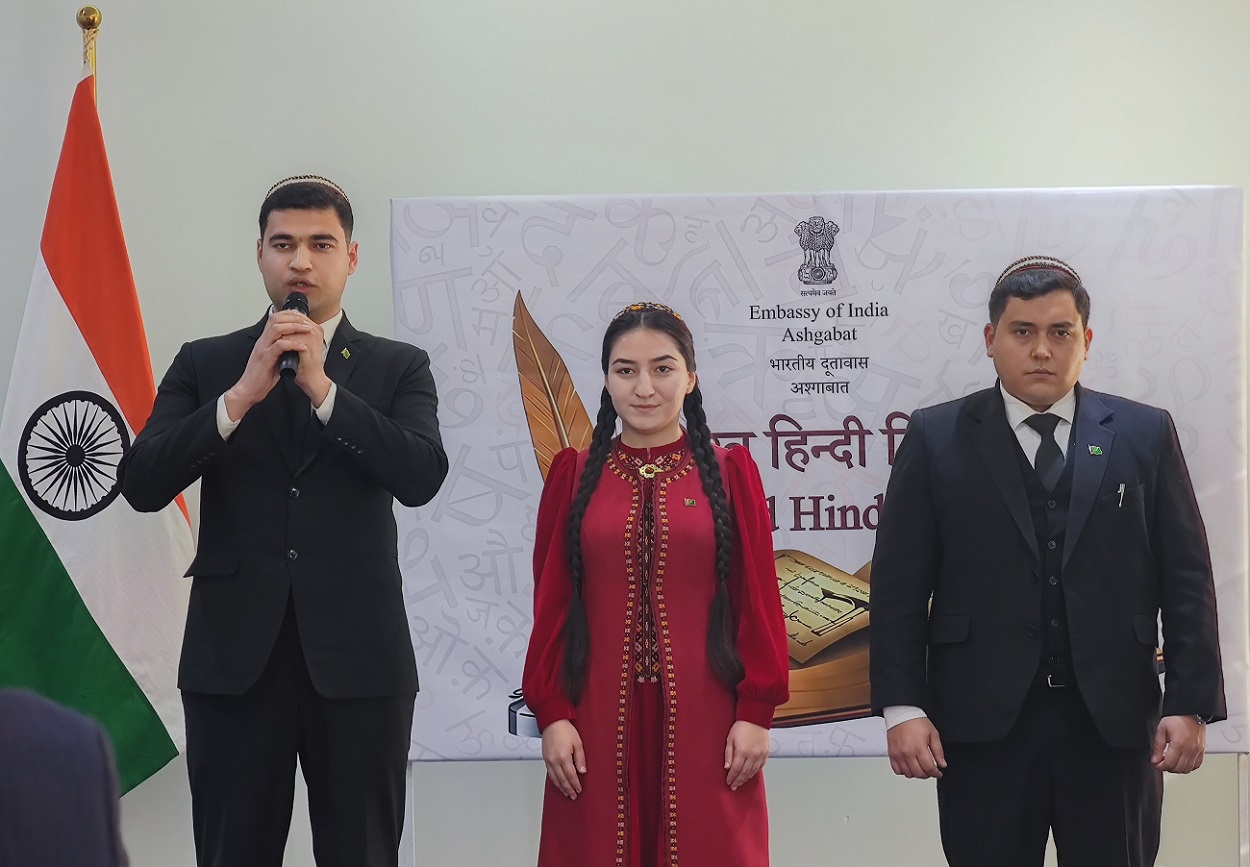
Hindi has a remarkable breathiness. It has many sounds pronounced with a slight exhalation. This is perceived by the ear as a soft echo or a warm flow of air. Speech doesn't "chomp" space, but rather envelops it, creating a deep, spacious, and slightly vibrant sound.
Interestingly, Hindi uses the Devanagari script, one of the most phonetically accurate in the world. It's written as it is read. Perhaps it is this clarity that helps Turkmen students, who have been studying Hindi at the Turkmen National Institute of World Languages for over 15 years (since 2009), achieve such artistry in reciting Indian poetry.
When looking at Devanagari, we see a horizontal line on which the letters "hang." This is also felt in speech. Hindi phonetics is a balance between clarity and melodiousness. Consonants are very prominent, almost tangible, but they are always strung on a soft, lingering vowel base.
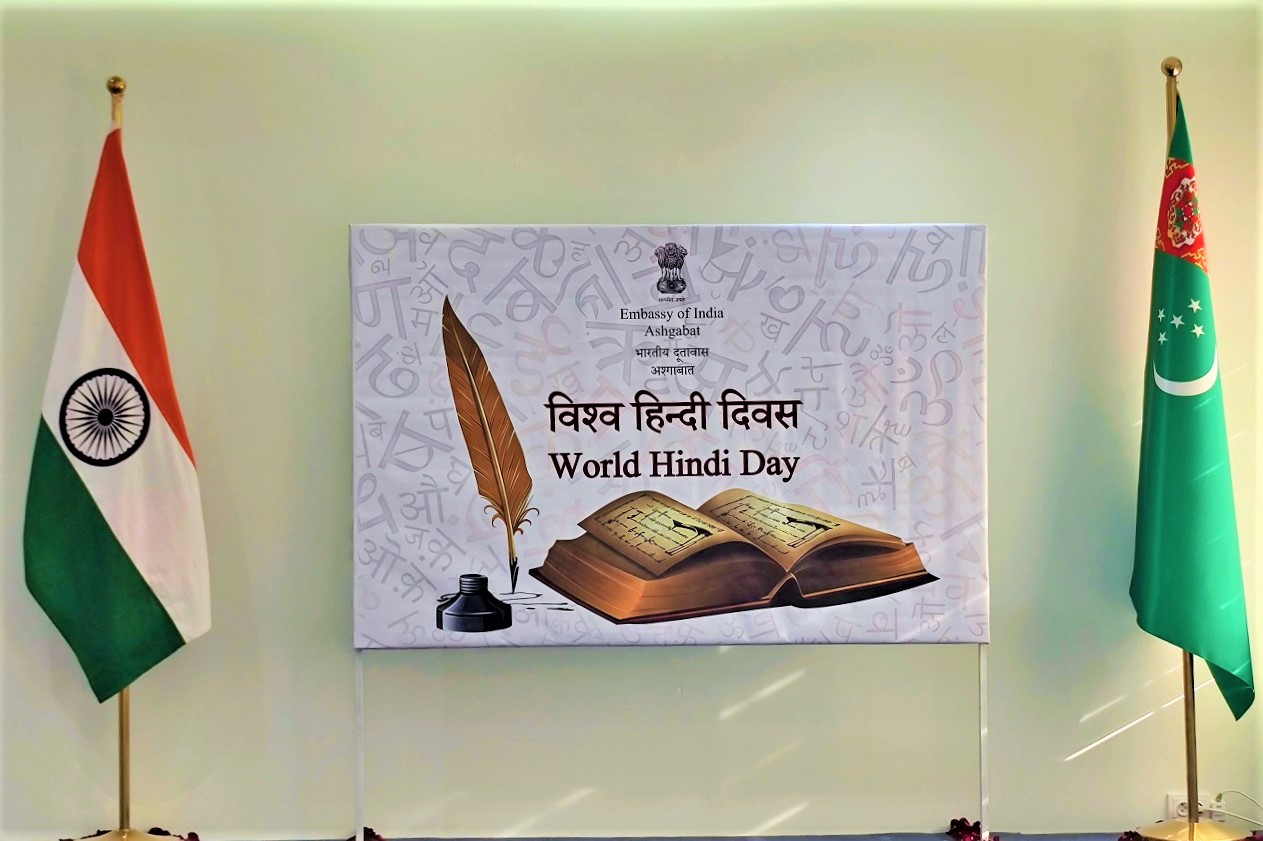
It's reminiscent of a calligrapher's hand drawing a confident line, sometimes curling into a graceful knot, then swiftly ascending.
Listening to the students, it was hard not to notice how the soft rolls of the vowels suddenly gave way to the distinct, short stabs of the consonants. It was reminiscent of the leisurely dance of raindrops on dry earth or the jingle of silver bells on a dancer's ankles—the sound sometimes fading into a half-whisper, then shattering into a ringing drumbeat.
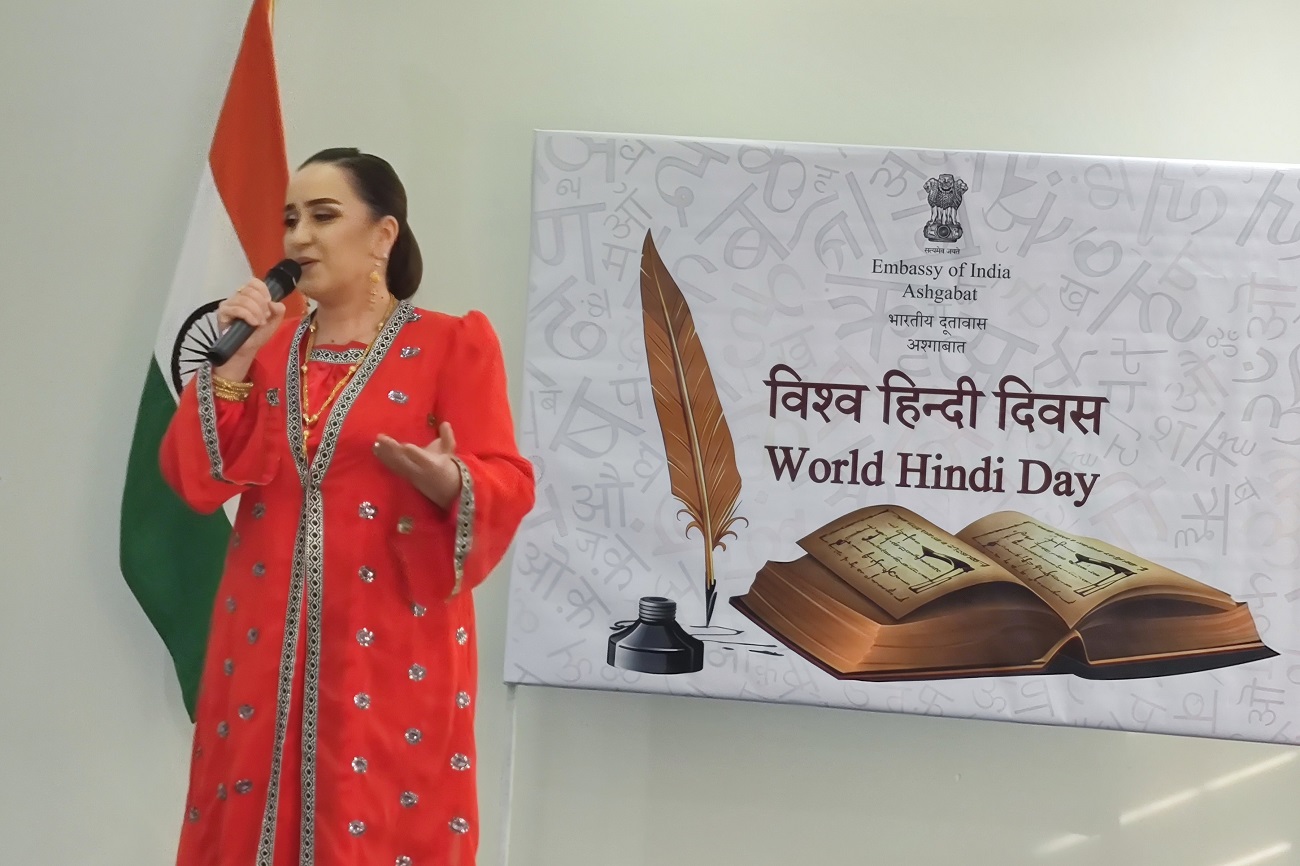
The evening was especially charming thanks to the female vocals, which instantly transported listeners to the golden age of Indian cinema. The Indian singing tradition is unique: women's voices here sound unusually high, almost crystalline, and possess a specific "flying" quality.
The singer's voice is like a fine silk thread, twisting in the air, creating intricate patterns like those on a silk sari. It has a very bright, almost childlike purity, yet it is capable of conveying the full depth of drama. It is this effect of ringing purity and endless flexibility that makes Bollywood soundtracks recognizable from the first note.
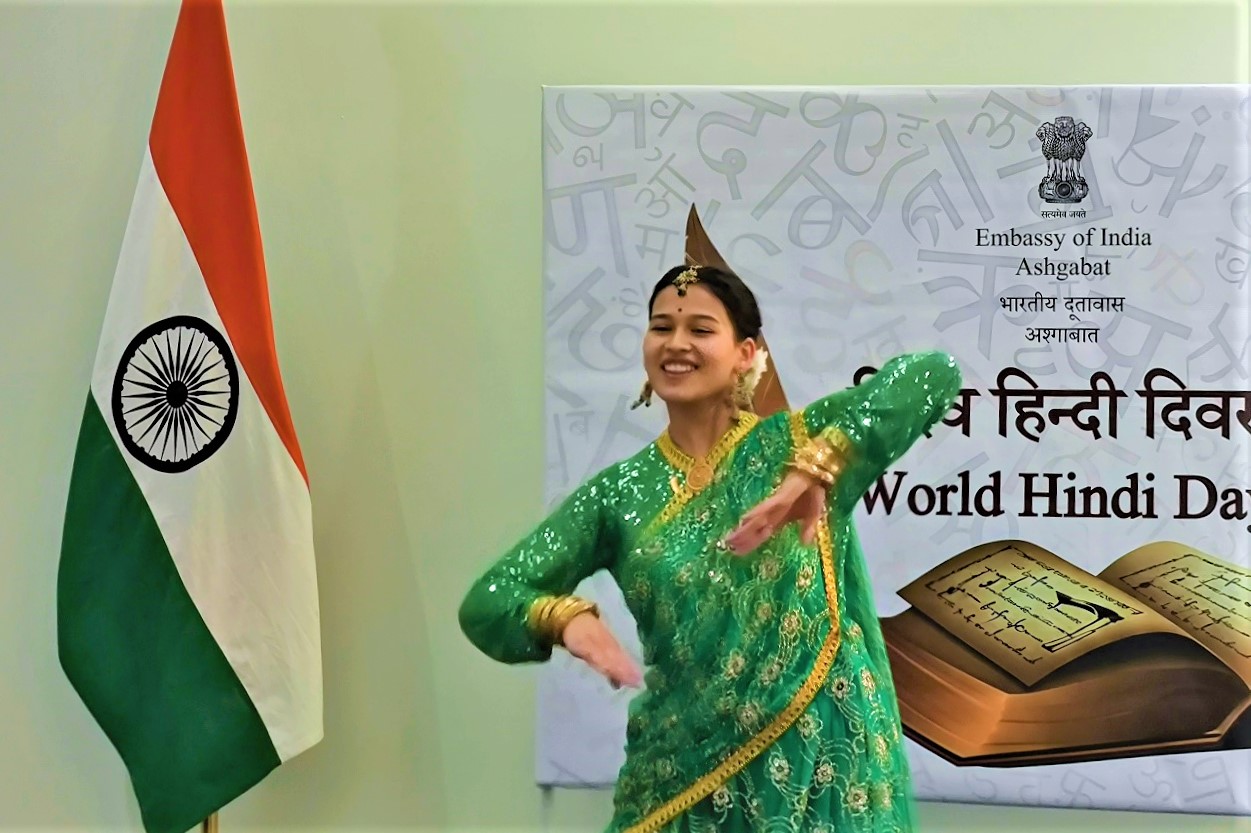
When the professional vocals gave way to Raj Kapoor's legendary hit from the film "Vagabond," performed by a student, the audience enthusiastically applauded the song. The immortal "Awara Hoon" once again proved that Indian cinema is a shared cultural code for our peoples. And the dance of a girl in a sparkling sari, spinning like a top, added cinematic dynamics to the evening.
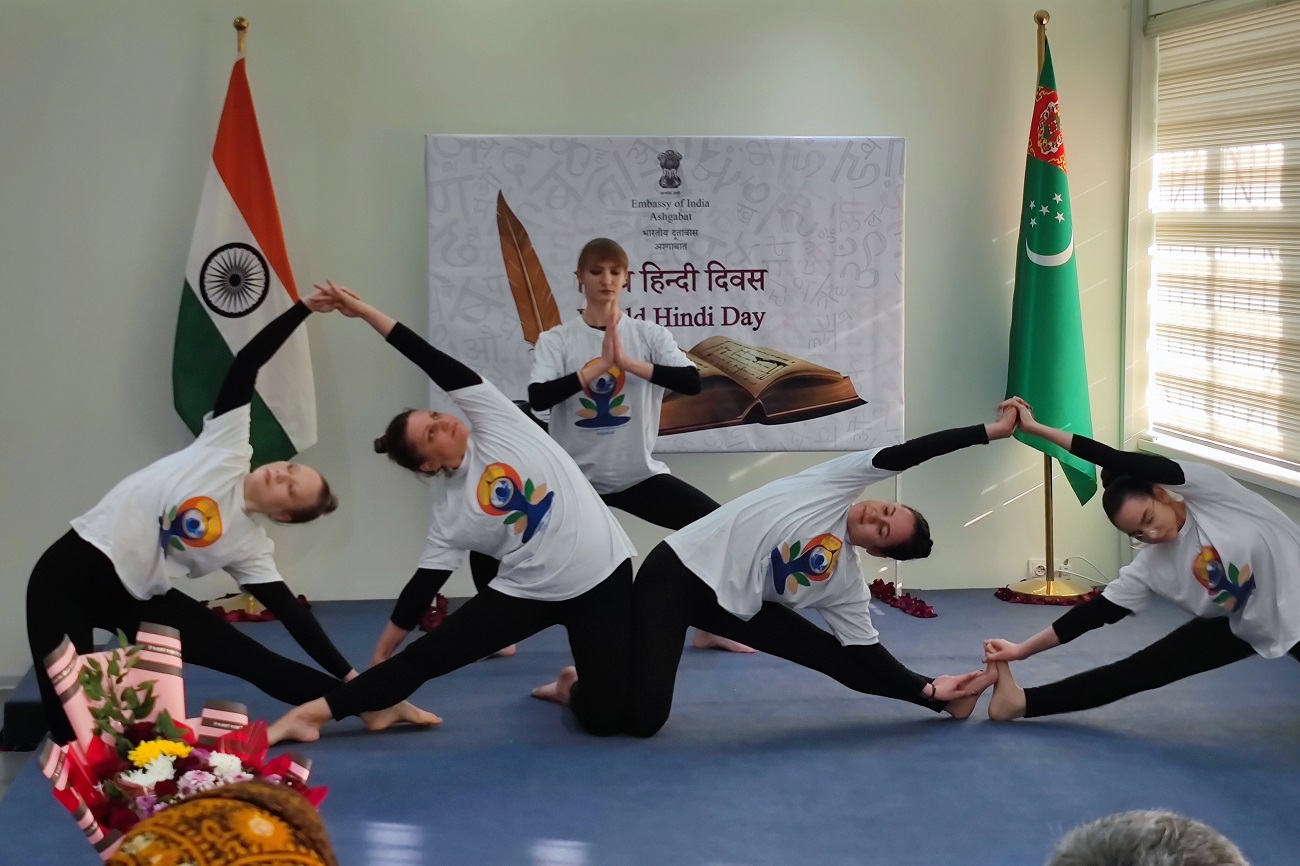
A performance by a group of girls from the Ashgabat Yoga Center offered a meditative interpretation of the theme of physical and spiritual harmony. Their demonstration program demonstrated that yoga in Turkmenistan is more than just a popular fitness program, but a profound understanding of Indian philosophy through body control and internal discipline.
The 2026 festival's motto is "Hindi – the Emotional Connector." Ambassador Extraordinary and Plenipotentiary of India to Turkmenistan, Bandaru Wilsonbabu, expounded on this idea by reading a message from Prime Minister Narendra Modi:
"Hindi is not just a language, but a powerful link conveying India's sensitivity, values, and philosophy to the world. ... Thanks to its simplicity, ease, and rich literary heritage, Hindi is steadily gaining strength as the language of information technology and digital media."
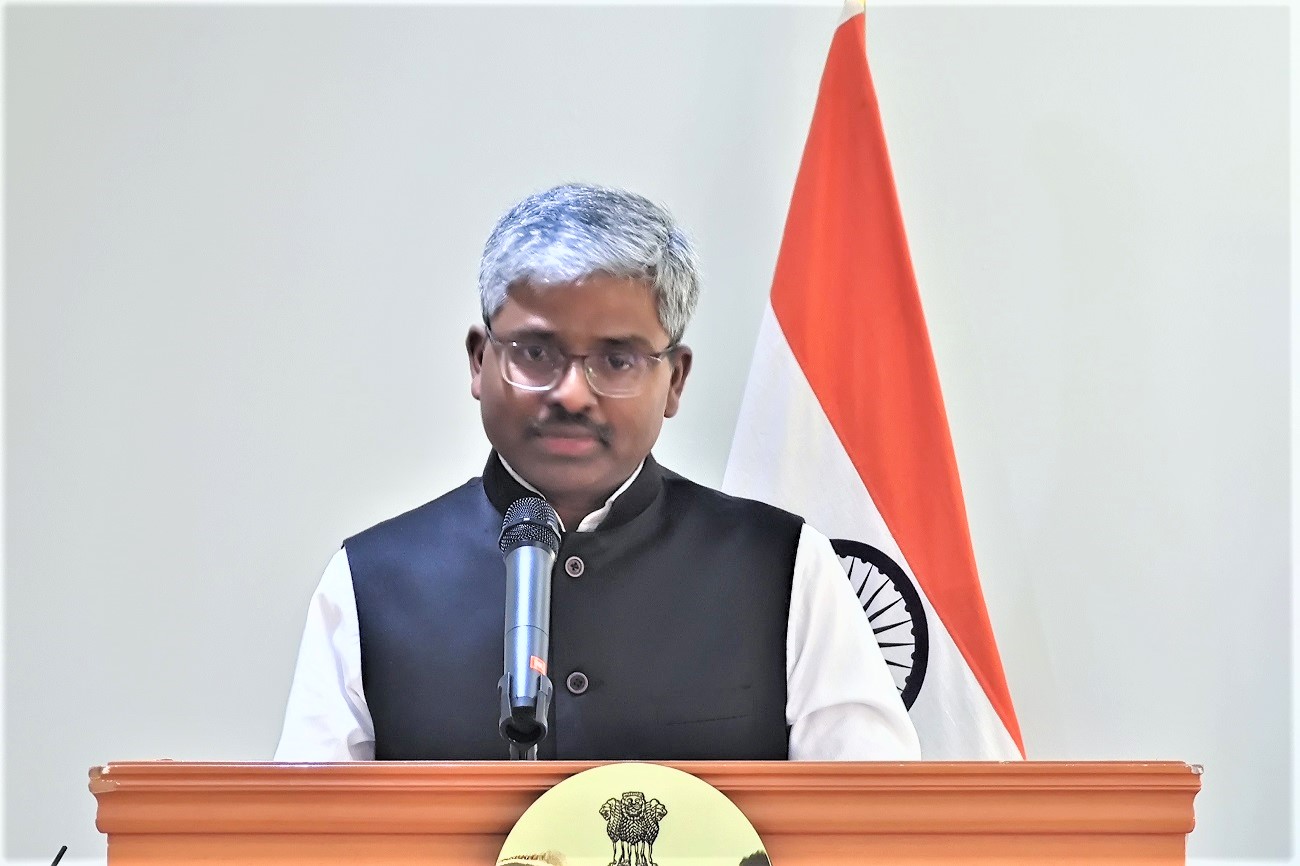
The Ambassador added warm words about Turkmenistan, noting that learning the language is the most reliable path to understanding the "soul" of its people. The diplomat emphasized the importance of language learning for developing economic and cultural cooperation between the countries.
The enthusiastic students, who received certificates and gifts that evening, became living proof that the "soft power" of culture knows no bounds.
Interesting fact: Hindi is closer to us than it seems. Many familiar words originate from it: pajamas, shampoo, bungalow, jungle, and even bandana.
The final chord was a gastronomic excursion. Guests appreciated the delights of vegetarian cuisine: amazing combinations of spicy sauces, vegetable ingredients, fruit accompaniments, and exquisite side dishes with traditional pastries.
It was a fascinating immersion: through hearing, into poetry and music; through seeing, into dance; and through taste, into India's centuries-old culinary traditions.
...When students in Ashgabat memorize lines of Hindi, they discover a vast world.
India and Turkmenistan are connected not only by economic projects but also by a sincere affection that resonates in every word spoken with an open heart in Hindi.
