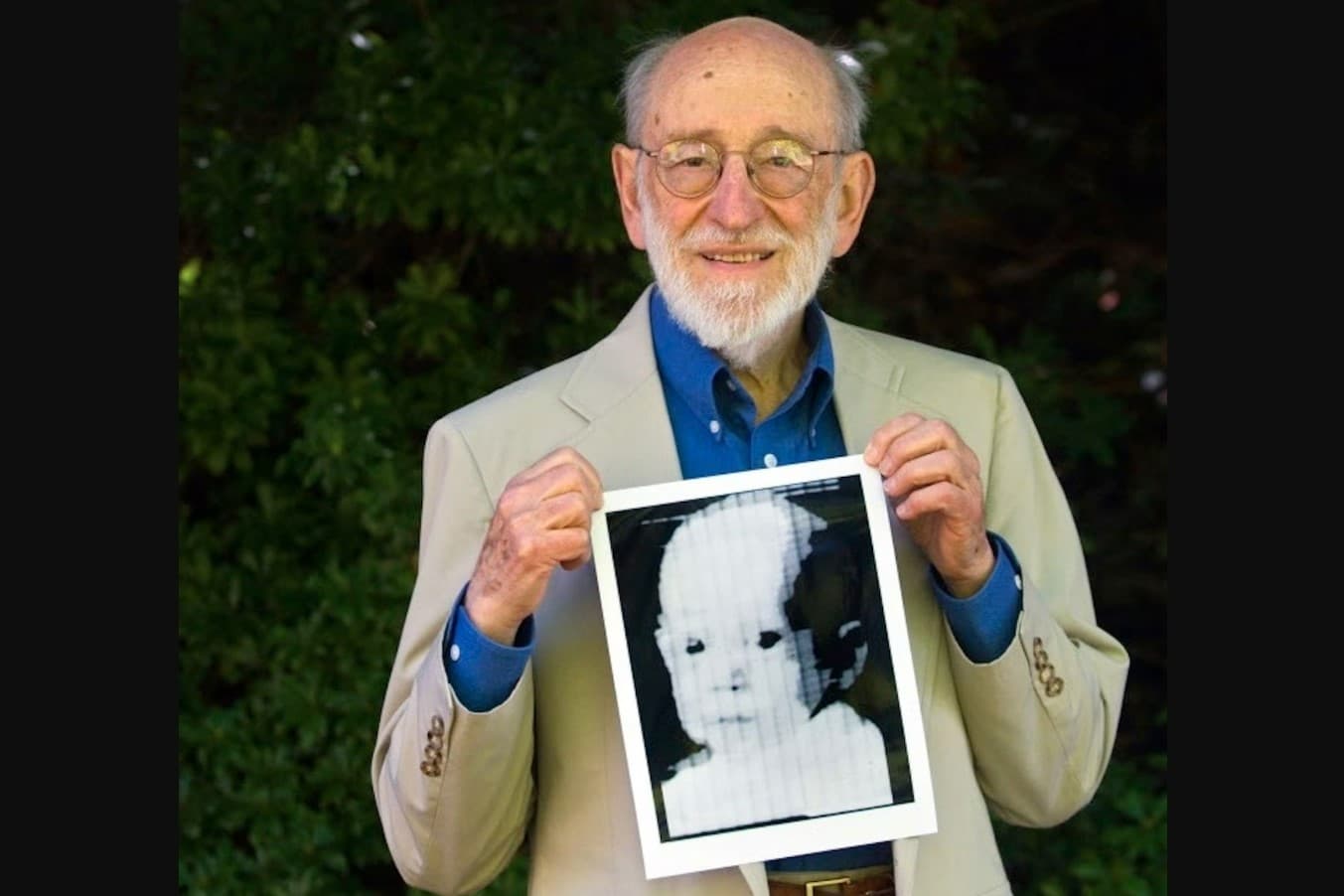
A PHOTOS IN HISTORY, December 29 | ORIENT. We've become accustomed to measuring our lives in megapixels. Every moment, endless streams of digital data are generated around the world, but once upon a time, this entire visual universe began with a single, tiny, grainy square measuring just 5 by 5 centimeters.
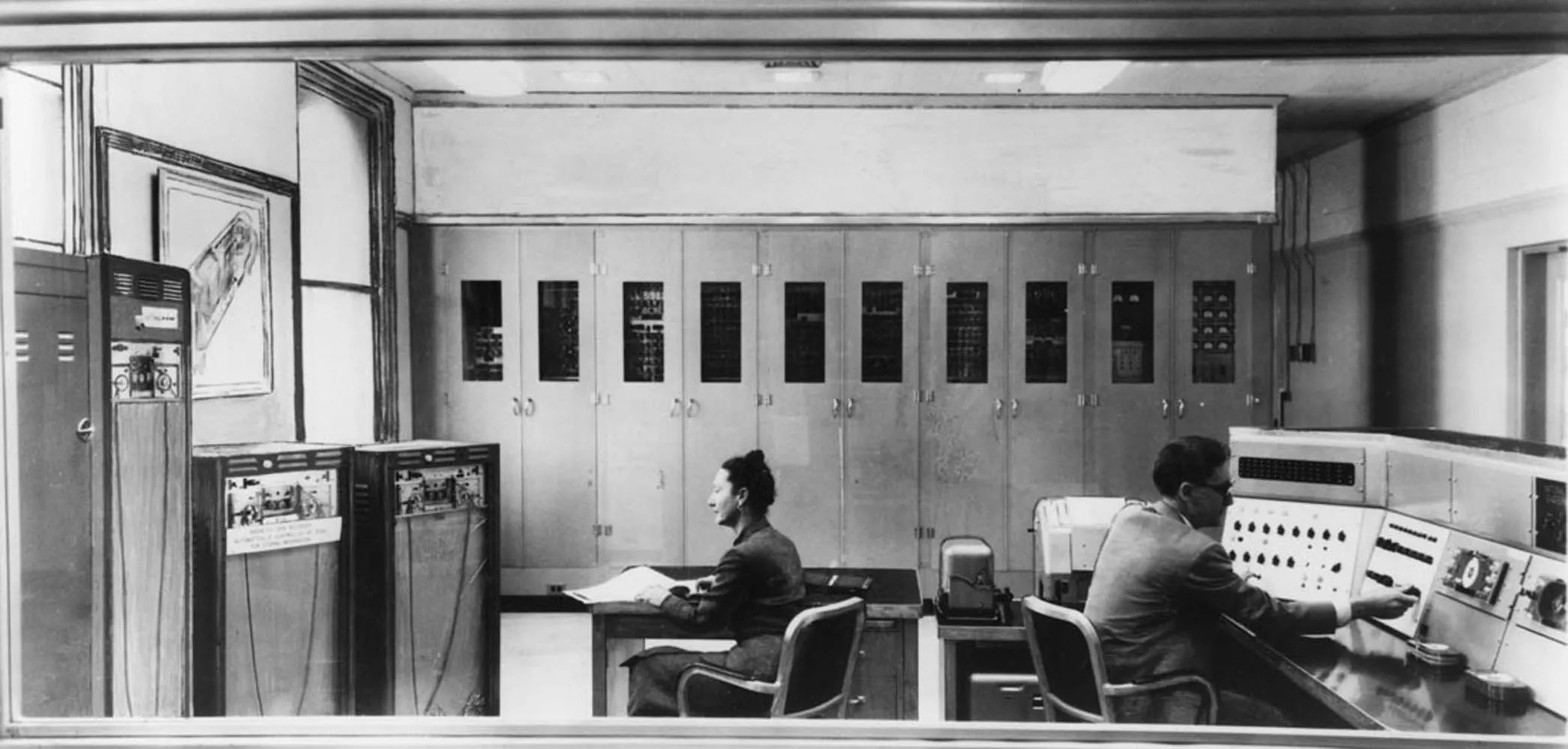
In 1957, decades before the first digital camera, American engineer Russell Kirsch achieved the impossible: he "taught" a machine to see. While working on SEAC, the world's first stored-program computer, which occupied an entire room at the National Bureau of Standards, Kirsch asked himself: could a computer perceive graphic information?
For his experiment, Russell chose neither a drawing nor text. He chose the most precious thing he owned—a black-and-white photograph of his three-month-old son, Walden.
Using the first scanner in history, the image was broken down into a grid of 176 by 176 dots. This was the first "pixel" (from "picture element"). The SEAC computer had so little memory that it could only "remember" black and white dots. But when the printer produced the result, a baby's face appeared on the paper. Little Walden Kirsch became the first person in history whose image was converted into mathematical code.
The Curse of the Square and the Gift of Immortality
Today, this photograph seems hopelessly outdated, but it was the "Big Bang" of the digital age. Russell Kirsch, without realizing it, changed the nature of human vision. If 19th-century photography was an "imprint of reality," then the digital photo of 1957 became its simulation.
We voluntarily agreed to fragment the world into squares. Over the years, these squares became smaller and smaller until they became invisible to the eye, transformed into perfect 4K displays and flawless AI generations. But the paradox is that in our pursuit of perfect clarity, we often lose the very "analog soul" that was in Kirsch's first, noisy and blurry scan.
A Digital Echo of Love
Looking at the grainy scan from 1957, we realize that Kirsch accomplished more than just a technical breakthrough—he achieved an existential revolution. Until that moment, the image was a single entity, an unbroken stream of light. Russell proved that any beauty, even the face of one's own child, can be transformed into a set of discrete data, into "yes" and "no," into zeros and ones.
Today, amid the rapid boom of artificial intelligence, old fears of a "machine uprising" have flared up with renewed vigor. But the story of the first pixel teaches us an important lesson. Decades before neural networks learned to draw worlds, the enormous and soulless SEAC computer stood in a cold room, remaining nothing more than a collection of transistors and wires. It became a "co-author" of history only when a person imbued it with meaning, choosing the most personal and precious image.
A machine, no matter how perfect—in 1957 or 2026—will never make a person talented. It has no will, love, or intuition. But a person can transform a machine into an instrument of art, imbuing it with their own spark.
Herein lies the greatest challenge of our era. We have learned to fragment reality into perfect particles in order to construct it anew, and we have learned to generate them using AI, but the paradox of the "first pixel" is that it reminds us of a boundary. Between the infinite number of dots on the screen, there always remains a void—the very space that only human meaning can fill.
Read also in the "A Snapshot in History" series:
15 Minutes of Eternity: How the World's First Selfie Changed the Way We View Ourselves – about how chemistry and Robert Cornelius's patience gave us the first self-portrait in 1839.
How a single horse's "flight" gave the world cinema and changed science – the story of Eadweard Muybridge, who, with the help of 24 cameras, proved the impossible and brought photographs to life.
The Day We Saw Our Home – a reflection on the famous "Earthrise" photograph, which forever changed humanity's environmental consciousness and showed our planet as a fragile oasis.