We are guided by what unites people




News
Articles
Media
Announcement
 Chinese New Year
Technology
About Us
Contacts
Chinese New Year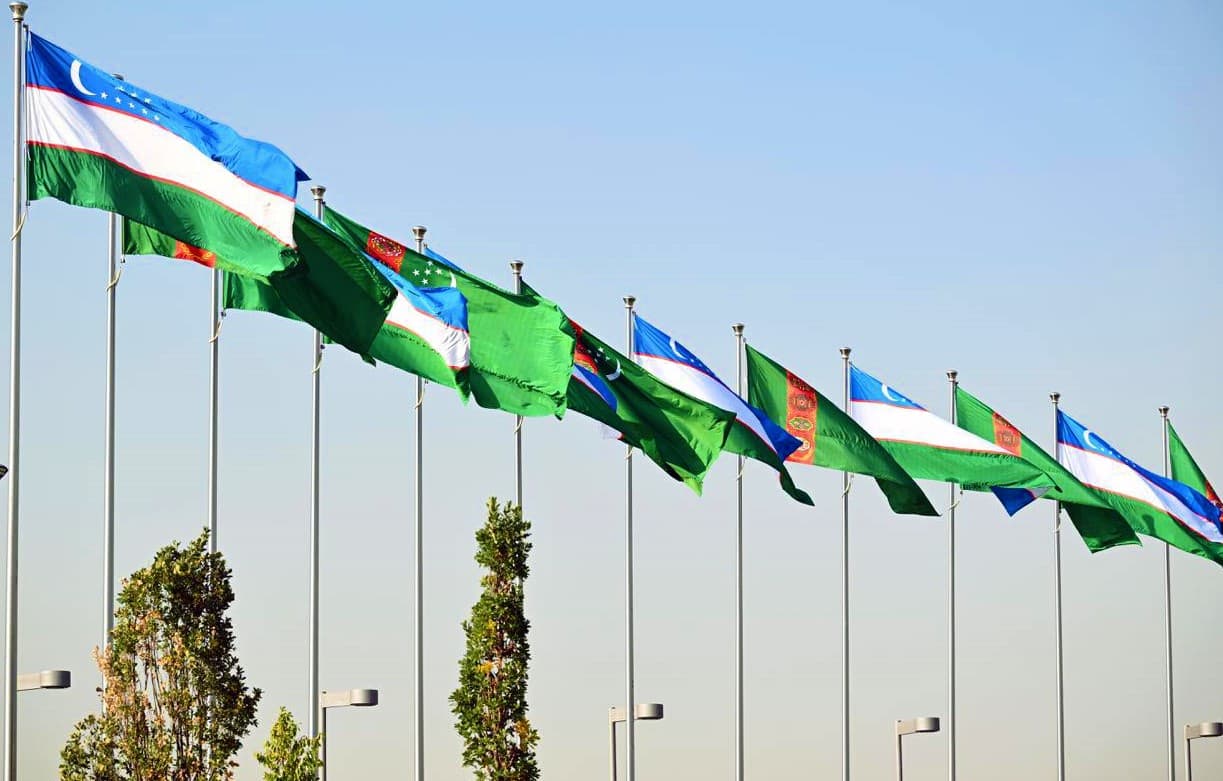
Economic cooperation between Tashkent and Ashgabat has entered a phase of mature and systemic partnership. In recent years, bilateral relations have moved away from a model of sporadic projects and political declarations, shifting their focus to genuine industrial cooperation, expanding trade, and predictable investment ties. This strategic course, defined by high-level contacts, is now reinforced by regular intergovernmental dialogue and specific infrastructure solutions.
The institutionalization of this cooperation was confirmed by the regular meeting of the Joint Intergovernmental Commission in July 2025, which solidified the course toward deepening cooperation in areas key to both economies.
The Foundation for Growth: Legal Framework
The established legal framework serves as the foundation for sustainable and predictable growth. Key intergovernmental agreements—"On the Main Directions of Long-Term Trade and Economic Cooperation," "On the Promotion and Mutual Protection of Investments," and "On the Avoidance of Double Taxation"—provide the regulatory framework.
This foundation guarantees transparency, predictability of economic policy, and, crucially, guarantees for entrepreneurs in both countries, stimulating the private sector to participate in joint projects.
The Scale of the Breakthrough: Trade Turnover Has Increased Fivefold
The effectiveness of this framework is clearly demonstrated by mutual trade indicators: Trade turnover between the countries has grown more than fivefold, from $209 million in 2016 to $1.148 billion in 2024.
Turkmenistan's exports (fuel, lubricants, and chemicals) dominate the trade structure, while imports from Uzbekistan increased by 23.7% from January to October 2025, demonstrating the Turkmen market's growing interest in Uzbek finished goods. The trade structure is gradually becoming more complex, including growing volumes of services, mechanical engineering, and finished industrial goods, indicating a deepening of industrial ties.
Growth Points: Shavat-Dashoguz Zone and Logistics
The launch of the Shavat-Dashoguz Border Trade Zone has been a true breakthrough, giving cooperation a qualitatively new impetus. This platform reduces transaction costs for businesses, expedites deliveries, and facilitates entry into new markets; it transforms the border region into a hub of business activity, combining trade, logistics, and manufacturing.
At the same time, transport connectivity plays a significant role. In 2024, the total volume of freight traffic reached 1.11 million tons, with transit volume increasing by almost 40%. Projects such as the repair of Turkmen railcars at the Andijan Mechanical Plant confirm that industrial and transport cooperation has become an independent and mutually beneficial area.
Investment cooperation is also developing steadily: today, 200 enterprises with Turkmen capital operate in Uzbekistan in various sectors, from textiles and furniture to petroleum refining.
Prospects: Industrial Cluster and Agro-Industrial Complex
The current cooperative economy is creating a solid foundation for a future focused on large-scale integration. Promising areas:
Industrial Cooperation: Deepening ties in the chemical, textile, and food industries.
Logistics: Transforming the Shavat-Dashoguz zone into an industrial and logistics hub.
Agricultural and Resources: Expanding projects in the agro-industrial complex and water conservation.
Capital Attraction: Creating new investment mechanisms and stimulating private sector participation.
The partnership between Uzbekistan and Turkmenistan is forming a sustainable regional model that not only strengthens the economic security of the two countries but also enhances their role in regional trade and transit chains.
Prepared based on materials provided by the Embassy of Uzbekistan in Turkmenistan