||




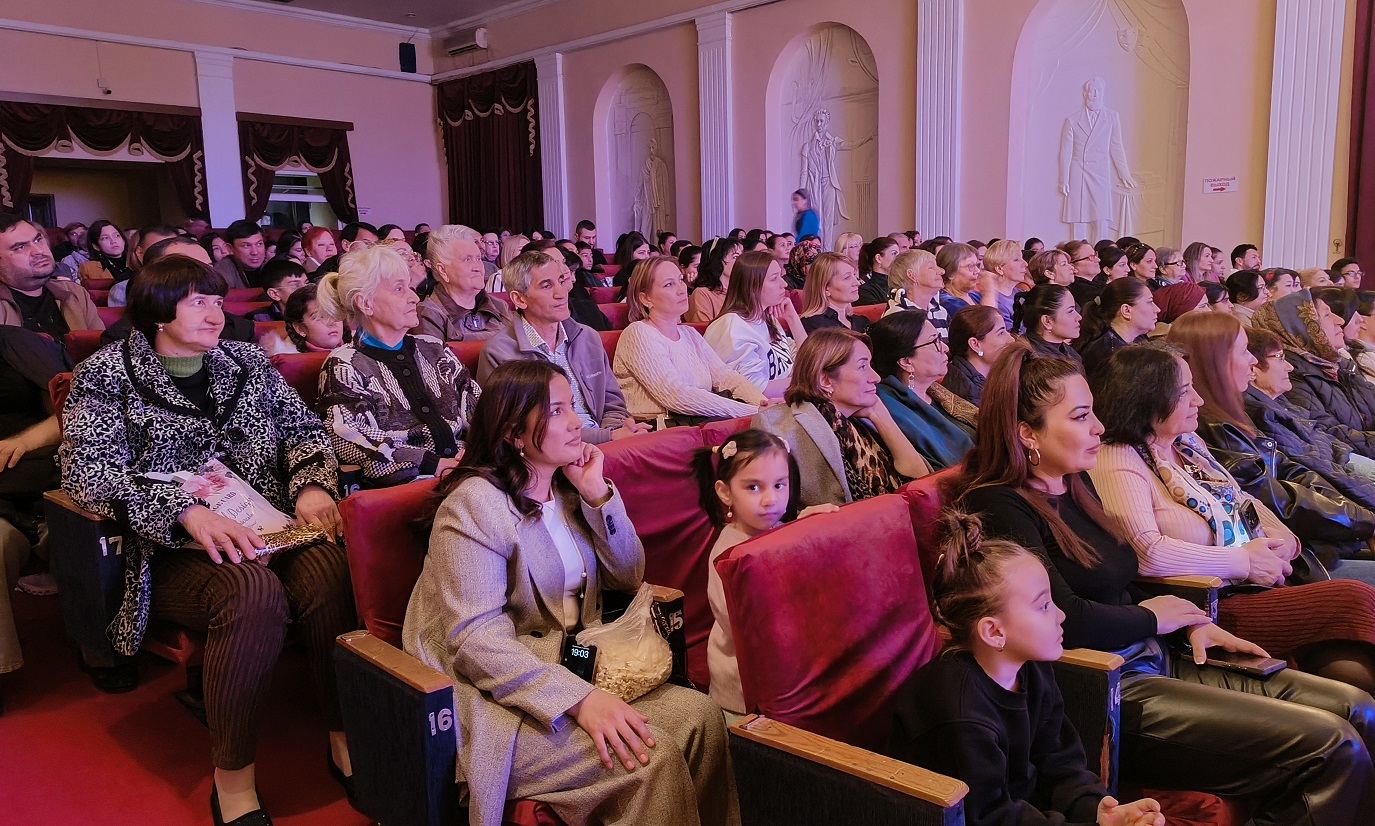
Ashgabat residents who visited the A.S. Pushkin Russian Drama Theater on Sunday evening once again thoroughly enjoyed the hilarious play "Arshin Mal Alan," which can be described as a "situational comedy."
This type of comedy is based on the unexpected, funny, and sometimes bizarre situations the characters find themselves in, as well as their simple-minded plots, which invariably bring a good laugh to the audience.
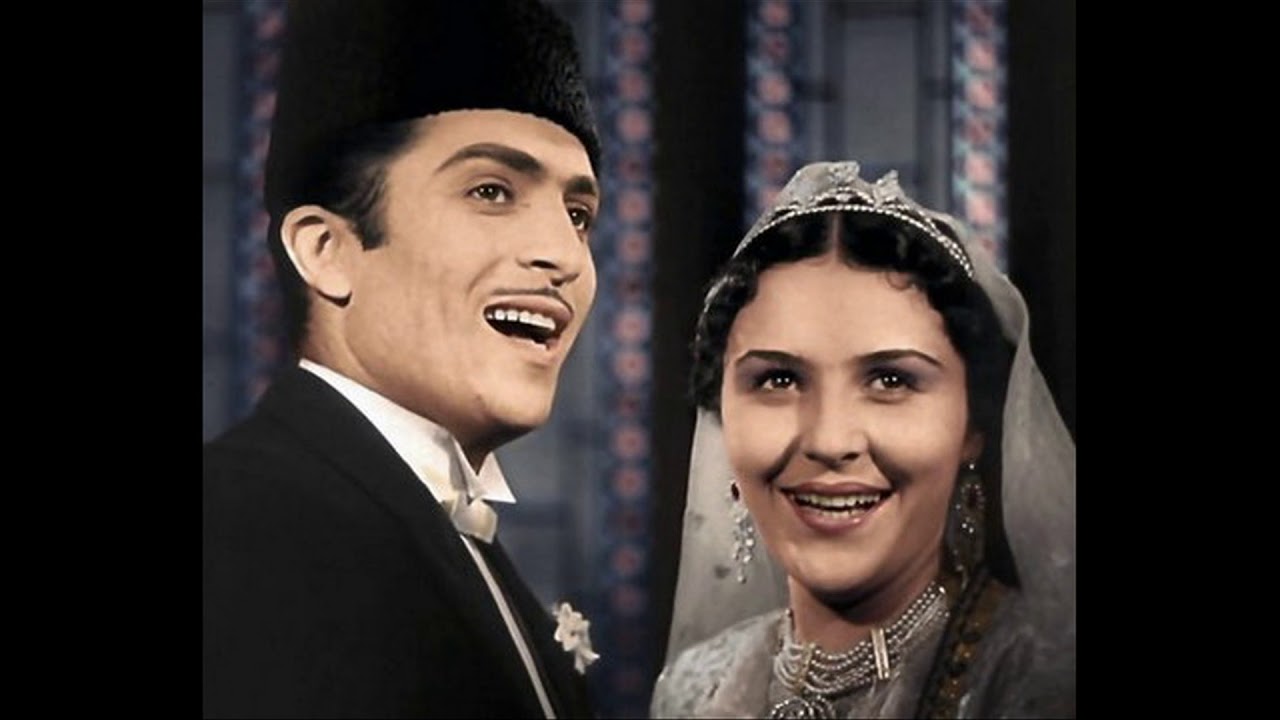
But the operetta, like its film version, "Arshin Mal Alan," goes beyond the comical adventures of its characters. Thanks to the outstanding talent of composer Uzeyir Hajibeyli (also known as Uzeyir Hajibeyov), these works have gifted audiences for several generations over a century with a unique musical cocktail, blending European classical and national traditions.
And the sweet oriental highlight of this symphony of enchanting sounds is the inimitable singing style, characteristic of the vocal art of the Azerbaijani people.
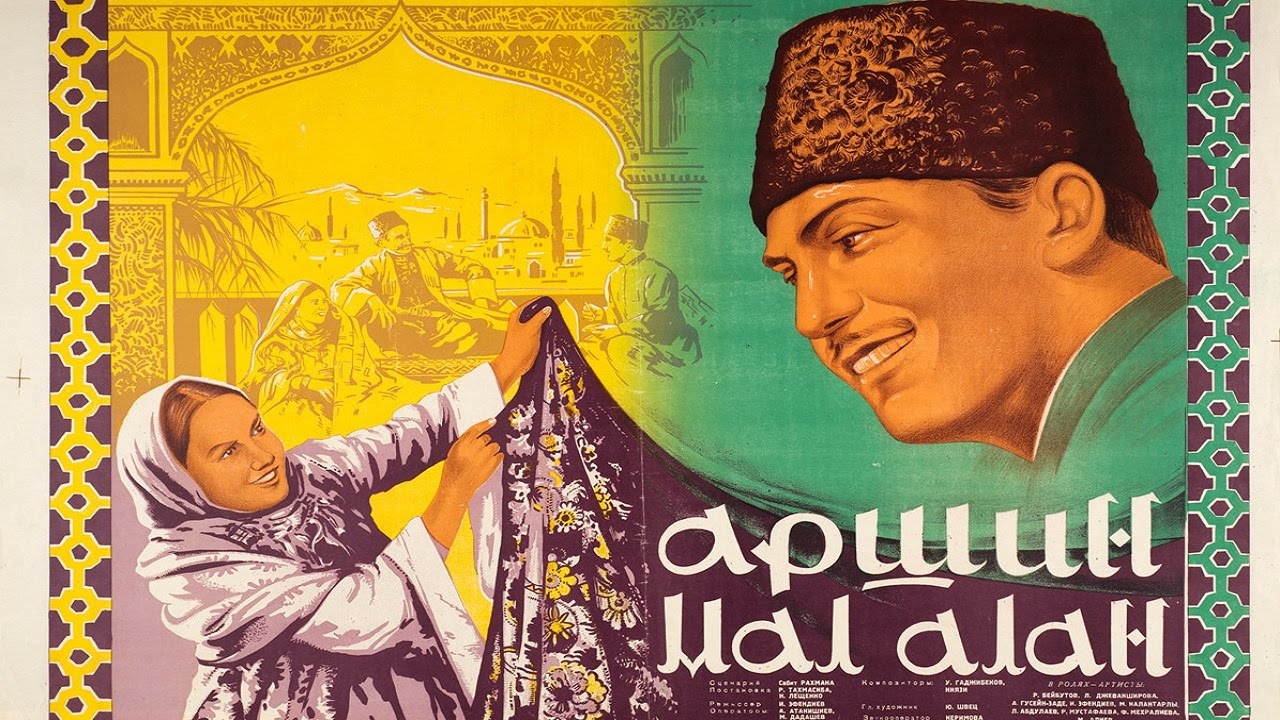
...We remember this film from childhood. Back then, I didn't quite understand the title of the musical, which I perceived as a single word, like a tongue twister – "arshinmalalan." Only later did I learn that "Arshin Mal Alan" means "Buyer of goods measured in arshins" (an arshin is an ancient unit of measurement, just over 70 centimeters).
In simple terms, "arshin mal alan" simply means "petty trader." That's the nickname given to the play's hero, Asker. Although in reality, despite his youth, he was quite a successful merchant. He donned the garb of a modest middleman in order to... But more on that later—first, let's talk about this remarkable play.
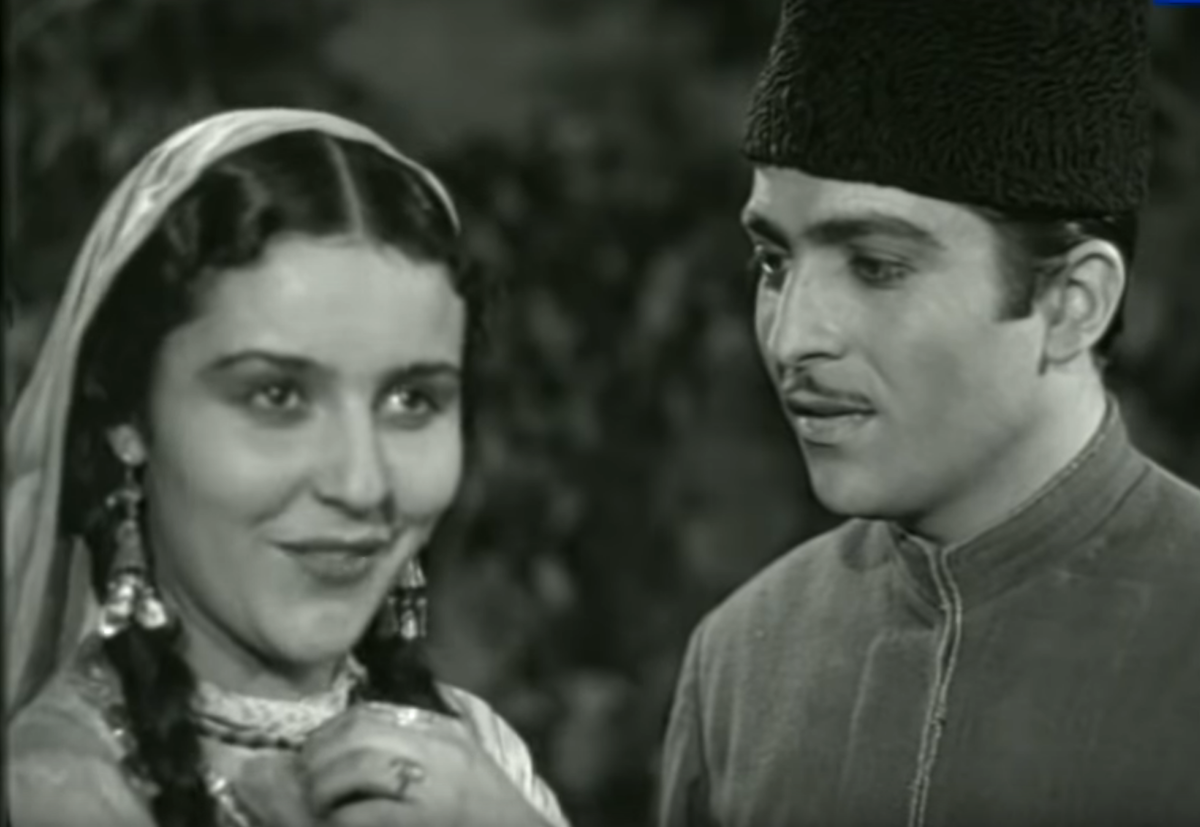
"Arshin Mal Alan" is a story about love—mutual, pure, sincere... in short, true.
The play's hero, Asker, a man of progressive views for his time (the play was written in 1913), dreamed of starting a family based on mutual love and the dictates of his heart, contrary to the traditions of the Muslim East, where in many cases the groom would see his bride's face for the first time... at the wedding.
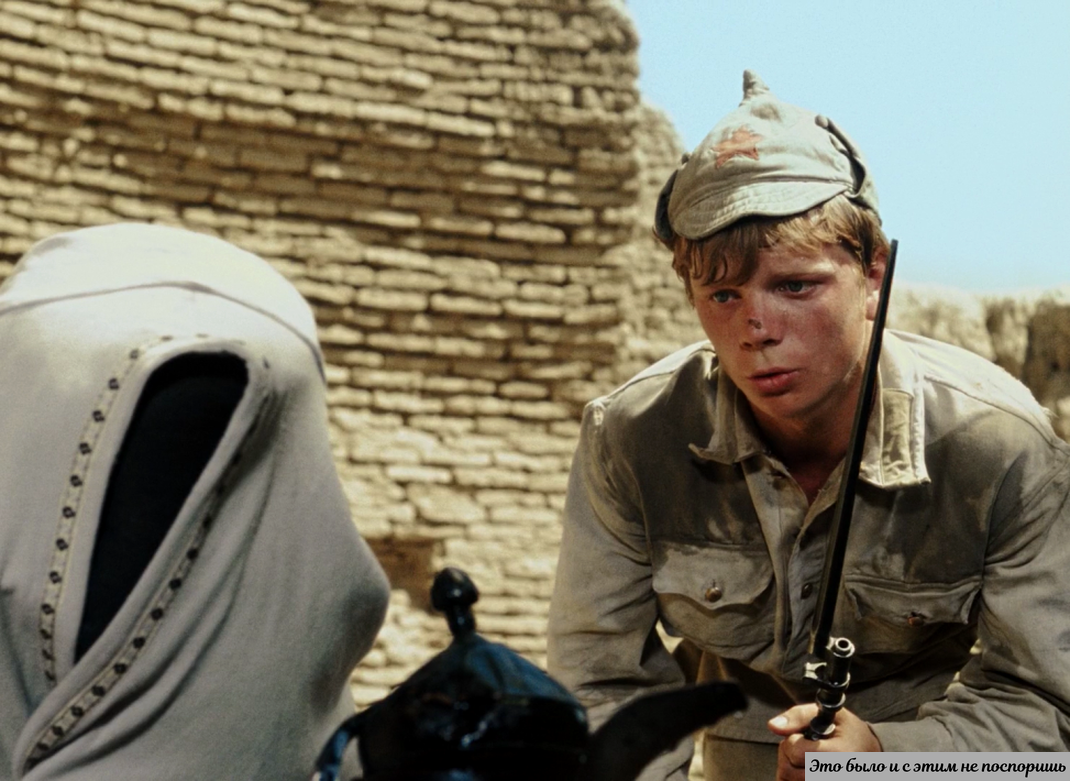
These traditions are confirmed by Petrukha's words from the legendary film "White Sun of the Desert." This young Red Army soldier claimed he wanted to marry Gulchatay for real. But here's the problem: his beloved never appeared in public without a chador. For this reason, Petrukha never saw her face. Before tying the knot with his beloved, he carefully inquired:
"I just want to see her face," he said. "Otherwise, what if it's a crocodile, and then I'll languish for the rest of my life."
The theme of love based on consent, rather than on dogmas that always hinder the happiness of young people, is explored in another legendary film, "Don't Be Afraid, I'm With You!"
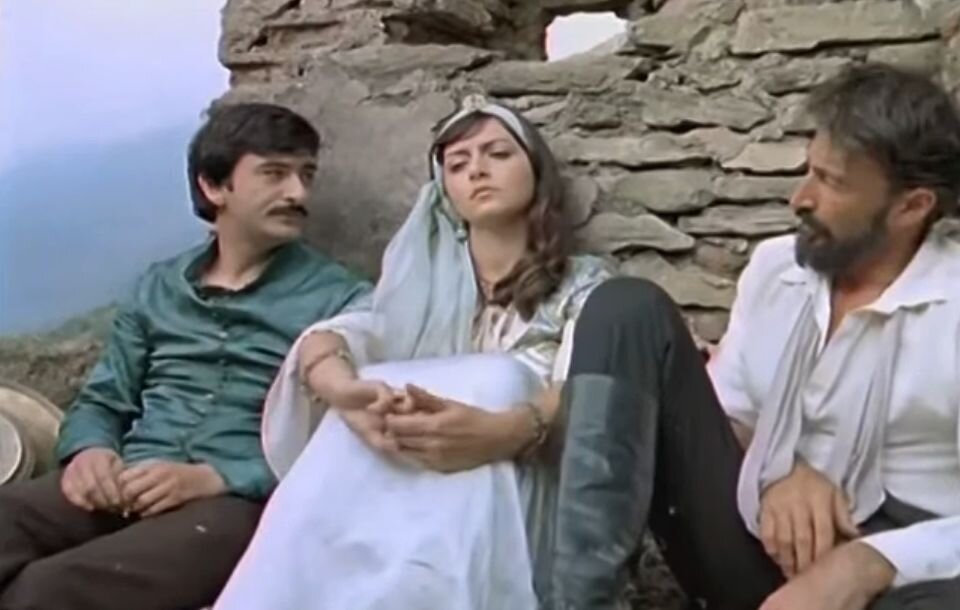
There, the irrevocably enamored man was played by the renowned Polad Bulbul oglu, who won national adoration, culminating in his being awarded the title of People's Artist in two countries – Azerbaijan and Turkmenistan.
But let's return to "Arshin Mal Alan." Asker, who vainly dreamed of marrying solely for love, shares his problems with his best friend, Suleiman. Suleiman, trying to help Asker, suggests a cunning plan, typical of picaresque novels: disguise yourself as a traveling fabric merchant (become "arshin mal alan").
After all, only he has the unspoken privilege of visiting women's homes so they can choose the right piece of cloth themselves. According to Suleiman's ploy, the girls will choose their scarves, fabrics, and other rags, while you choose your bride!
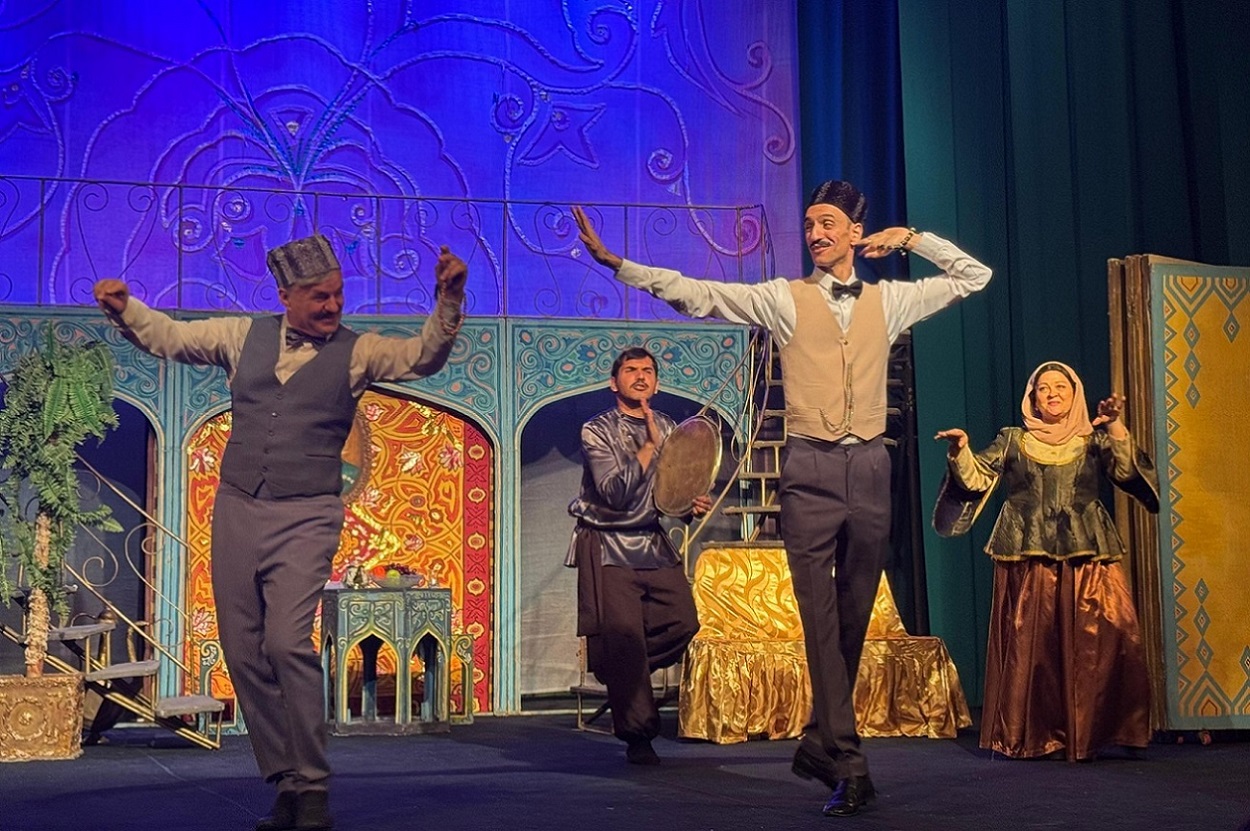
Delighted by the opening up possibilities, Asker immediately "transforms" himself from a wealthy merchant into a small trader in the name of true love.
And here it was, that sweet moment of luck! In one of the houses, Asker caught a glimpse of what seemed to him to be a true angel in the flesh! It was Gulchohra – the meek, well-behaved, and radiantly kind daughter of Sultanbek. Although Sultanbek was impoverished, he was still a bek – as those with noble titles were called in the East.
During a presentation (as they say today) of his wares, a traveling fabric merchant, bewitched, stared at Gulchohra. And she, the modest one, caught Asker's enchanted gaze. An invisible connection instantly formed between them. Thus, Love, like lightning, struck two hearts!
This is a popular moment in many Eastern love legends.
A plot typical of a romantic fairy tale! – some would say.
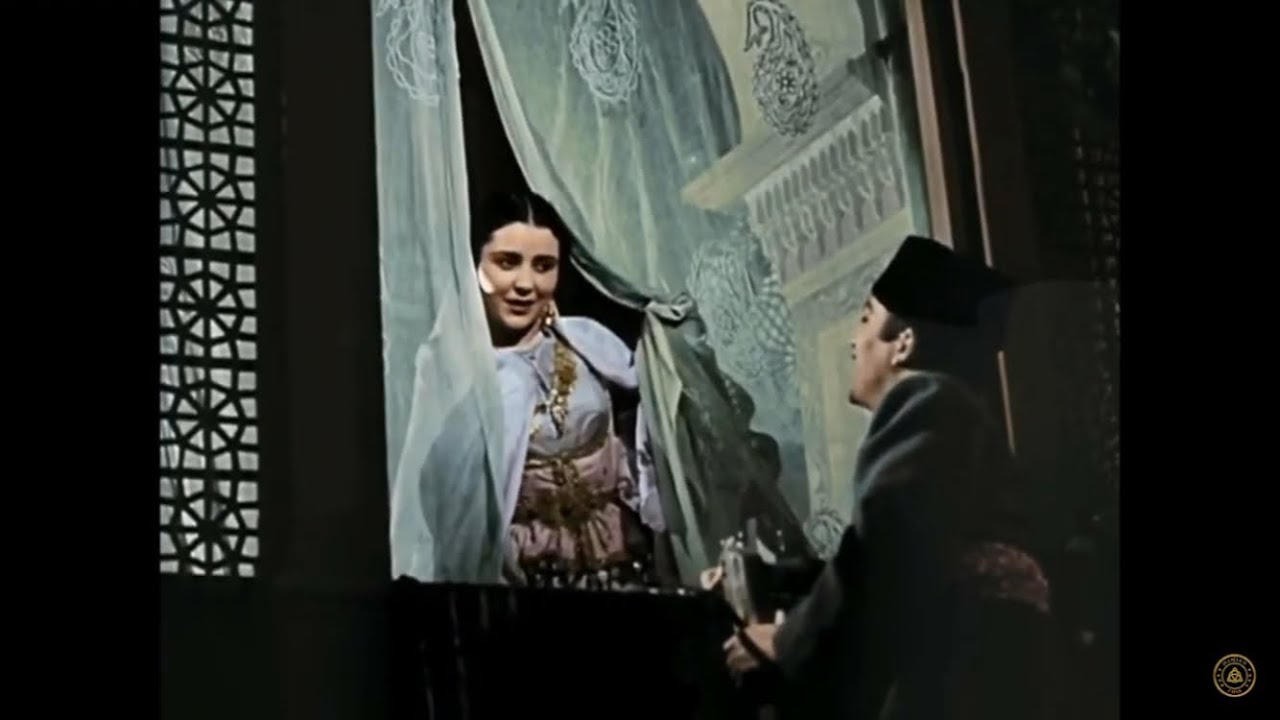
Perhaps! But only someone who has been completely enchanted by the magic of such enchantment can understand and feel it. In the East, where legends abound with tales of happy and unhappy love, there's even a special word for someone "who has lost his mind because of love."
Asker, upon seeing Gulchokhra, was literally speechless, yet at the same time overjoyed. And then, no longer a small trader, but a wealthy merchant, Asker asks Sultanbek for his consent to marry his daughter.
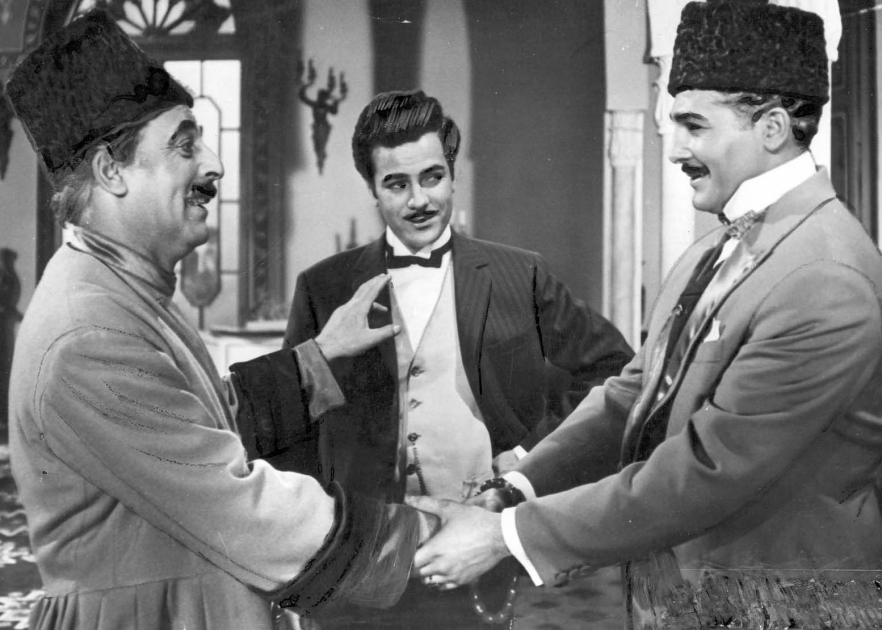
The calculating father gives the go-ahead with undisguised pleasure. How could it be otherwise? In Sultanbek's eyes, Asker is a suitable suitor, wealthy, one might even say, cultured...
It would seem that this is it – a Happy End! A happy ending that crowns it all.
But no! According to the laws of situational comedy, everything is just beginning...
When Sultanbek informs his daughter of his decision to marry her off to the wealthy merchant Asker, the saddened Gulchokhra categorically denies this possibility. After all, she fell in love with the humble merchant Asker, not the jaded moneybags Asker.
What an oddity! She, poor thing, had no idea that the small trader and the wealthy merchant were one and the same!
Gulchokhra resolves to defend her choice to the last, in favor of true love rather than a gilded cage. ...It seems the musical comedy is beginning to degenerate into a disastrous tragedy.
The situation was exacerbated by secret intrigues! Behind the scenes of the nascent drama, Suleiman, Asker's best friend, announced that he had unexpectedly fallen in love with the niece of Sultanbek himself – Gulchohra's father!
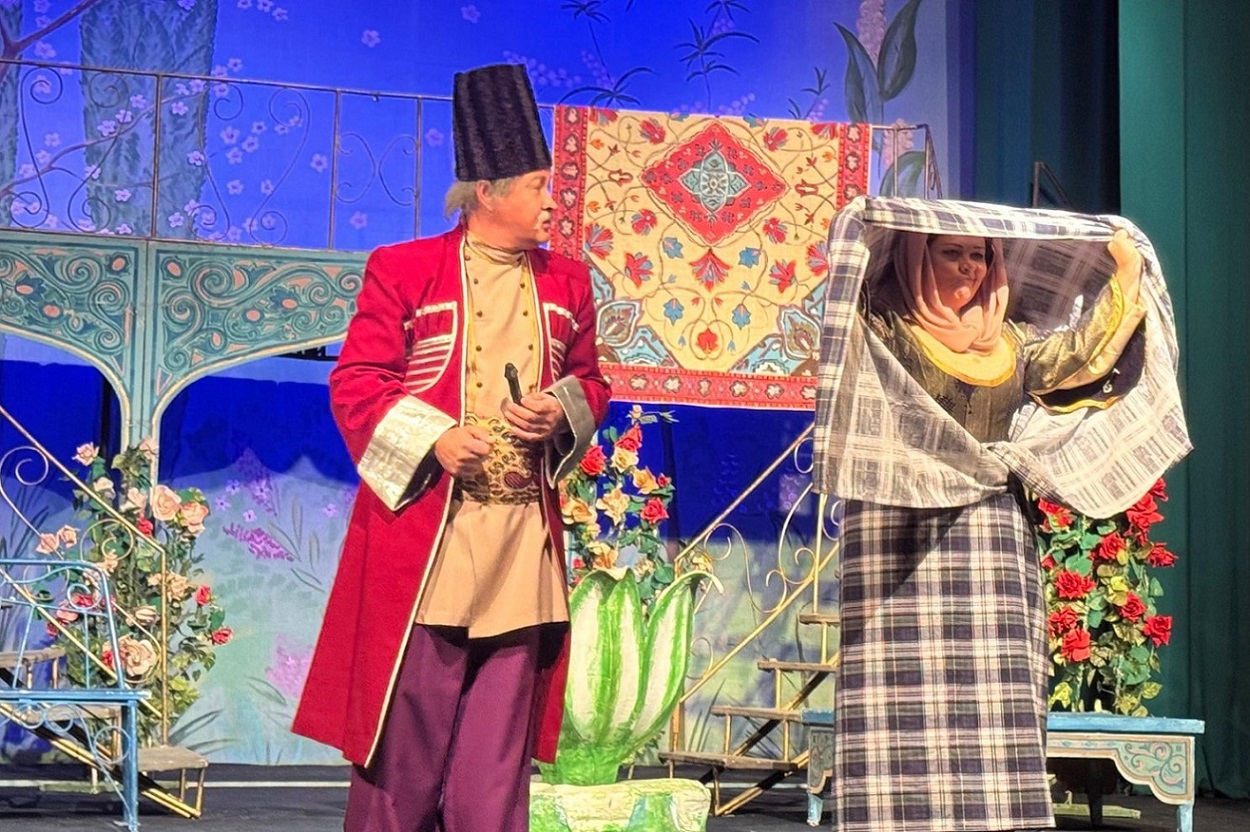
And he, too, a handsome man (with a gray beard and a devil in his ribs), had decided to marry Jahan Khanum – that is, the aunt of his future son-in-law, Asker, who is a small trader and also a wealthy merchant!
Yes... Everything was mixed up in Sultanbek's house. And this confusion continued until Gulchohra realized that her beloved small trader and the hated wealthy merchant were one and the same, Asker. (It seems the audience, like the characters in the play, was confused by the intricacies.)

It seemed like that was it. Finally, everyone had figured it all out! We had to get ready for the wedding. And not just one big celebration, but three! After all, we already had three brides and three grooms!
But then came another snag! It turned out that the rogue Veli (Asker's servant) and Telli (Gulchokhra's maid) had been secret messengers for the amorous masters for some time, while behind their backs, the servants themselves were plotting love affairs, singing amorous songs in dialogue format:
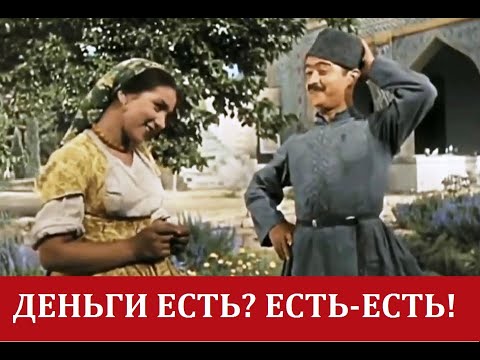
– Do you have money? (Telli asks in a singsong voice)
– What? What? (Velly asks in a singsong voice)
– Do you have money? (Telli sings in the same key)
– Yes, yes! (Velly lies confidently)
– Do you have a lot of it?
– Enough for both of us!
– If you have money, then I'll go out!
– Oh, my little goat!
And now, it seems, the tragedy that never happened is beginning to transform into a funny vaudeville.
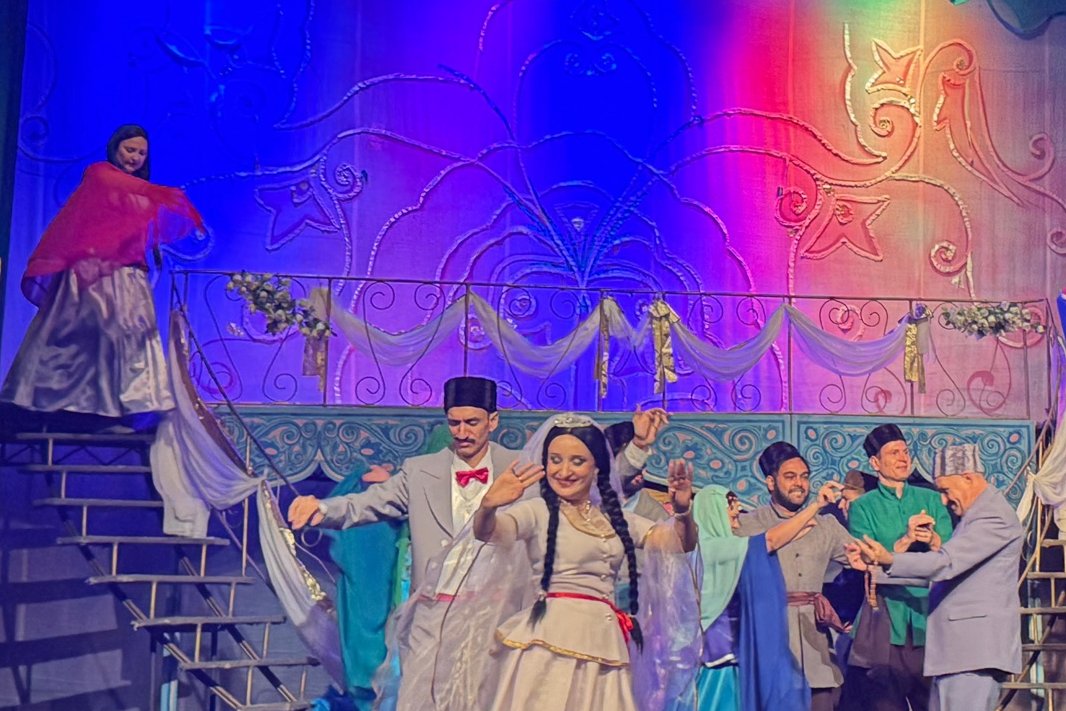
Well, thank God! Three weddings... Oh no! Four weddings in one day—what better way to replace the chaos we, the audience, had to endure!
Everyone is happy—all four grooms and the same number of brides. Regardless of rank, both the servants and their masters have found what might seem like small, but in reality, truly great happiness.
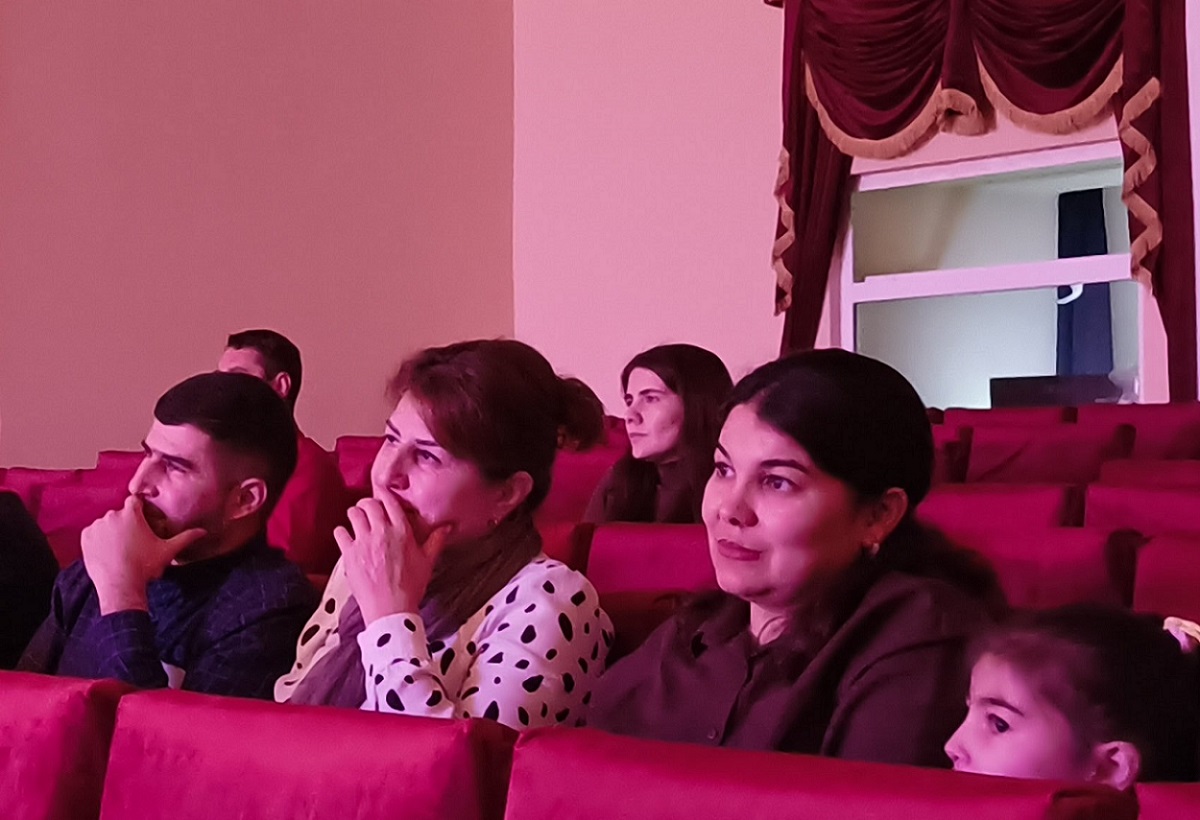
And not only them. Kind smiles on the faces of those who visited the Pushkin Theater in Ashgabat on Sunday evening and, contrary to the familiar plot, sincerely sympathized with and rejoiced for the play's characters.

That's all... Well, no!
Thanks to everyone: those who played and those who listened.
But special thanks to maestro Uzeyir Hajibeyli. For being with us this evening and for always and everywhere continuing to do so! After all, he's been doing so for over a century. His operetta "Arshin Mal Alan" has been translated into 80 languages and performed in 187 theaters in 76 countries.
In 2013, UNESCO celebrated the operetta's 100th anniversary. Its film version, released in 1945 in black and white, was digitized and colorized using modern technology with the support of the Heydar Aliyev Foundation.
UNESCO recognized "Arshin Mal Alan" as one of the most popular musical works in the world, as well as the first operetta in the Muslim East... Now that's definitely it!
Enejan KEPBANOVA
