||




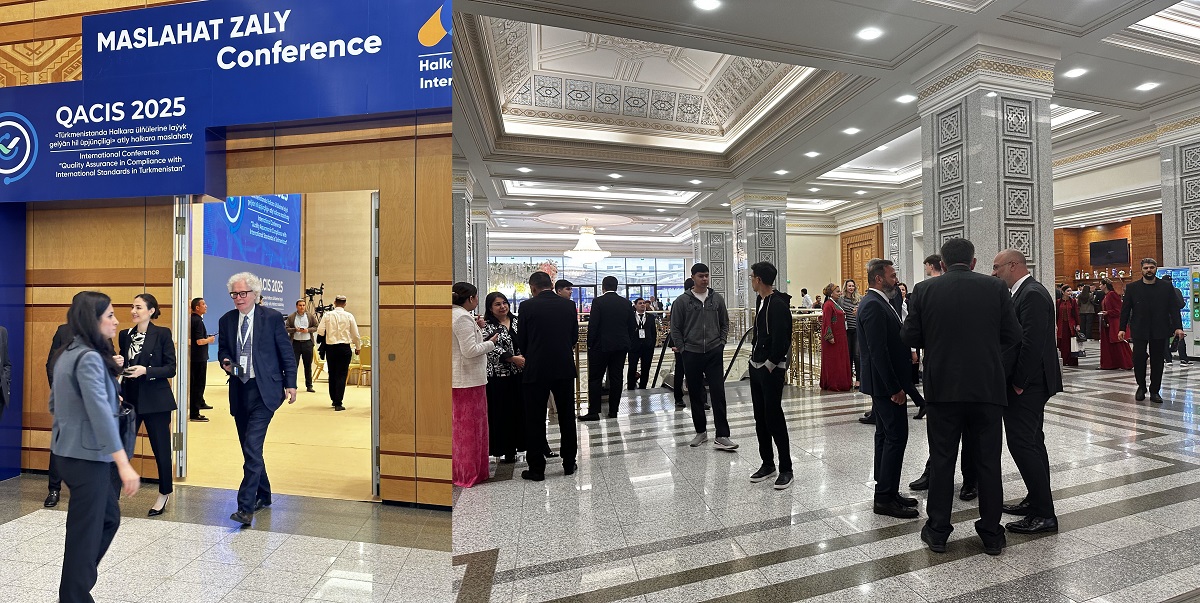
After a rich plenary session that set the high tone for the International Conference “Quality Assurance in Accordance with International Standards in Turkmenistan” (QACIS-2025), the work continued in the format of two panel discussions. Participants – high-ranking officials, international experts, representatives of businesses and organizations – delved into specific mechanisms and challenges associated with the implementation of international standards to stimulate trade and attract investment in Turkmenistan.
The plenary session, with the participation of such authoritative figures as Deputy Chairman of the Cabinet of Ministers of Turkmenistan Nokerguly Atagulyev, President of The Stirling Foundation Miles Hansen, Head of the EBRD Resident Office in Turkmenistan Eric Livny, Accreditation Expert Salih Ayvaz from the USA and First Deputy CEO of QazTrade Nurlan Kulbatyrov, emphasized the strategic importance of standardization and integration for the economic development of the country.
Conference participants then gathered for a more substantive discussion at a panel discussion on the role of international standards in stimulating trade and attracting investment.
Turkmenistan on the Path to the WTO and the Creative Economy
This session brought together experts to discuss a wide range of issues, from e-commerce to investments in free economic zones and the development of the "creative economy". Speakers included national officials, international practitioners and representatives of the diplomatic corps.
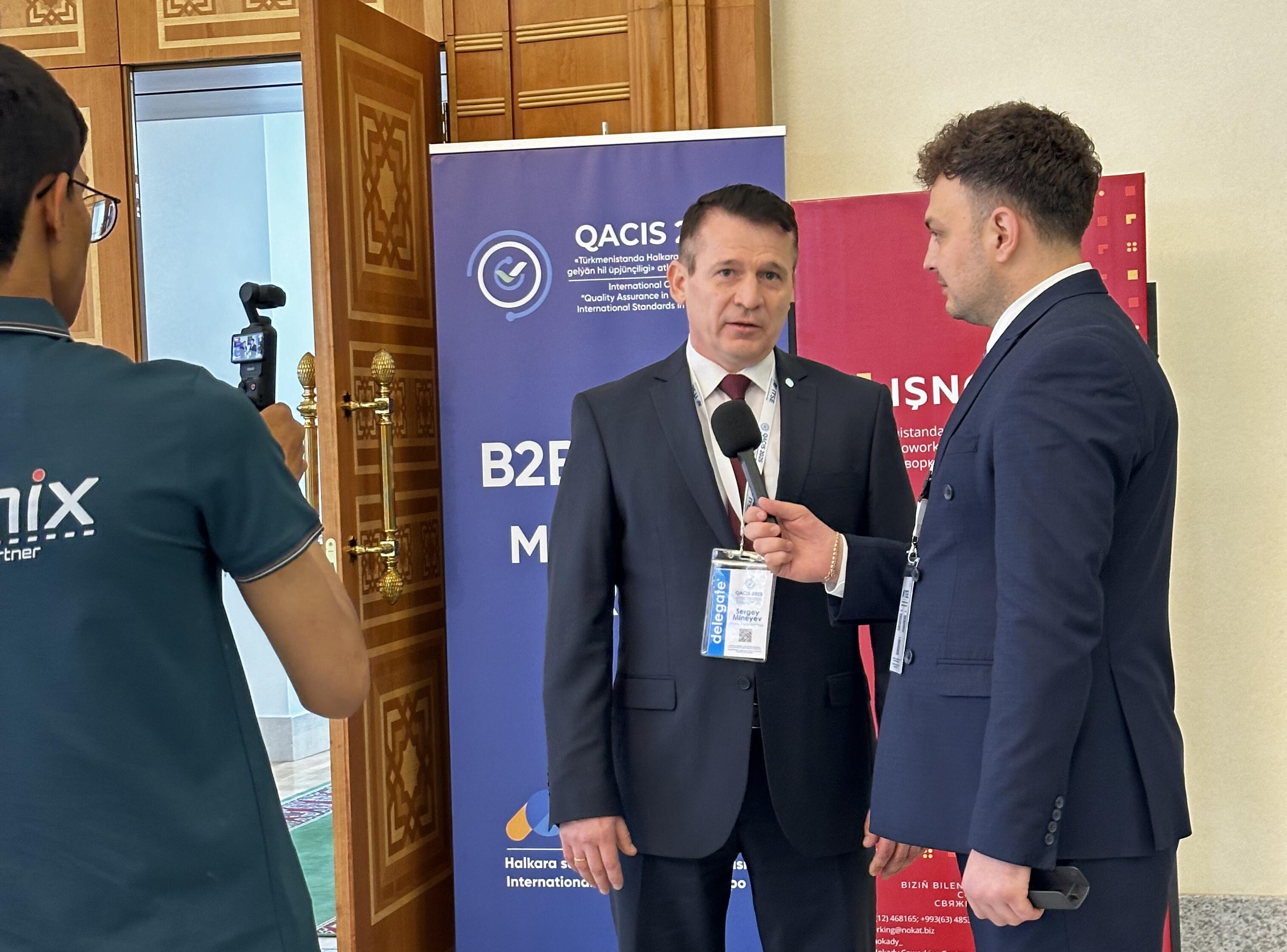
One of the key speeches in this discussion was the report of Deputy Minister of Finance and Economy of Turkmenistan Perhat Yagshiyev. He spoke in detail about the central role of quality assurance and compliance with high standards in the country's trade and investment policy.
Perhat Yagshiyev noted the relevance of the topic in the context of the revision of global trade flows. He directly linked the increase in the competitiveness of domestic goods and services with the improvement of their quality and compliance with international standards, including WTO rules.
The Deputy Minister spoke in detail about Turkmenistan's planned path to full membership in the WTO, starting with observer status in 2020 and receiving the status of "acceding country" in 2022. This status, according to him, was "an important and symbolic step that marked the beginning of our systemic path."
He highlighted the work on adapting national legislation and trade procedures to WTO requirements, including the preparation of a key document - the Memorandum on the Foreign Trade Regime for the Period 2022-2024, which involved all relevant ministries and departments under the coordination of a special interdepartmental commission. The Ministry of Finance and Economy is actively cooperating with the WTO Secretariat on these issues.
Perkhat Yagshiyev also highly appreciated the support of international partners such as the World Bank, UNDP, UNECE, and particularly focused on cooperation with UNCTAD. He mentioned the signing of Memorandums of Understanding: in 2017 in priority areas (investments, customs/logistics modernization, WTO) and in 2020 in support of the Single Window for Export-Import Operations project, which became the basis for the digitalization of trade relations.
Other important topics covered at the panel included the prospects for electronic exports, standards for free economic zones, practical tools for business, and the importance of certification in developing the "creative economy", as discussed by Martin Smith, an expert from Goldsmiths, University of London. The discussion was also attended by the EU Ambassador to Turkmenistan Beata Peksa, eBay expert and founder of e-traid Fabian Stahelin (Switzerland), and the head of the regional office of the World Free Zones Organization Erbol Bukharbayev (Kazakhstan). Jim Krigbaum (USA), head of 20/20 DC Export Services, joined the platform remotely.
Agriculture – certification as a condition for export
The next session focused on the implementation of standards in one of the key sectors of the economy of Turkmenistan – agriculture. The moderator was the expert on GlobalG.A.P. standards Edite Strazdina.
The focus was on the relevance of Global G.A.P. standards for Turkmenistan and Central Asia, various types of organic certification, environmental and social aspects of agricultural production, experience in implementing ESG principles, as well as compliance with market requirements in Europe and the Middle East.
The discussion was attended by the Minister of Agriculture of Turkmenistan Charyyar Chetiev, international experts in the field of quality standards and organic agriculture from Latvia, Kyrgyzstan, Uzbekistan and Egypt, as well as a representative of the successful Turkmen company OJSC "Miwe", who shared national practical experience in implementing Global G.A.P. standards.
This session demonstrated how the general principles of standardization and certification find their specific application in a particular industry, helping local producers improve quality, meet international requirements and enter export markets.
The working atmosphere of the conference after the plenary session was characterized by a high interest of the participants in obtaining specific information and exchanging experience. Thematic sessions allowed for a more in-depth study of both general issues of international integration and standardization, as well as specific industry aspects, confirming Turkmenistan's desire to actively develop its foreign economic activity based on the best world practices.
ORIENT
