We are guided by what unites people




News
Articles
Media
Announcement
 Chinese New Year
Technology
About Us
Contacts
Chinese New Year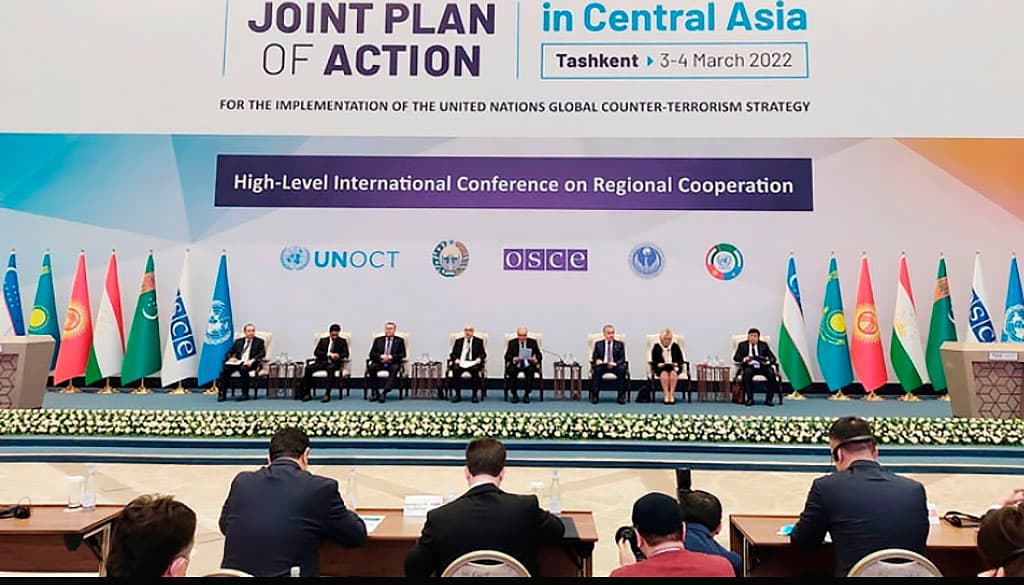
“It was not by chance that Central Asia became the first region of the world in which a comprehensive and integrated implementation of the UN Global Counter-Terrorism Strategy began on a systematic basis,” said the head of the delegation of Turkmenistan, Deputy Foreign Minister Vepa Khadzhiev, speaking at the High-Level International Conference dedicated to the 10th anniversary of implementation of the UN Global Counter-Terrorism Strategy in Central Asia.
The strategic importance of the region for the stable development of the continent and the world as a whole, the high degree of responsibility of national governments led to the adoption in the capital of Turkmenistan on November 30, 2011 of the Joint Action Plan to counter terrorism in Central Asia and the Ashgabat Declaration.
The past 10 years of practical implementation of these documents show the effectiveness of a multi-level approach to the implementation of key areas of the UN Global Counter-Terrorism Strategy on the regional and sub-regional tracks, and serve as an effective model for application in other regions of the planet.

Following this practice, regional strategic documents on combating terrorism were adopted in South, Central and North Africa and the Middle East.
The current conference, held in Tashkent on March 3-4, continues the processes laid down in Ashgabat, and with the adoption of an updated Joint Plan of Action to Combat Terrorism, the second decade of coordinated work in the counter-terrorism direction begins.

In this context, Khadzhiev drew the attention of the forum participants to two important issues that are especially important not to lose sight of.
The first is real work “on the ground”, that is, the expansion of project activities, in particular human and material and technical potential, the development of a network of experts from the countries of the region and international organizations, as a result, an increase in funding and expert support.

The second issue is the creation of regional institutions for building structural and effective interorganizational interaction.
“The implementation of Turkmenistan’s proposal to establish a Program Office of the UN Counter-Terrorism Office in Central Asia will make it possible to better and more effectively reorient programs to the needs of the states of the region and local conditions, to increase the level of interaction with national authorities and civil society,” said Vepa Khadzhiev.

According to him, work is currently underway to determine the format and modalities for the Program Office. “We have already sent a corresponding official request, held a number of working meetings in this regard with representatives of the Counter-Terrorism Office and the UN Regional Center for Preventive Diplomacy,” he added.
This year it is planned to complete the preparation of preliminary materials for the Program Office and discuss them with the countries of the region and partners to approve a mutually acceptable format for this structure.
ORIENT news