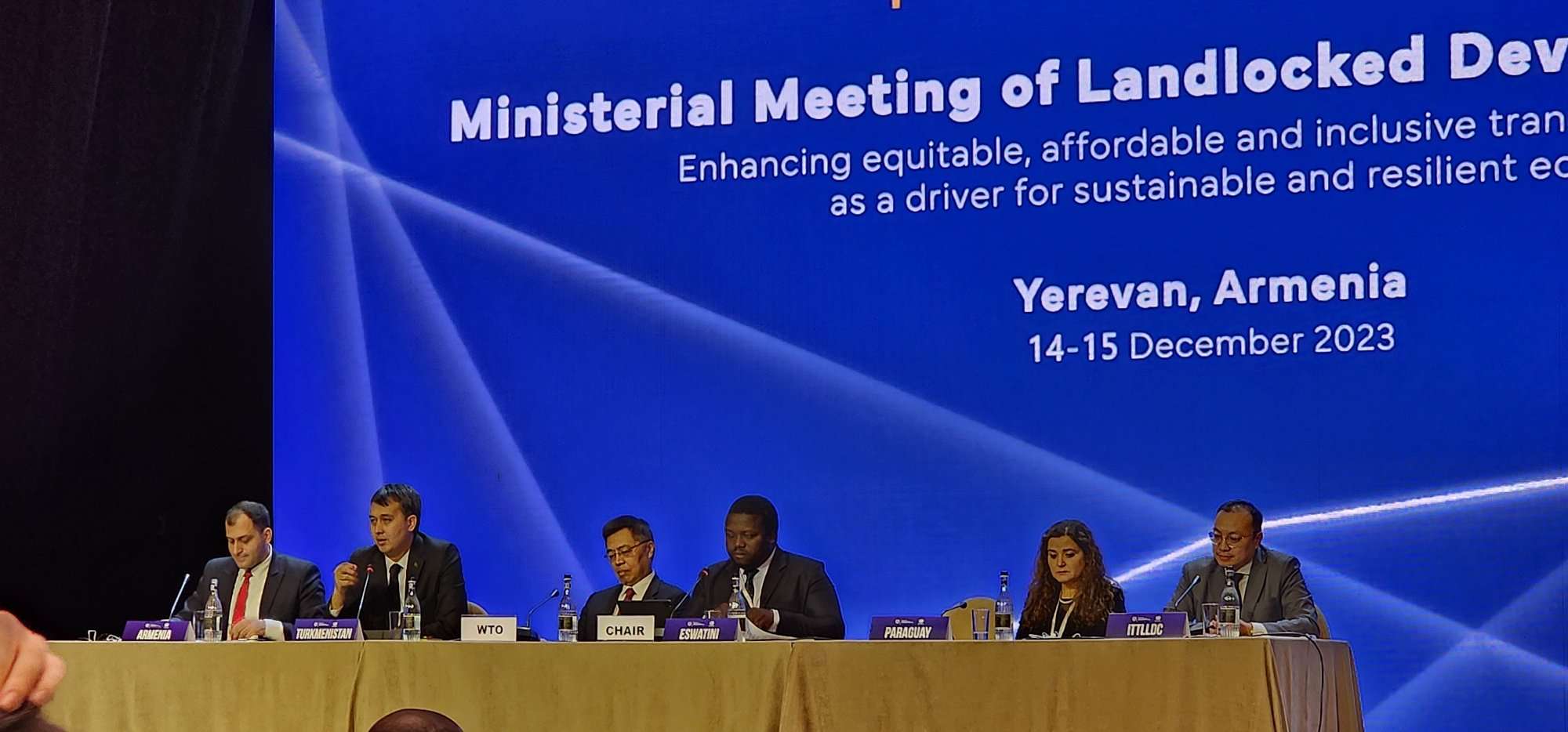
Turkmenistan took part in the ministerial meeting of the landlocked countries in Yerevan

The Ministerial Meeting of Landlocked Developing Countries was held in Yerevan, Armenia, on December 14-15. The theme of the event is “Stimulating equal, affordable and inclusive transport links in the name of a stable and sustainable economy.” The meeting is a preparatory stage ahead of the Third Conference of Landlocked Developing Countries (LLDC), which will be held in the capital of Rwanda, Kigali, in June 2024.
The Forum b’ought together delegations from more than 30 countries and representatives of international organizations. The plenary session was attended by Nikol Pashinyan, Prime Minister of Armenia and Rabab Fatima, Deputy Secretary General of the United Nations, Secretary General of the Third United Nations Conference on Landlocked Countries. Turkmenistan is represented by the Agency for Transport and Communications under the Cabinet of Ministers of the country.
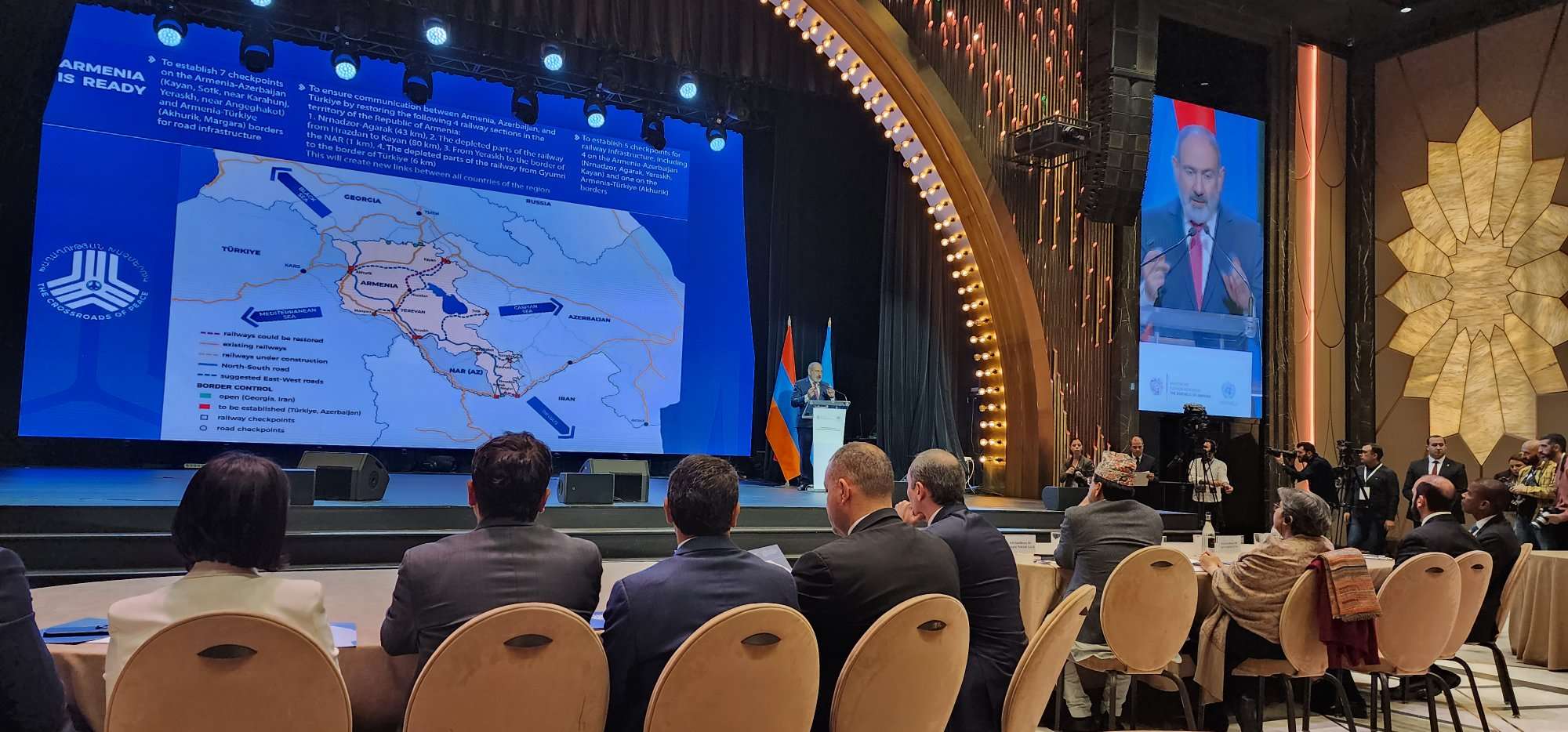
Ministers and other high-level participants shared their national and regional experiences on the progress made, challenges and opportunities in improving transport links, lessons learned over the past decade, as well as highlighted recommendations for improving transport links and a programme of action for landlocked developing countries.
Deputy Director General of the Agency Batyr Annayev spoke today at a session dedicated to the transformation of global trade and relations through the use of digital technologies. He spoke about the processes of digitalization of the national economy, as well as the results of the implementation of the State Program to support small and medium-sized businesses, which had a significant impact on the development of trade in the country.
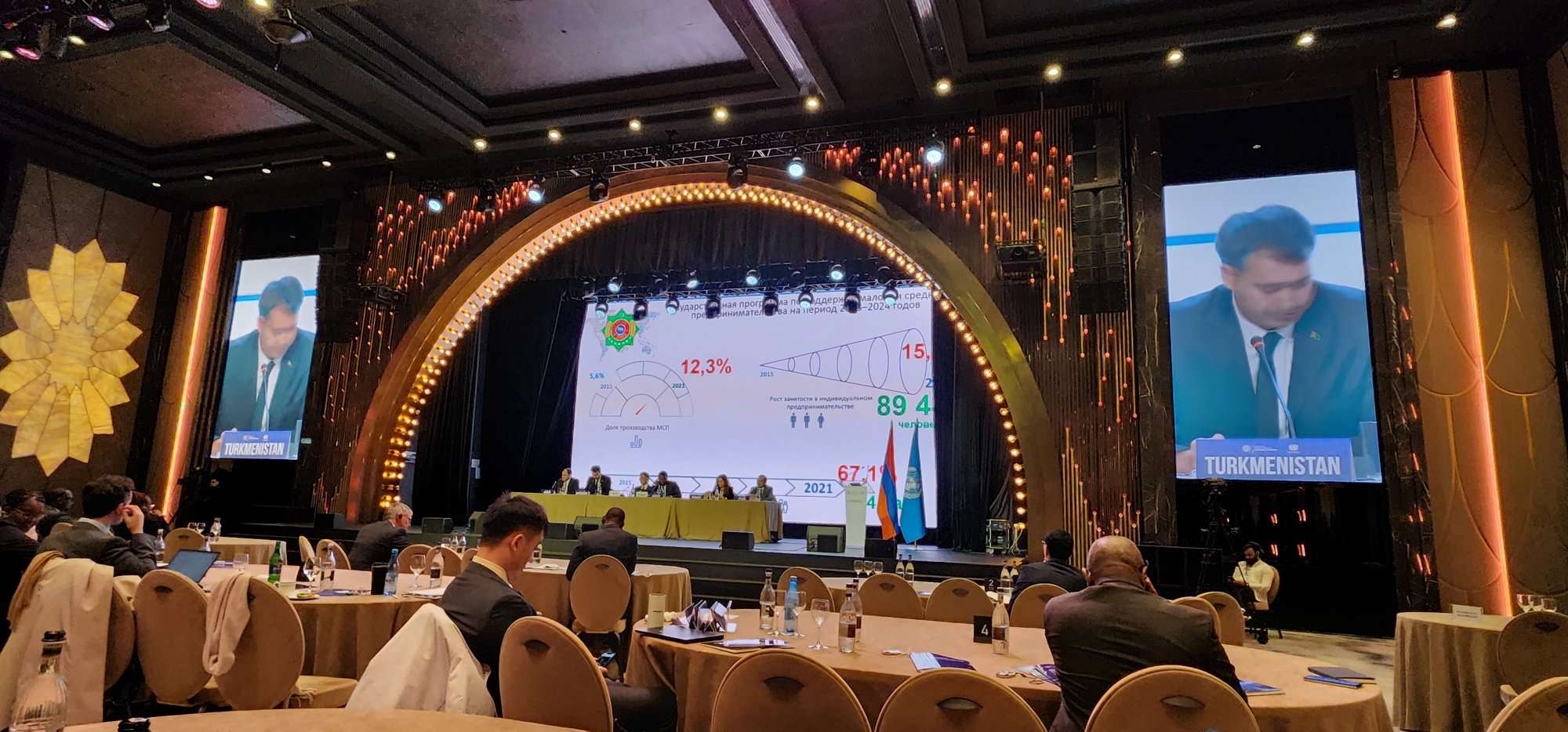
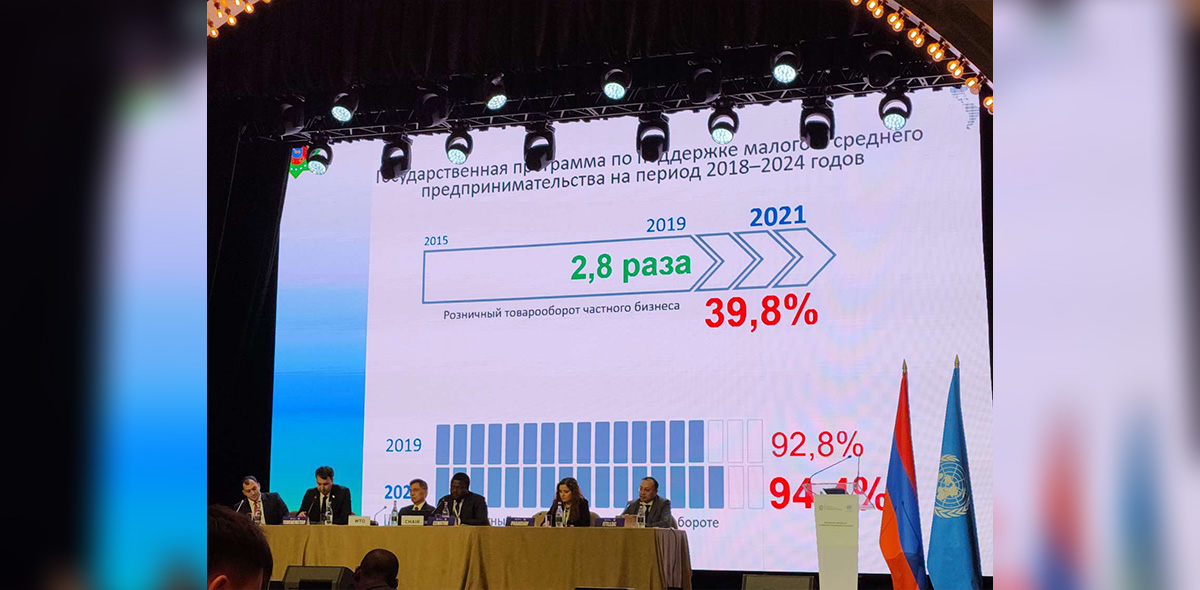
In the presentation presented to the audience, it was noted that the share of production of small and medium-sized enterprises in the industrial sector increased from 5.6% in 2015 to 12.3% in 2021. Retail turnover of private businesses increased 2.8 times from 2015 to 2021 and increased by 39.8% compared to 2019. In the total volume of retail trade in 2021, the private sector accounted for an impressive 94.4%.
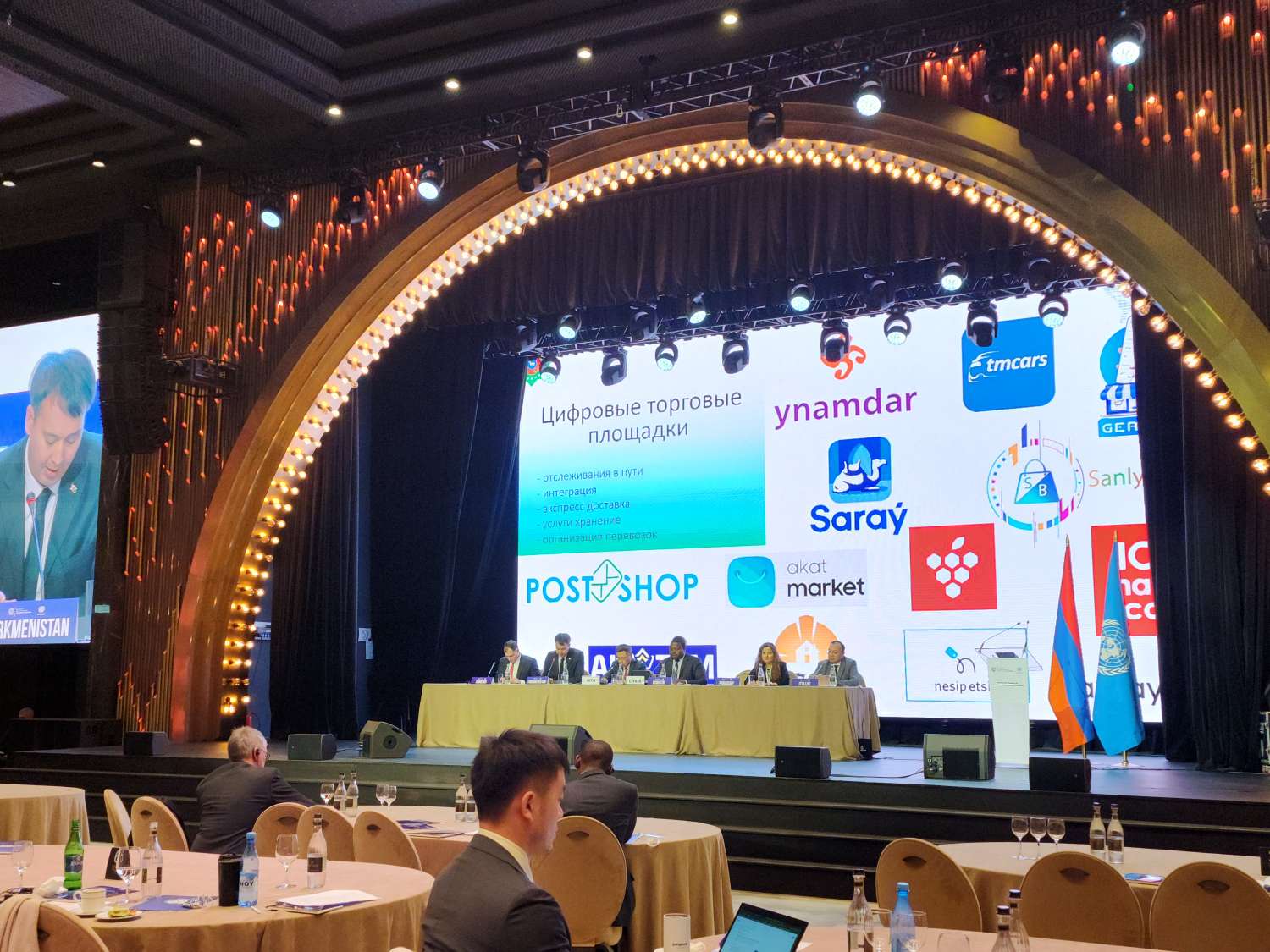
At the same time, digitalization has played a key role in the transformation of trade in Turkmenistan, becoming an important source of productivity improvement, ensuring sustainability and stimulating a “green” transition. The pandemic has given impetus to the accelerated digitalization of enterprises and services in Turkmenistan. This includes creating conditions for remote work, providing remote access to healthcare, education, as well as basic goods and services. Today, there are hundreds of trading platforms in the country that contribute to the development of electronic commerce, as well as the banking and transport and logistics sectors.
Special attention is paid to increasing the transit capacity of the Internet stream, which is reflected in a tenfold increase in the total capacity of purchased international Internet channels over the past five years. Currently, the number of Internet users in Turkmenistan has exceeded three million, which is more than 20% higher than in 2019.
Over the period from 2017 to 2022, the number of plastic card holders and Internet banking users in the country has more than doubled. There is also an impressive increase in the number of mobile banking users, their number has increased 65 times, reaching more than 60 thousand people. These changes indicate positive results in the promotion of multisectoral digital solutions in Turkmenistan.
Speaking about the main achievements in improving transport links over the past decade, Batyr Annayev noted that from 2015 to 2021, more than 48 billion manats were invested in the transport and communications industry, which stimulated their rapid growth. The share of transport and communications in the country’s GDP in 2022 was 8.8%, which is a significant increase compared to 7.4% in 2015.
Turkmenistan’s further steps include strengthening innovative and technological, transport and logistics infrastructure, integrating banking solutions, and launching a second national communications satellite to improve the quality of telecommunications services. It is also planned to activate free economic zones and create industrial clusters to stimulate diversity in the economic structure, and significantly increase investments in research and development projects.
In general, Turkmenistan strives to move to a new qualitative level of development, paying special attention to science and innovation. And transport and communications play a crucial role in this, determining the sustainability of development, the development of trade and cooperation.
ORIENT news


