Nuclear technologies have given a new impetus to the development of Azerbaijan's cotton industry

With the support of the Food and Agriculture Organization of the United Nations (FAO) and the International Atomic Energy Agency (IAEA), researchers and farmers in Azerbaijan are reviving the local cotton industry by introducing methods of climate-optimized agriculture based on nuclear and related technologies. This is reported by the UN News Center.
Cotton growing in Azerbaijan originated thousands of years ago. During the Soviet period, cotton was called "white gold", and it accounted for about 25% of the agricultural income of the republic. However, with the transition to a free market economy in the 1990s and the rapid development of other industries, the cotton industry lost its leading position.
The introduction of climate-optimized farming methods based on nuclear and related technologies, combined with the use of improved cotton varieties, allowed to increase yields at the local level in three provinces to eight tons per hectare, while the national average was three tons.
It all started in 2021 with a pilot project in which Azerbaijani researchers and farmers were taught methods of climate-optimized agriculture by organizing demonstration events on farms.

In 2022, the implementation of the second project aimed at transferring best practices in the field of rational use of soil resources, nutrients and water began, taking into account that the lands in Azerbaijan are particularly vulnerable to the effects of climate change and are subject to degradation. Since 1991, the average annual temperature in the country has increased by 0.4 degrees Celsius, and at the same time there is a decrease in precipitation and an increase in such extreme weather events as floods, droughts and periods of abnormal heat.
"In general, a 60% increase in crop yields depends on the strategically correct use of soil nutrients and water resources," notes Mohammad Zaman, a soil scientist at the FAO/IAEA Joint Center and a technical specialist of the project. "It's all about the right amount, the right method and the right stage of growth."
"When we started work, the soils in Azerbaijan were severely depleted. Fertility was extremely low, the soils could not provide enough nutrients needed for cotton growth," Zaman adds.
To solve this problem, the FAO/IAEA project proposed a whole range of nuclear and related methods covering various aspects of cotton growing – from soil preparation and selection of the best cotton varieties to the introduction of nutrients, the use of irrigation technologies and the control of weeds, pests and diseases.
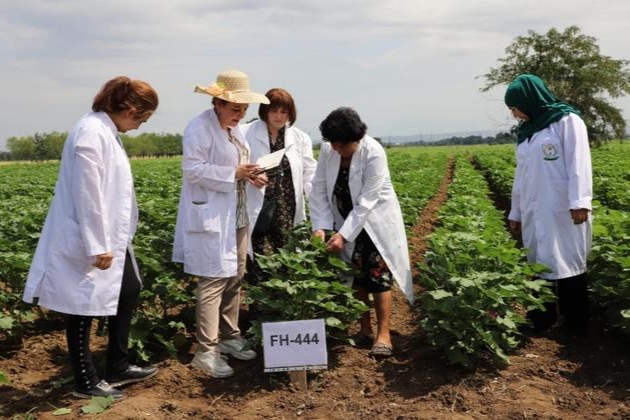
Researchers in Azerbaijan have applied a method based on nitrogen-15, a stable isotope, which is used to track nitrogen levels in the environment. Nitrogen is of great importance for plant growth and photosynthesis, the process by which plants convert carbon dioxide and solar energy into the nutrients they need. At the same time, excessive or improper use of nitrogen fertilizers leads to an increase in greenhouse gas emissions and pollution of surface and groundwater.
With the help of isotopic methods, Azerbaijani researchers and farmers receive important data to optimize the use of fertilizers and increase the efficiency of cotton production while maintaining soil health.
The results of the project indicate the significant potential of nuclear and climate- optimized methods. They not only increase agricultural productivity, but also contribute to strengthening the immunity of agricultural systems to climate change.
"Considering that the total area of cotton fields in Azerbaijan is 105 thousand hectares, the introduction of climate–optimized farming methods proposed by the Joint FAO/IAEA Center can increase cotton production by 10% from 31.5 thousand tons produced using traditional agricultural methods to 84 thousand," experts explain.
The success of the project has aroused great interest from the Ministry of Agriculture and local cotton producers, and there are plans to further popularize these methods in Azerbaijan.
ORIENT news


