Chinese Ambassador to Turkmenistan: A Look at China through Keywords (16th edition)

The Chinese government recently announced that it will downgrade the COVID-19 response level from category A to category B from January 8, 2023, and temporary measures will be taken regarding cross-border travel. This adjustment is based on a comprehensive assessment of the virus mutation, the epidemic situation and prevention and control efforts.
Keyword 1: Category B registration level

The following are temporary measures following the announcement by the Chinese government of a reduction in the level of registration for COVID-19.
Firstly, incoming travelers must present a negative result of a PCR test taken within 48 hours before departure. The test result must be noted in the customs declaration of health. Incoming travelers no longer need to request a health code from Chinese embassies or consulates. If the test has shown a positive result, it is necessary to postpone the trip until a negative test result is received.
Secondly, PCR tests will no longer be conducted for incoming travelers upon arrival. Healthy people who have passed the established customs quarantine supervision can enter China without isolation. If there are problems with the declaration of health status or fever and other symptoms, it is necessary to pass an antigen test at customs. Travelers with a positive test result without symptoms or with minor manifestations of the disease can self-quarantine or self-medicate at their place of residence. In other cases, it is recommended to seek medical help as soon as possible. If the test result is negative, it is necessary to pass the usual customs inspection and quarantine control in accordance with the "Border Health and Quarantine Law" and other established laws and regulations of China.
Thirdly, restrictions on passenger capacity on international flights will be lifted with a gradual increase in the number of flights and a refined distribution of flight routes. Airlines must provide appropriate preventive measures on board, including the mandatory wearing of masks by passengers.
Fourth, China will continue to improve the procedure for foreign citizens to enter the country for such purposes as resuming work, business, education, visiting relatives and family reunification, and will ensure appropriate simplification of the visa regime.
Fifth, China will adjust the "cargo-only" policy at ports of entry and gradually resume the entry and exit of passengers by land and water and provide greater convenience for Chinese and foreign crews changing watches.
Sixth, China will resume outbound tourism for Chinese citizens in an orderly manner, starting with a pilot scheme.
China will continue to work to ensure that measures to combat COVID-19 are more scientifically sound, targeted and take into account the changing situation with COVID-19 and better facilitate safe and orderly cross-border travel of Chinese and foreign citizens.
Keyword 2: People above all

Since the emergence of COVID-19, China has always put people and their lives above everything else. We make every effort to protect people's lives and health and direct all resources to the treatment of each patient. Over the past three years, we have effectively responded to five global waves of COVID-19 and prevented the widespread spread of infections caused by the original strain and the Delta variant, which are relatively more pathogenic than other variants. We have significantly reduced the number of severe cases and deaths, as well as gained valuable time for research, development and application of vaccines and therapeutic agents, preparation of medicines and other resources.
During the fight against COVID-19, China has effectively coordinated epidemic prevention and control measures and socio-economic development, as well as improved response policies in light of the changing situation.
Since omicron has become much less pathogenic and deadly, and China's capabilities in the field of treatment, testing and vaccination are constantly growing, it was decided to classify COVID-19 as an infectious disease of category B rather than A, shifting the focus in the fight against infection to health care and prevention of severe cases.
This change is scientifically sound, timely and necessary. It is also important in the strategic and long-term perspective for effective coordination of epidemic prevention and control measures and socio-economic development and protection of the fundamental interests of the greatest majority of people. As the response measures are clarified, the relevant Chinese departments are actively working to strengthen medical resources, create a multi-level and category-based mechanism for diagnosis and treatment, increase production capacity and supply of medicines.
We have mobilized as many resources as possible to protect the elderly with poor health, pregnant and bedridden women, children and other key population groups.
Keyword 3: Economic Recovery
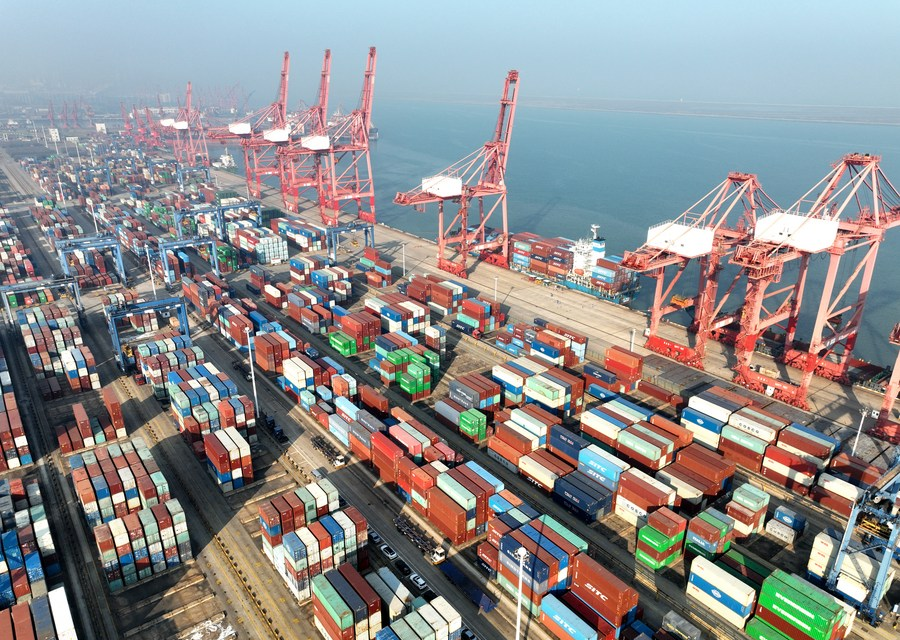
A new set of measures to optimize the fight against the COVID-19 epidemic in China will effectively contribute to the recovery of the country's economy. This is a rational assessment given the enormous resilience, potential and long-term stability of the Chinese economy.
By further facilitating the flow of people and the exchange of goods, the new set of measures is designed to gradually revive business activity in a wide range of sectors, including consumer spending, investment and foreign trade - thus, a huge market potential will be used to increase economic output.
According to the Managing Director of the International Monetary Fund/IMF/ Kristalina Georgieva, decisive steps by the Chinese authorities to revise their policy on the COVID-19 epidemic can create a more effective incentive for the resumption of economic growth in China, especially in combination with more extensive vaccination activities, provision of antiviral treatment and health capacity building.
These measures may have a positive effect for the Chinese people and the economy, as well as for Asia and the world economy. To date, signs of a recovery in China's economy have already begun to appear. During the recently completed three-day New Year holidays, about 2.7 million people visited 151 sights of the city, which amounted to 86.4% of the figure for the same period in 2019.
Morgan Stanley raised its forecast for China's GDP growth in 2023 from 5% to 5.4%, predicting that the recovery in activity will occur earlier and will be more dynamic than expected.
The Central Workshop on Economic Issues, which recently concluded in Beijing, demanded to make economic stability a top priority and to make steady progress in ensuring economic stability next year.
Experts predict that the restoration of the normal rhythm of production and social life will accelerate in the first half of 2023, especially in the second quarter, when economic potential will be released at an accelerated pace.
China has the confidence, conditions and opportunities to contribute to China's economy for the better as a whole and give a powerful impetus to the recovery and development of the global economy.
Qian Naicheng, Chinese Ambassador to Turkmenistan


