Is the youth science of Turkmenistan alive?
In the development program of Turkmenistan, President Berdimuhamedov set ambitious tasks for the industrialization of the country, digitalization of the economy, the creation of innovative industries and even new sectors of the national economy.
The program is seven-year and one year has already passed. Given the current year, a little less than six years remain. The plans are ambitious, but also relevant for any country that wants to break out to the forefront.
But are there any cadres to fulfill such expectations?
Obviously, for the development of fundamentally new directions in the country's economy, advanced personnel are needed. Moreover, they need to be young. Indeed, the issues of digitalization, the introduction of innovations, the development of IT technologies require the lot of scientists and specialists of the current generation. The former pros are usually out of work here - youth cadres rule the ball. Probably, attention was paid to the fact that when IT people communicate, ordinary people around them get the impression that they speak a language unknown to the uninitiated.
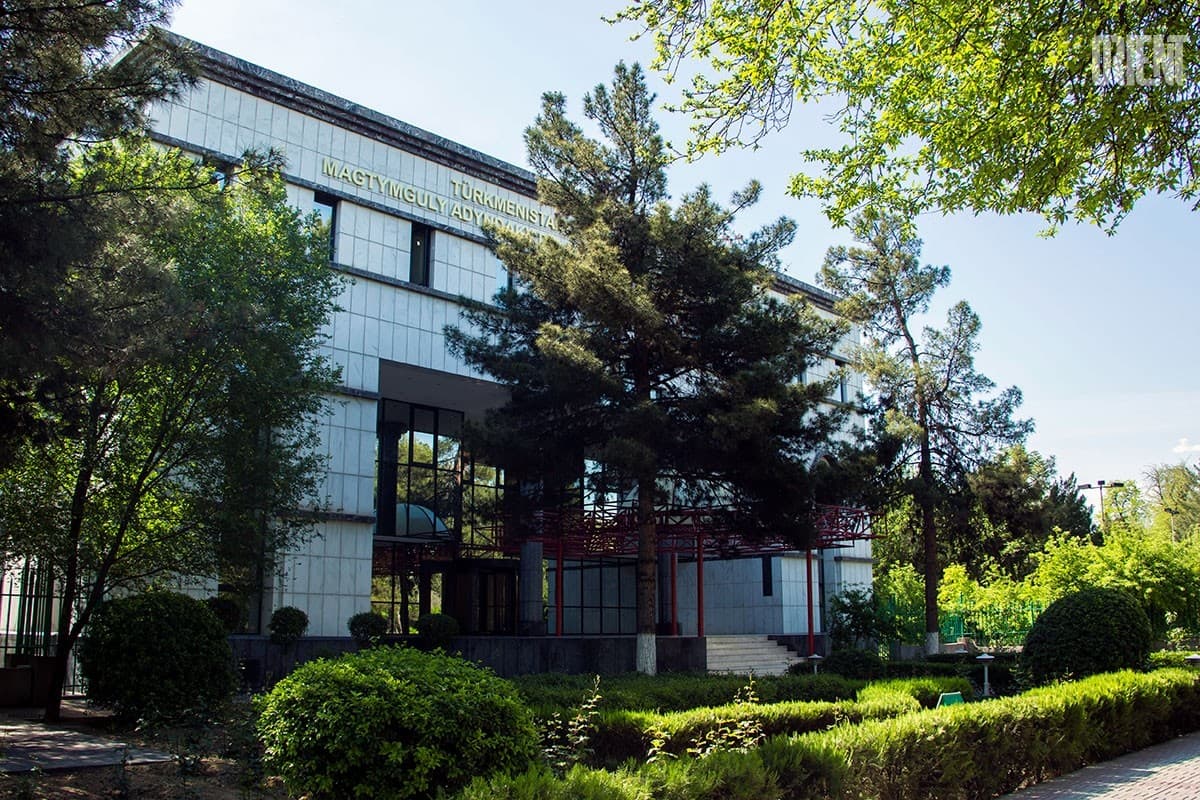
Turkmenistan has taken care of such personnel ahead of time. In recent years, not only new specialties were introduced in existing universities and new faculties were opened, but new higher educational institutions were also established - the Engineering and Technology University, the International University of Oil and Gas, the International University of Humanities and Development, the Institute of Engineering and Transport Communications etc. The Academic Technocenter can also be added to this.
To stimulate the influx of fresh ideas and developments, for several years, the Academy of Sciences and the Youth Organization of the country have held competitions among young scientists and students.
And today the second stage of the competitive selection of research by young scientists has begun. In total, six areas are identified that are relevant for the development of the Turkmen economy.
This is nanotechnology, chemical technology, the study of new materials and energy; biotechnology, molecular biology, agriculture, ecology and genetics; areas of information and communication, computer technology; production technology of modern medical and pharmaceutical products; innovative economy and humanitarian sciences.
In total, in the second competitive stage it is planned to consider over 250 works, of which the majority of the research was done by students who showed a penchant for scientific activity. The rest - belong to the pen of young employees of academic institutes and university professors.
 “Today, young scientists and specialists working in the field of nanotechnology, chemical technology, new materials and energy were the first to take the exam,” says Durdymyrat Gadamov, chairman of the competition committee, Ph.D. - 44 works were presented and discussed, of which 18 belong to young specialists and 26 to students.
 “Our commission includes well-known scientists, doctors of science, experienced employees of academic institutes, as well as representatives of the country's youth organization,” continues Durdymyrat Kurbanovich. - Despite the youth of the authors, the studies presented by them are not only theoretical in nature, but also have practical significance. And since today's discussion is an intermediate stage of competitive selection, I will not name the authors and specify their topics for professional and ethical reasons. But in general, I can confidently say that many developments have already confirmed their viability in the course of laboratory research, now it’s the turn for their industrial testing”.
 “The current stage was preceded by a selection of scientific works conducted directly at research institutes and universities of the country,” Yazpolat Kiriev, deputy chairman of the Central Council of the country's Youth Organization, enters into a conversation. - The competition is aimed at providing support to university students, graduate students, young scientists, their projects, which can contribute to solving urgent problems developed by applied science. For some, this competition was the next step in their research work, and for most - the first test, exciting, but, of course, important and significant for their further development as scientists.
“Recently, an electronic journal, Science and Technology of Youth, has been established in Turkmenistan, in which novice scientists publish their work,” continues the chairman of the commission, Durdymyrat Gadamov. - Four issues of the electronic edition have already been published. And this is a great help for young people, because they see the results of their research in print. And in general, in all the country's universities and research institutes, the technological base for laboratory research has been significantly strengthened in recent years, and this has increased the interest of young people who want to devote themselves to scientific activity.
“The current stage was preceded by a selection of scientific works conducted directly at research institutes and universities of the country,” Yazpolat Kiriev, deputy chairman of the Central Council of the country's Youth Organization, enters into a conversation. - The competition is aimed at providing support to university students, graduate students, young scientists, their projects, which can contribute to solving urgent problems developed by applied science. For some, this competition was the next step in their research work, and for most - the first test, exciting, but, of course, important and significant for their further development as scientists.
“Recently, an electronic journal, Science and Technology of Youth, has been established in Turkmenistan, in which novice scientists publish their work,” continues the chairman of the commission, Durdymyrat Gadamov. - Four issues of the electronic edition have already been published. And this is a great help for young people, because they see the results of their research in print. And in general, in all the country's universities and research institutes, the technological base for laboratory research has been significantly strengthened in recent years, and this has increased the interest of young people who want to devote themselves to scientific activity.
 ...So, today the second stage of the competition of scientific works has started. The best of them will be held in the third, final stage. And it will be followed by a ceremony of awarding the winners of the competition among young scientists, which is traditionally held in June - on the Day of Science.
Yes, the youth science of Turkmenistan is not only alive, but also continues to develop, strengthening its position and expanding opportunities. The profession of a scientist in the youth environment has become prestigious.
What is a portrait of a typical representative of youth science in Turkmenistan?
Beginners on a scientific path are active, very initiative and ambitious guys and girls.
These are those who strive to be at the forefront of today's change.
And it pleases. Indeed, in their hands, as they like to say in Turkmenistan, is the future of our Motherland.
...So, today the second stage of the competition of scientific works has started. The best of them will be held in the third, final stage. And it will be followed by a ceremony of awarding the winners of the competition among young scientists, which is traditionally held in June - on the Day of Science.
Yes, the youth science of Turkmenistan is not only alive, but also continues to develop, strengthening its position and expanding opportunities. The profession of a scientist in the youth environment has become prestigious.
What is a portrait of a typical representative of youth science in Turkmenistan?
Beginners on a scientific path are active, very initiative and ambitious guys and girls.
These are those who strive to be at the forefront of today's change.
And it pleases. Indeed, in their hands, as they like to say in Turkmenistan, is the future of our Motherland.
Myahri YAGMUROVA