||




 Chinese New Year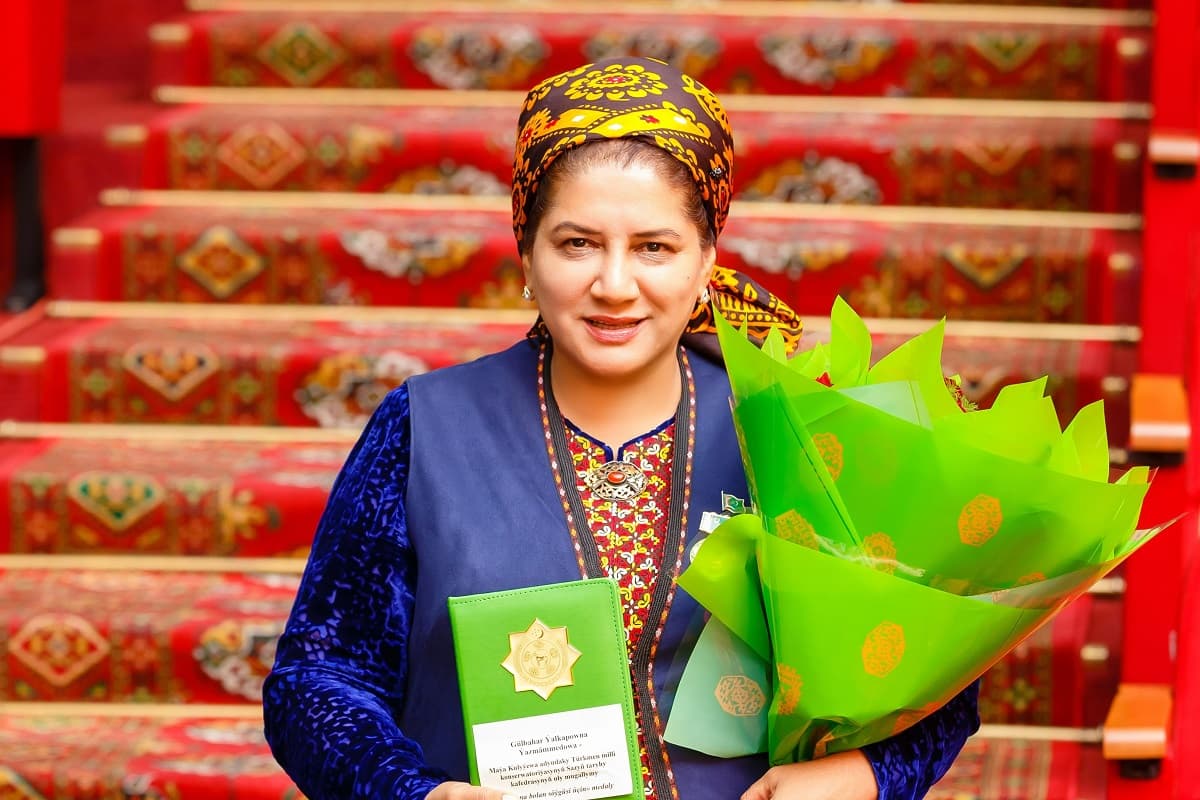
The Maya Kulieva Turkmen National Conservatory evokes the soaring sound of violins, the soaring voices of opera singers, and the power and thrill of piano chords. But behind the ceremonial grandeur of its concert halls lies the painstaking, almost alchemical work of those who transform sounds into meaning.
Musicologists are the ones who prevent art from becoming a "silent" past. This is precisely the path—the path of selfless service to history and science—that Gulbahar Yalkabovna Yazmamedova has chosen.
Gulbakhar Yalkabovna's journey within the walls of the country's main musical citadel began in 1992. Then a young graduate of the Theory and Composition Department, she defended her thesis with honors and immediately realized that her calling was not simply to study music, but to explain it.
Over the course of more than thirty years of teaching, she has risen through the ranks of professional development—from a young lecturer to a faculty director and a state-level consultant. But wherever her work took place, the most important thing remained the classroom—the place where the history of music transforms from dry dates into a living narrative of the lives of creators.
Yazmamedova's pedagogical gift has manifested itself in tangible results—textbooks used by future maestros today. Writing a music literature textbook for schools or a fundamental work "Composers of Turkmenistan," for universities means taking responsibility for how a new generation will view national classics.
A special chapter in her biography is her work rescuing and systematizing the musical heritage. Gulbakhar Yalkabovna acted as a true "collector" of the works of luminaries such as Ashir Kuliyev. In the age of digitalization, finding, preserving, and publishing musical scores means giving music a second life, allowing it to resonate on the podiums of modern performers.
The research of this senior lecturer in the History of Music Department focuses on the most intimate subject—the nature of Turkmen themes. Analyzing the works of Danatar Ovezov, Nury Khalmamedov, and Chary Nurymov, she searches for those very "genetic codes" that make our music recognizable anywhere in the world. Her articles in national and international publications are the confident and profound voice of Turkmen scholarship.
In 2024, this long-standing work was recognized with a state award—the "Watana bolan söýgüsi üçin" (For Love of the Fatherland) medal. But perhaps her greatest reward is the sparkle in the eyes of her students, who, under her guidance, begin to understand that music is not just a technical skill, but also a vast spiritual world.
Today, Gulbahar Yazmamedova continues her work. Discussions of theses and debates on symphonic music can be heard in her office. She doesn't simply impart knowledge—she instills in her students "cultural immunity," carefully handing them the keys to the treasury of the national spirit. And as long as such mentors exist, the work of their great predecessors lives on.