||




 Chinese New Year
The experiment we launched several issues ago has received a great response from readers. Your comments and the citation rate of our analytical analyses have demonstrated that the dry numbers of stock market reports come to life when they make sense to each of us. Today, we are officially naming our project. "ORIENTIR" is our lead analyst Bekdurdy Amansaryev's unique perspective on processes in the global energy and economic sectors. We don't simply rehash the news; we seek out coordinates that help us understand where the world is heading and where its fulcrum lies.
In today's issue, we'll discuss why sparks in the Persian Gulf are scorching the wallets of shoppers in supermarkets around the world, and how our internal "shield" of stability works.
On Wednesday, March 18, the world continued to balance on a fine line between large-scale stabilization measures and growing geopolitical risks. Market conditions remained extremely dynamic, with new factors coming into play that directly impacted market movements. But despite the largest-ever release of 400 million barrels of oil from the International Energy Alliance's strategic reserves, prices were slow to fall.
On Wednesday, the situation in gas markets escalated again: following alarming reports of strikes on energy infrastructure in the Persian Gulf, including the largest South Pars field, the price of natural gas in Europe jumped to $1,180 per thousand cubic meters.
Reports of attacks on tankers and military facilities in the Persian Gulf offset the impact of the reserve release. Therefore, the global market is pricing in a "risk premium" given that around 20% of global oil and LNG traffic passes through the strait.
Although the United States possesses its own energy resources, the "gasoline echo" that has reverberated around the world has also affected the US. In New York and other US cities, gas prices continue to rise, reaching an average of $3.79 per gallon (an increase of 81 cents during the conflict). This is exacerbating already negative inflationary pressures.
Today has become a moment of truth for world leaders as well. International Energy Agency Director General Fatih Birol openly acknowledged that the world is facing "the first truly global energy crisis." At the same time, Washington is signaling its readiness for a long "war of reserves."
On the other side of the world, Beijing is demanding immediate security for transportation arteries. For China, as the largest importer, the vulnerability of the Persian Gulf sea lanes is a reason to reassess the reliability of land routes originating in our region.
Japan, which imports 90% of its oil and a significant share of its gas from the Middle East, is also in the highest risk zone, forcing Tokyo to keep reserves at 200 days of consumption.
Uncertainty in the Persian Gulf is currently acting as a catalyst for negative economic developments. Fear of a physical shortage of resources due to threats in the Strait of Hormuz is forcing global traders to factor enormous risks into logistics costs. This resembles a domino effect, where one oilfield event halfway around the world triggers a rise in the price of ordinary goods in stores in Lisbon or Tokyo.
While oil and gas giants wage a trench war, ordinary people around the world are asking: why does the price of a barrel of oil in London, currently at $103.50, have such a strong impact on the price of bread in the bakery next door?
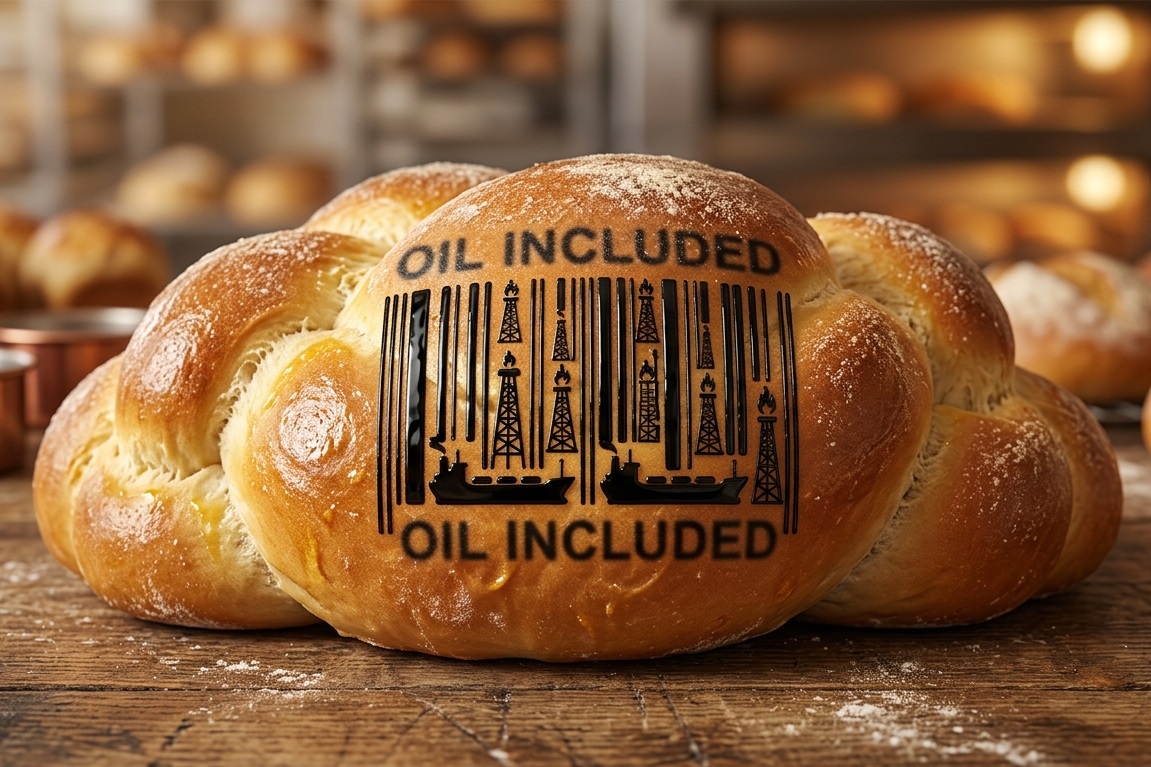
This has reminded people across the globe that the global economy is not just about numbers on screens, but also about the contents of their refrigerators. After all, modern agriculture is one of the most energy-intensive and expensive industries. Take, for example, the production of nitrogen fertilizers, which currently costs global farmers three to four times more than traditional ones.
In the US, where the market is protected from Middle Eastern storms, gas is nine times cheaper than in Europe – around $130. This colossal gap makes food production in Europe extremely expensive, literally burning through farmers' budgets.
Even if vegetables are grown in a neighboring field, they need to be picked, packaged in plastic, and transported to the store. Up to 40% of the fuel cost is hidden in every kilogram of any product. When gasoline costs $1.50 in New York and almost $2.50 in London, the consumer ultimately pays for it all at the counter.
In the current global situation, Turkmenistan is proving the correctness of its strategy, relying on the real sector and the absence of domestic debt. The country remains an island of predictability. Turkmenistan not only provides itself with energy but also maintains reliable land routes that are not dependent on tanker routes in the world's straits. In this regard, the country and the region enjoy a strategic advantage. Having its own gas at stable prices acts as an invisible agricultural buffer (a government regulation tool that mitigates price fluctuations on the domestic market), protecting producers from global price fluctuations.
Against this backdrop, the average fuel price in Central Asia, around 60 cents, serves as a reliable, invisible shield. It prevents global inflation from turning a simple grocery run into a strain on the family budget.
The strength of Turkmenistan's energy security, as well as the ongoing work in this direction, is confirmed by recent data. The talks held in Beijing on March 18 between the head of the Khalk Maslakhaty (People's Council) of Turkmenistan, Gurbanguly Berdimuhamedov, and Chinese President Xi Jinping cemented the energy partnership as the foundation of the two countries' strategic alliance.
A logical continuation of this dialogue was Gurbanguly Berdimuhamedov's meeting with the leadership of CNPC, where two decades of successful cooperation received new impetus in the phased development of the super-giant Galkynysh gas field.
Amid growing volatility on global energy routes, these meetings in Beijing confirmed Turkmenistan's exceptional role as a guarantor of supply stability and predictability in Eurasia.
On the same day, March 18, at the International Forum "Investments in the Future of Turkmenistan" in Ashgabat, Deputy Minister of Finance and Economy Perkhat Yagshiyev cited figures that compel global analysts to take a closer look at Turkmenistan's experience: the country's GDP by the end of 2025 exceeded $77.4 billion, with a growth rate of 6.3%.
At the same time, inflation has been kept low – just 3.2%, and external debt amounts to a symbolic 3% of GDP. Against the backdrop of the global debt crisis, this is a true macroeconomic stronghold. Moreover, Turkmenistan's geographic location, like that of the entire Central Asian region, has every reason to be called the crossroads of the North-South and West-East continental corridors.
Consequently, given that the price of our lunch is factored into the global oil price, the winner in the global game is the one with its own resource, healthy finances, and a secure direct route to the consumer.
And more on the rest-tomorrow...