


Ashgabat, March 12 | ORIENT. We continue our mini-replies on global issues. Today, global oil markets resemble an athlete holding his breath before the start. After the wild swings at the beginning of the week, when prices broke through the $116 ceiling, today has come a time of tense and anxious anticipation. This Thursday poses new questions, to which there are no clear answers in economics textbooks.
Our main indicator is the price of Brent crude oil, which on Wednesday traded mostly in the $105–$107 per barrel range. What does this mean?
Although the price continues to slowly "slide" downward, searching for a bottom, this decline should not mislead us. For the gap between supply and demand is still enormous. This is not peace, but only a temporary truce between sellers and buyers.
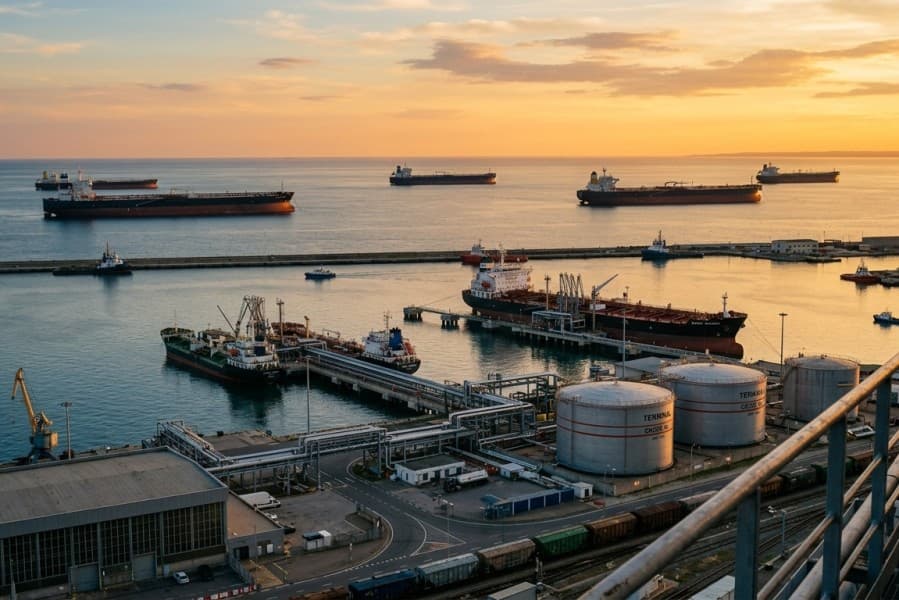
The main reason for the current pause is logistics. Major tanker companies are currently reconsidering routes that bypass the relatively small Persian Gulf, which has caused global congestion. How will this impact our region?
While global giants are counting the losses from extending routes, Central Asia is demonstrating resilience. The interconnectedness of the region's countries allows for the development of internal resources. The trade caravans of the modern Silk Road (trucks and trains) continue to move, relying on stable borders and the predictability of regional partners.
With global energy prices remaining in the red, Turkmenistan continues to play the role of a predictable and stable player. For its domestic market and immediate neighbors, the presence of domestic oil and gas production guarantees that the global price shock, while affecting the region, will not escalate into a local crisis. When a neighbor has sufficient resources, the fence between houses becomes a bridge of cooperation.
Yesterday's question of "is this a respite or a new reality" is being answered for the first time today. The market is getting used to living with high prices. We are seeing businesses starting to factor these "oil $100+" into the cost of goods.
For us, this is a signal that a sharp price collapse to the old levels of $70-80 is not to be expected anytime soon. The global benchmark has shifted upward. This means that the ability to calculate and analyze is becoming a key skill not only for energy ministers and businessmen, but also for everyone planning their budget for the spring – a belated but long-awaited…