We are guided by what unites people




News
Articles
Media
Announcement
 Chinese New Year
Technology
About Us
Contacts
Chinese New Year 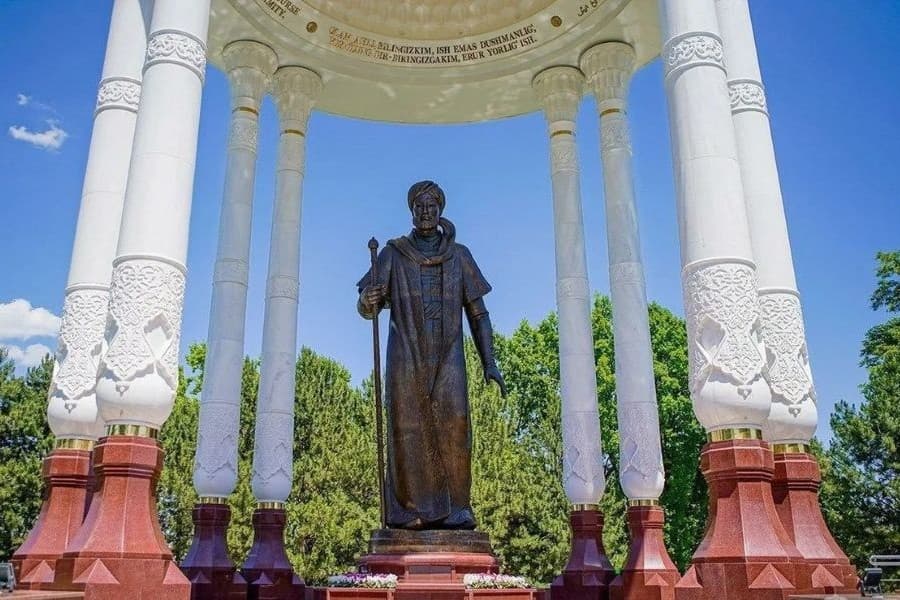
On February 9, the global community marked the 585th anniversary of the birth of the great poet, philosopher, and statesman Alisher Navoi. His works, imbued with the ideals of humanism, is recognized today as a treasure of all humanity and continues to serve as a bridge between the cultures of East and West, reports.Yuz.uz
A New Stage in the Study of the Classic
Modern Navoi studies have reached a qualitatively new level. Whereas at the end of the 20th century research was often published in limited print runs, today the study of Navoi’s heritage has become a large-scale state project. One of the most significant scholarly achievements of recent years is the publication of the four-volume “Encyclopedia of Alisher Navoi.” This fundamental work, spanning nearly 2,000 pages, brings together the expertise of 78 leading scholars from Uzbekistan, Türkiye, and Azerbaijan, covering the thinker’s biography, creative path, and international influence.
Navoi’s Heritage in Europe: An Italian Edition
Global interest in the poet’s legacy is confirmed by new international projects. A major cultural event of the yearwas the first Italian translation of the philosophical poem “Lison ut-Tayr” (“The Language of the Birds”). The edition, prepared by Sandro Teti Editore with the support of the Embassy of Uzbekistan in Italy, opens access for European readers to the profound Sufi philosophy of the East. The foreword to the book was written by renowned historian Professor Marco Di Branco of Sapienza University of Rome.
Spiritual Heritage and Global Dialogue
Anniversary events were held throughout the republic and abroad. The key academic event was the international symposium “Navoi and the Eastern Renaissance,” where experts from various countries, including specialists from Belgium, discussed Navoi’s influence on the development of world civilization.
Today, the name of the great ancestor is borne by cities, universities, and parks in different parts of the world — from Tashkent to Ashgabat and Baku. As experts note, Navoi’s works remains a relevant instrument of cultural diplomacy, helping peoples better understand the history, values, and spiritual wealth of the Uzbek nation.
ORIENT

