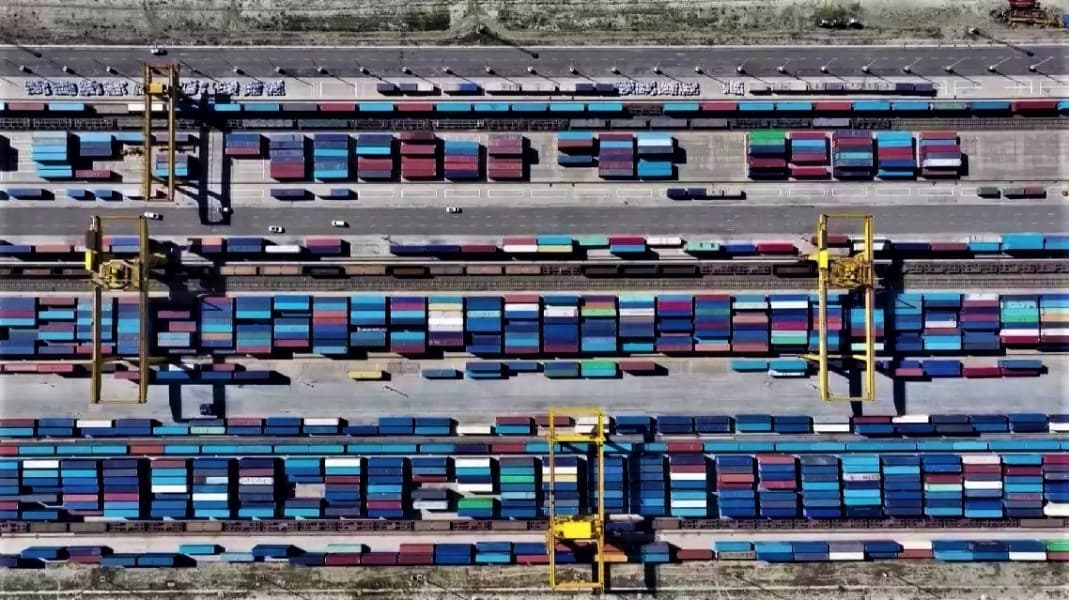



The global economic map is changing before our eyes: by the end of 2025, trade between China and the five Central Asian countries will have surpassed the psychological mark of USD 100 billion for the first time in history. This represents a more than 200-fold increase since the establishment of diplomatic relations, making China a key trading partner for every state in the region.
In the article, prepared exclusively for ORIENT, Ambassador Extraordinary and Plenipotentiary of the People's Republic of China to Turkmenistan Ji Shumin analyzes the factors behind this success. From the strategic partnership within the China-Central Asia Format to the implementation of the Belt and Road Initiative, which is transforming the region into the "golden crossroads" of Eurasia, the head of the diplomatic mission presents a vision of a new economic reality in which Turkmenistan plays a crucial role.
The China-Central Asia Format: A Catalyst for Practical Cooperation
According to statistics from the General Administration of Customs of the People's Republic of China, trade volume between China and the five Central Asian countries in 2025 amounted to $106.3 billion, a 12% increase compared to the previous year. This marks the first time that mutual trade has exceeded $100 billion, representing a more than 200-fold increase from 1992, when diplomatic relations between our countries were established. For the first time, China has become the largest trading partner of all five Central Asian countries.
How was such dynamic growth achieved?
First of all, the China-Central Asia format plays a key role. Since the first China-Central Asia Summit, relations between China and Central Asia have continuously reached new heights. At the Astana Summit, Chinese President Xi Jinping proposed the "China-Central Asia spirit," defined as "mutual respect, mutual trust, mutual benefit, mutual assistance, and advancing joint modernization through high-quality development," which received broad support. The heads of state of the six countries signed the Treaty of Eternal Good-Neighborliness, Friendship, and Cooperation and declared 2025-2026 the "Years of High-Quality Development of China-Central Asia Cooperation." Since then, cooperation between China and Central Asia has entered a new stage of high-quality development.
The 14 interagency cooperation mechanisms within the China-Central Asia format comprehensively implement the agreements reached by the heads of state and play an important role in promoting trade and investment cooperation between China and the Central Asian countries.
Moreover, this was made possible by the driving force of China's economy. During the 14th Five-Year Plan, China's GDP growth remained stable at a medium-high level of around 5.0%, successively surpassing new milestones of 110, 120, 130, and 140 trillion yuan (equivalent to 15.7, 17.2, 18.6, and 20 trillion US dollars). In 2025, China's outward direct investment totaled 174.38 billion US dollars, up 7.1% year-on-year, firmly maintaining its position among the world's leaders. Foreign trade reached 45.47 trillion yuan, an increase of 3.8%, while trade with countries participating in the Belt and Road Initiative reached 23.6 trillion yuan, an increase of 6.3%.
China's position as the world's largest commodity trader remains firmly established. China is the undisputed driving force of the global economy, accounting for approximately 30% of annual global economic growth. Deepening cooperation between regional countries and China helps them board the "Chinese economic express," which in turn helps them put their own economies on a path of accelerated development.
Furthermore, the joint development of the Belt and Road Initiative and the development of interconnectivity between China and the Central Asian countries have given a powerful boost to trade and economic cooperation. The China-Kyrgyzstan-Uzbekistan railway project has been officially launched; Construction of the third cross-border railway between China and Kazakhstan and key sections of the second phase of the China-Tajikistan highway is progressing steadily; cooperation on the Europe-Asia transcontinental train and the Trans-Caspian International Corridor is steadily deepening.
The level of connectivity between China and Central Asia is steadily increasing, and the region, including Turkmenistan, is gradually becoming a "golden crossroads" linking Europe and Asia.
This year marks the launch of China's 15th Five-Year Plan. Over the next five years, China will consistently combine high-level opening-up with high-quality development, accelerate the construction of a modern industrial system, steadily expand institutional openness, promote innovative trade development, and continuously deepen the high-quality joint construction of the Belt and Road Initiative, bringing greater opportunities to Central Asian countries.
Exceeding the $100 billion mark in trade volume between China and the Five Central Asian countries is an inspiring milestone; the potential for development in the future will be even greater and the prospects even broader.
Ambassador Extraordinary and Plenipotentiary of the People's Republic of China to Turkmenistan Ji Shumin