We are guided by what unites people




News
Articles
Media
Announcement
 Chinese New Year
Technology
About Us
Contacts
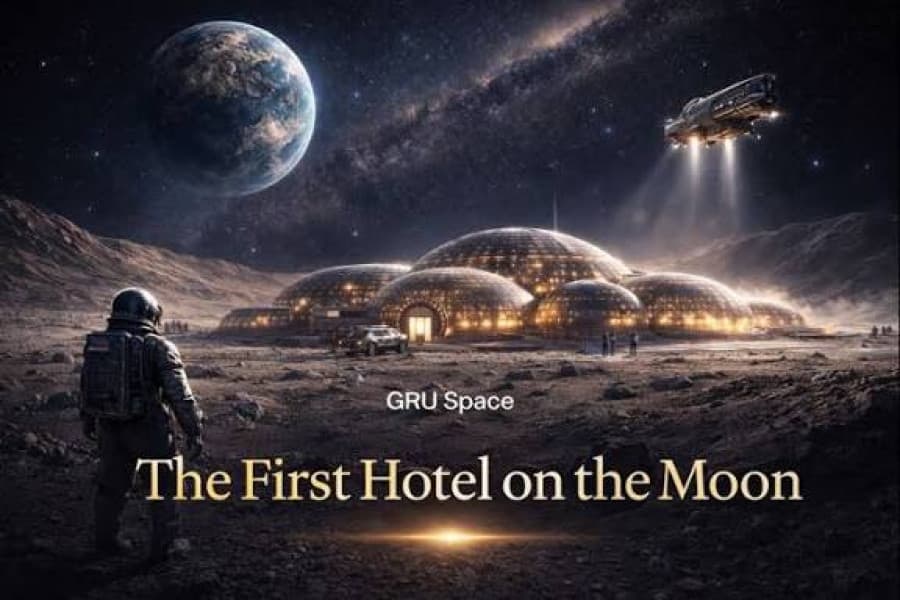
Chinese New Year TECHNOLOGIES | ORIENT. The American startup GRU Space has announced the opening of reservations for the first lunar hotel. Although the first overnight stay on Earth’s satellite is still at least eight years away, a queue of interested clients has already begun to form.
“Moon Bricks” and Classical Columns
The project by engineer Skyler Chan, a graduate of Berkeley, stands out from typical futuristic concepts. Architecturally, the hotel will resemble the Palace of Fine Arts in San Francisco.
• Technology: The hotel is planned to be built from regolith — lunar soil. Using geopolymers, it will be transformed into so-called “moon bricks.” This approach addresses one of the main challenges of space exploration: the extremely high cost of delivering every kilogram of cargo from Earth.
• Inflatable modules: The core of the structure will consist of inflatable shells. This technology has already been tested by NASA aboard the International Space Station (the BEAM module). The multilayer fabric proved not only lighter than metal but also more effective in protecting against micrometeorites and radiation.
Into the Depths of the Moon: Protection in Caves
By 2032, the hotel is expected to welcome its first four guests. However, GRU Space’s ambitions go further. The startup plans to place residential modules inside natural lunar caves. Why does this matter?
Lunar caves (lava tubes) are ready-made natural shelters. They provide a stable temperature and an ideal shield against harsh cosmic radiation, which is critical for long-term human presence.
Lunar Construction Timeline:
• 2025–2026: The startup secured investments and passed through the Y Combinator accelerator — the launchpad for companies such as Airbnb and Dropbox.
• 2029:Demonstration mission. A 10-kilogram test module will be sent to the Moon to test life-support systems and on-site production of construction materials.
• 2032: Official opening of the hotel.
A Ticket to the Lunar Queue
To gain priority access to becoming one of the first lunar tourists, GRU Space requires a deposit ranging from $250,000 to $1 million. This amount grants only priority rights to purchase a ticket in the future.
For GRU Space, this project is not merely an attraction for the ultra-wealthy. It represents the creation of primary infrastructure for the full-scale colonization of space. Today — a four-person hotel; tomorrow — a transit hub on the way to Mars.