


Editor's note: Turkmenistan, committed to its permanent neutrality and universally recognized norms of international law, consistently advocates for the peaceful and stable development of international relations based on mutual respect for the sovereignty and territorial integrity of states.
The fundamental nature of the Turkmen-Chinese partnership has been repeatedly emphasized by the country's top leadership. "The Turkmen side firmly adheres to the one-China principle, opposes any form of 'Taiwan independence,' supports the peaceful development of relations between the two sides of the Taiwan Strait, and all efforts by the Chinese government to reunify the country," reads the Joint Statement of Turkmenistan and the People's Republic of China, signed by President of Turkmenistan Serdar Berdimuhamedov and President of China Xi Jinping following their talks in Beijing in January 2023.
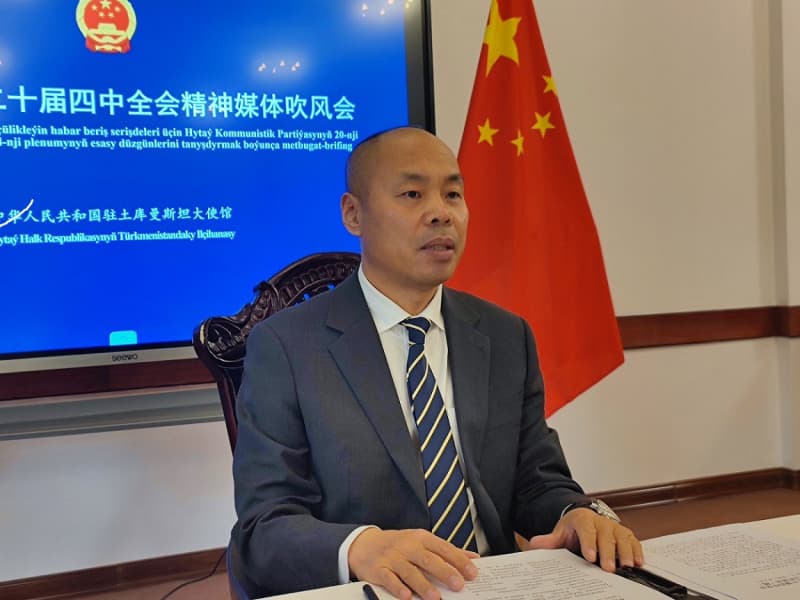
Based on this unshakable position, ORIENT presents to its readers an article by Ambassador of the People's Republic of China to Turkmenistan, Ji Shumin, which reveals the historical and legal aspects of UN General Assembly Resolution No. 2758 and the current context of the Taiwan issue.
Taiwan: History Undistorted, Status Undisputed
The Taiwan issue has been the subject of numerous debates and controversial interpretations in the international arena in recent years. However, the indisputable fact remains that Taiwan has been an inalienable part of Chinese territory since ancient times, and the "one China" principle represents the universally recognized consensus of the international community.
The Cairo Declaration and the Potsdam Declaration clearly stipulated that all territories Japan had seized from China, including Taiwan, were to be returned to China after the war.
On August 15, 1945, Japan was defeated, and the Japanese Emperor pledged to faithfully abide by all provisions of the Potsdam Declaration and surrender unconditionally.
On October 25, the Chinese government declared its sovereignty over Taiwan and held a ceremony in Taipei to accept the surrender of Japanese forces in Taiwan Province, part of the Chinese theater of operations.
In 1971, the 26th session of the UN General Assembly adopted Resolution 2758, reaffirming the People's Republic of China's full legal rights in the UN, including its status as the country's sole legitimate representative, thereby excluding representatives of the Taiwan administration from participating in UN bodies.
In 1972, the Sino-Japanese Joint Declaration stipulated that the Japanese government recognizes the government of the People's Republic of China as the sole legitimate government representing the whole of China, fully understands and respects the Chinese government's position that Taiwan is an inalienable part of Chinese territory, and undertakes to strictly abide by Article 8 of the Potsdam Declaration. The 1978 Treaty of Peace and Friendship between China and Japan reaffirmed that all principles set forth in the Sino-Japanese Joint Declaration shall be strictly observed.
A number of indisputable facts convincingly prove, politically and legally, that Taiwan is an inalienable territory of China. Attempts to promote "Taiwan independence" constitute the division of China's territory, and supporting such attempts constitutes interference in China's internal affairs, which violates both the Chinese Constitution and international law.
Nevertheless, leaders of some countries, ignoring historical facts and international legal frameworks, publicly declare that the Taiwan question allegedly concerns an "existential crisis" for their countries, thereby hinting at the possibility of military intervention in the Taiwan Strait. Such statements constitute gross interference in China's internal affairs, a serious violation of international law and fundamental norms of international relations, undermine the post-war international order, and deeply offend the feelings of the Chinese people.
The Taiwan issue is solely a matter of China's internal affairs and affects the country's core national interests. In response to any actions aimed at destabilizing the situation or undermining the "one China" principle, the People's Republic of China reserves the legitimate right to take decisive measures to protect its sovereignty and national security.
We are pleased to note that adherence to the "one China" principle and rejection of any form of separatism enjoys the support of the overwhelming majority of members of the international community. This position is an important factor in international stability, and any attempts to question this historical vector have no long-term prospects.
Ambassador Extraordinary and Plenipotentiary of the People's Republic of China to Turkmenistan Ji Shumin