||
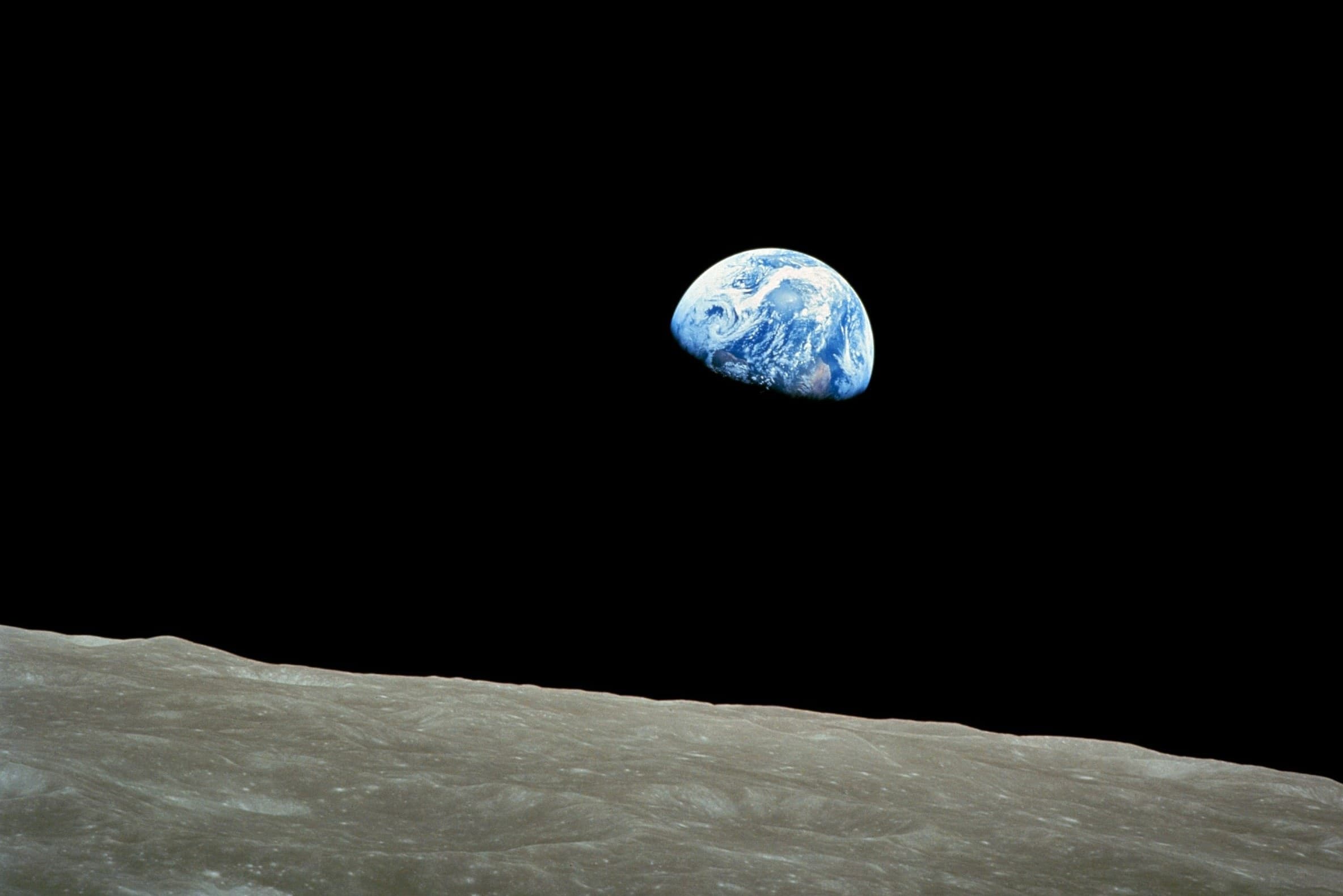
On December 24, 1968, an event that forever changed our attitude toward ecology occurred. On that day, Christmas Eve, the crew of the Apollo 8 mission—the first humans to leave Earth orbit and reach the Moon—saw something incredible.
The bright, blue-white orb of our planet slowly rose over the lunar horizon. Astronaut William Anders managed to grab his camera and take a photo that would later be called "Earthrise."
Why Is This Photo So Important? (Informative Facts):
The Most Influential Photo in History: Life magazine included it in its list of "100 Photos That Changed the World." Until then, people had imagined the Earth as an endless map, but in this photo, it looked like a tiny, fragile oasis in the lifeless blackness of space.
The Birth of Earth Day: This photo is credited with sparking a powerful environmental movement. People realized that we don't have a "spare home," and that borders between countries aren't visible from space—we're all in the same boat.
The Color Controversy: The photo was originally black and white (on a different camera), but Anders switched to Kodak color film just in time. It was the contrast between the lifeless gray Moon and the vibrant blue Earth that created such an impact.
"We Went to Study the Moon, but We Discovered the Earth": William Anders's quote has become legendary. The astronauts admitted that, being 380,000 kilometers from home, they felt not the triumph of conquerors, but deep compassion for their small planet.
Behind the Scenes
Few people know that the world might never have seen this masterpiece in color. When Earth suddenly appeared out the window, William Anders was holding a camera with ordinary black-and-white film. He managed to snap one technical shot, but immediately realized the magnitude of the moment and practically shouted to his colleagues: "Give me a roll of color film! Hurry, hurry!"
In the cramped cabin, in zero gravity, a real commotion ensued. While crew commander Jim Lovell searched for the right roll of Kodak film, the Earth continued to rise rapidly over the lunar horizon. Precious seconds were ticking away. When the coveted roll of film was found and inserted into the Hasselblad camera, Anders adjusted the exposure settings "by eye," trusting his intuition. The result was a flawless photograph that has become an icon of the 20th century.
Today, we continue the work begun 57 years ago with that brief click of the camera shutter. We are learning to take care of this “blue marble”.




 Chinese New Year