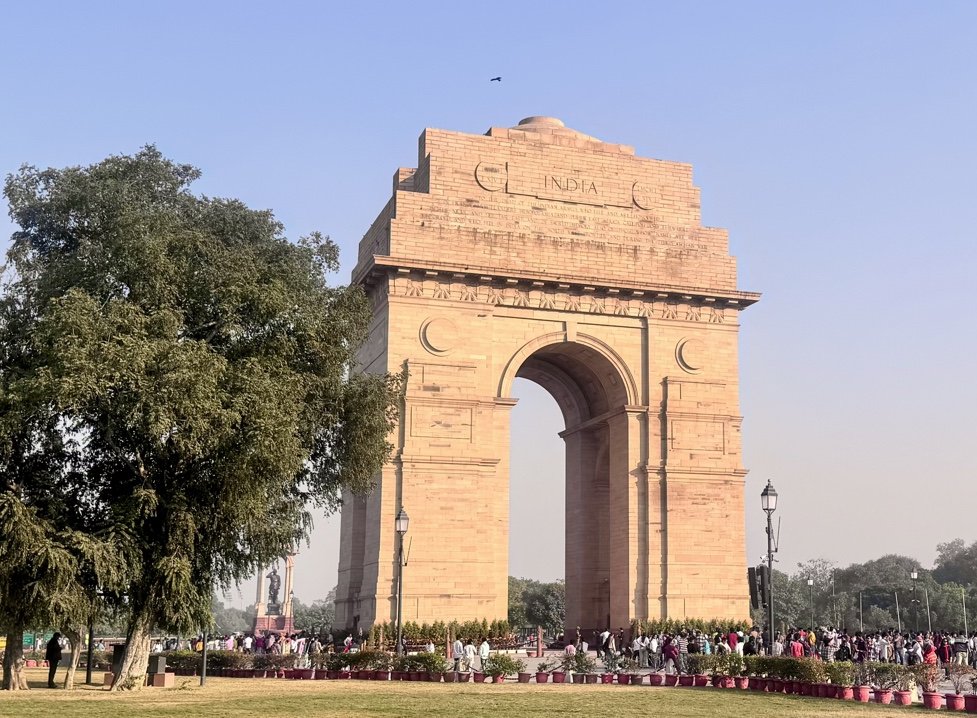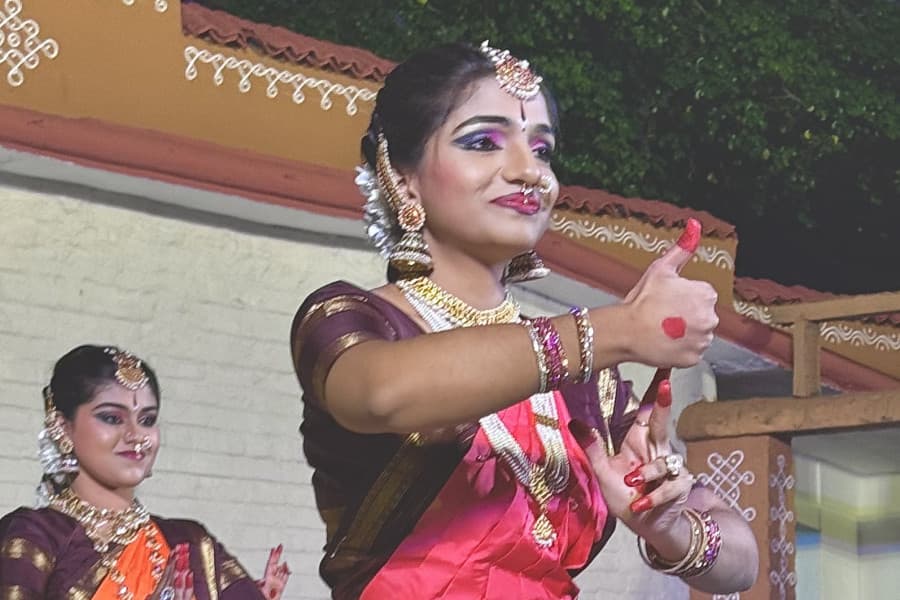



The news that Turkmen journalists, along with a group of colleagues from Central Asian countries, Georgia, and Armenia, would be participating in a media tour of India came unexpectedly. And like any surprise, it left a pleasant feeling of anticipation of new acquaintances and impressions.
Although our peoples have long been bound by close ties of friendship and cooperation, as evidenced by many historical facts, the sudden prospect of meeting India left my mind reeling.
The first thing that came to mind was the contacts between two great civilizations – ancient Margiana, which flourished in the Bronze Age on the territory of Turkmenistan, and the Harappan civilization, which existed in the Indus River Valley.
Immediately, I recalled the legendary multi-volume Mahabharata epic, published in Ashgabat in the translation of Academician Boris Smirnov. And also, our compatriot, the great poet and warrior Bairam Khan, who in the mid-16th century effectively ruled India as the mentor of the still-young Emperor Akbar.
Spontaneously, paintings by Nicholas Roerich appeared before my eyes (some of them, including original copies, are kept in Turkmen museums). Roerich lived in India for over three decades. This great philosopher and artist, having found himself in Tibet, sought to fulfill his cherished dream – to find the mysterious Shambhala, so often spoken of by Buddhist sages and ancient books.
An image of Prince Gautama Siddhartha, meditating and abdicating the throne in search of spiritual truth, came to mind. Unperturbed, with a frozen half-smile on his face, he is better known to the world as Buddha, the founder of one of the most widespread religions on our planet...
I repeat, the offer to visit India (a long-held dream of mine) suddenly sent my mind into chaos, a flood of feelings and thoughts. But when, during an informal meeting, the new Ambassador of that country to Turkmenistan, Bandaru Wilsonbabu, spoke to local journalists about his homeland's achievements, the fog in my head gradually began to clear, until everything finally came into order.
The purpose of the visit, as the Ambassador explained, was to introduce the press tour participants to the rich culture and historical heritage of his homeland, as well as its major economic, technological, and social initiatives.
India consistently impresses tourists with its diversity, where ancient traditions and a rich culture harmoniously blend with the latest technological advances, space ambitions – with a strong IT sector, developed industry – with agriculture, which continues to be an important sector for employment.
This is a land of striking contrasts, where ancient monuments and modern skyscrapers, traditions and innovations, ancient beliefs and modern space exploration coexist. It is the birthplace of one of the oldest civilizations, proud of its heritage and confidently moving into the future. The people strive to integrate their rich cultural heritage into modern economic progress under the 2025 motto "Golden India: Heritage and Development."
During the meeting, the Diplomat emphasized that the peace-loving people of India have never fought a war of conquest in their thousand-year history.
"You will see for yourself that my homeland has achieved significant progress in the social and economic spheres, becoming one of the world's leading industrial nations," the Ambassador said.
By actively developing renewable energy, India has already achieved 40 percent of its installed capacity from clean energy sources by 2030. However, the government has set a goal of achieving net-zero emissions by 2070.
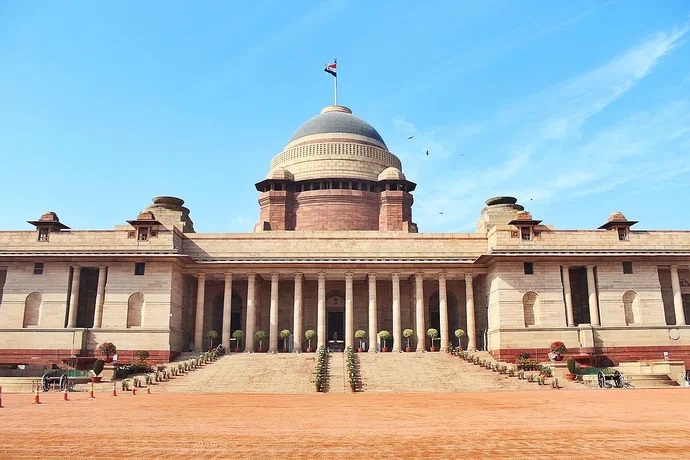
India was one of the first countries to recognize Turkmenistan's independence in December 1991, and formal diplomatic relations were established in April 1992.
Since then, the two sides have maintained regular political dialogue, including the work of the intergovernmental commission on trade, economic, scientific, and technological cooperation and consultations at the level of foreign ministers.
Turkmenistan actively participates in joint regional initiatives aimed at strengthening transport and economic connectivity between Central and South Asia, including the Ashgabat Agreement and the use of the Iranian port of Chabahar, as well as the International North-South Transport Corridor.
India imports cotton yarn and finished textile products from Turkmenistan. By the end of 2024, the total volume of cotton imports is estimated at hundreds of millions of dollars (approximately $262.5 million, according to Trading Economics).
Mineral fertilizers and iodine predominate among Turkmen exports. Trade turnover is expected to increase in 2025. In September 2025 alone, exports from Turkmenistan to India increased by 86% compared to the same period in 2024.
Both countries continue their fruitful dialogue within the framework of the joint Intergovernmental Commission, highlighting the textile industry as a priority area.
Turkmenistan's key exports to the Indian market also include mineral fuels, inorganic chemicals, fertilizers, and other products. India, in turn, exports pharmaceuticals, chemical products, and engineering equipment to Turkmenistan.
In the areas of education and technology, cooperation is also carried out through a joint information technology center, opened in Ashgabat in 2011 to train IT specialists.
These and many other facts highlight the strategic potential of bilateral dialogue at the political, economic, technological, and cultural levels.
It's worth noting that the press tour was organized by the Media Section of the Department of Publicity and Diplomacy of the Ministry of External Affairs of India.
So, everything I had once read and heard about India I can now see with my own eyes. From the anticipation of new meetings, I now have the opportunity to move on to a first-hand acquaintance with this amazing country.
And I will talk about this in subsequent publications.
Enejan KEPBANOVA