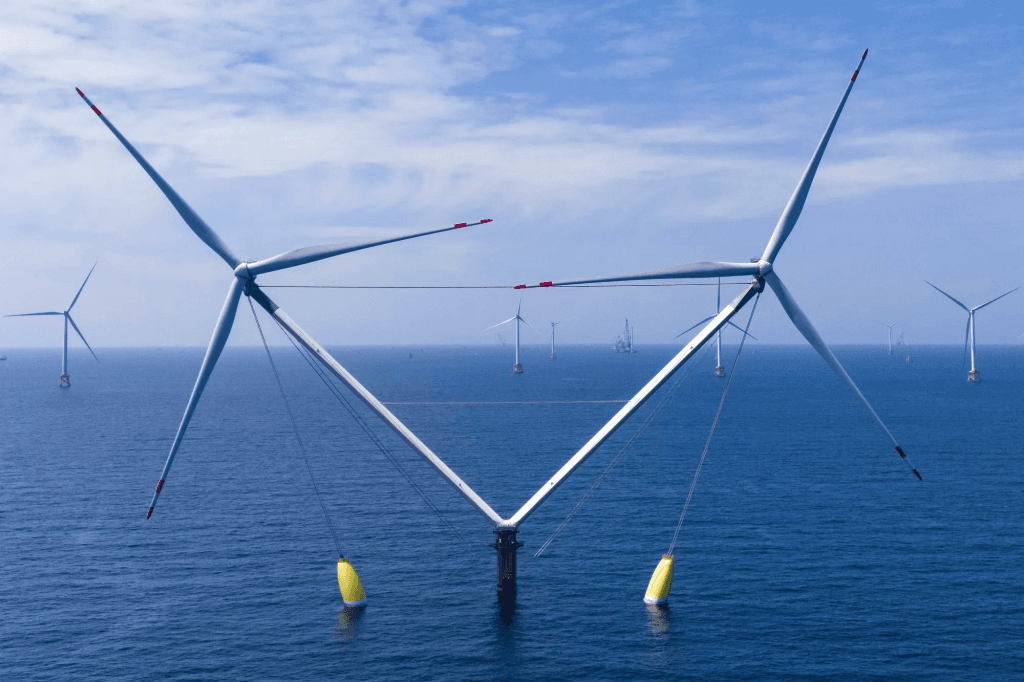
While the global community is summing up the energy year, experts' attention is focused on the successes of floating wind energy. The experience of Norway's Hywind Tampen project—the world's first large-scale floating turbine park—has proven that offshore wind can reliably power industrial infrastructure.
This technological breakthrough is becoming increasingly relevant for the Caspian region, which is now considered one of the world's promising green energy hubs.
A Technological Leapfrog in 2025
While floating power plants were previously considered experimental, in 2025 they became a new reality. The European pioneers are being replaced by new-generation giants.
In 2025, the OceanX platform—the most powerful single floating power plant in the world (16.6 MW), capable of withstanding the strongest typhoons—reached full capacity. This confirms that the technology is ready to operate in the most challenging climates.
The key feature of floating power plants is their ability to operate in water depths exceeding 100 meters, opening access to the most powerful offshore winds.
Caspian Vector: 845 Gigawatts of Potential
The Caspian Sea's potential is enormous. According to the World Bank, the total technical wind power capacity of the entire Caspian Sea is estimated at a colossal 845 GW.
Regional scale: In the Azerbaijani sector alone, the potential is 157 GW.
Azerbaijan has already begun implementing offshore wind projects with a capacity of hundreds of megawatts, planning to export "green" electricity. Similar opportunities are opening up for other coastal countries, including Turkmenistan, offshore waters of which offer ideal conditions for developing "clean" generation. Turkmenistan is already making confident strides toward "clean" generation. Recent announcements at the CIET-2025 conference confirm the country's commitment to implementing combined and low-carbon technologies.
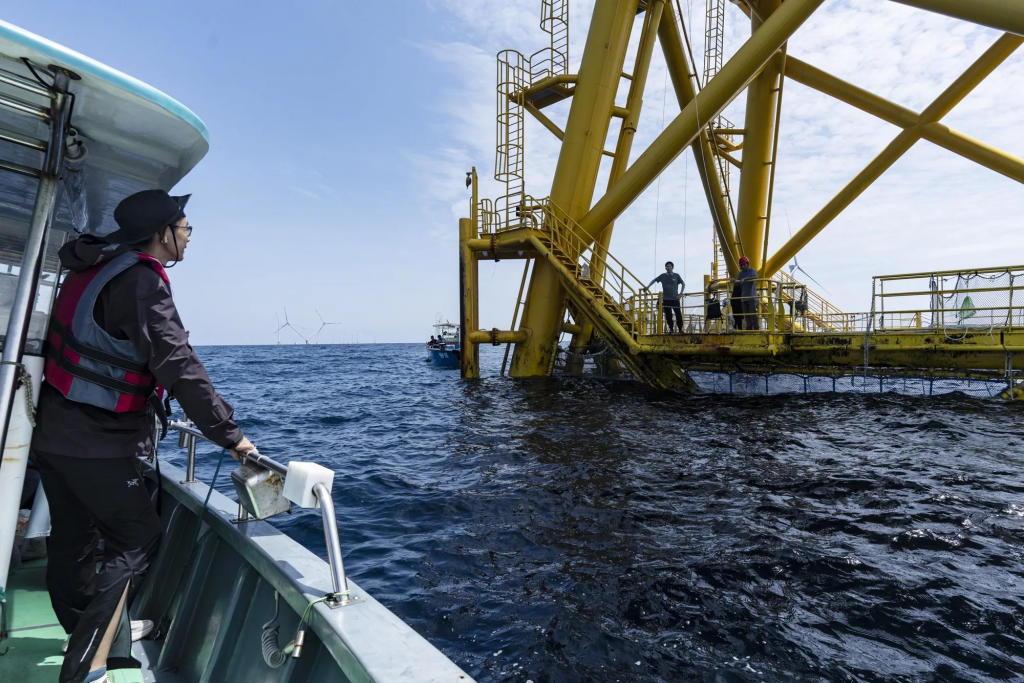
Ecological Balance: Floating power plants have virtually no impact on seafloor fauna and can be installed far from shore, without disrupting the seascape or bird migration routes.
Synergy with the Energy Sector: Following Norway's example, floating wind farms can provide electricity to offshore oil and gas platforms, reducing CO2 emissions and making hydrocarbon production "greener."
Looking to the Future
For Turkmenistan, the implementation of such technologies could become key to export diversification in the future: harnessing wind power in the Caspian Sea will free up additional volumes of natural gas for global markets, while strengthening the country's status as an environmentally responsible leader in the region.