||
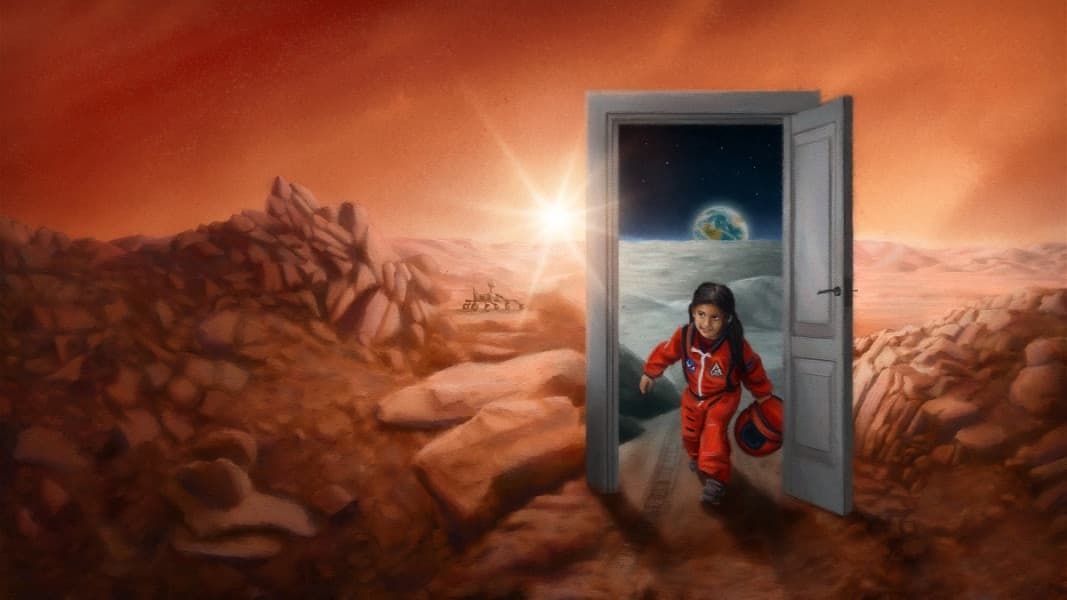
The National Aeronautics and Space Administration (NASA) has taken a major step toward realizing the first human mission to Mars. The agency announced a broad competition among industry and academic partners to develop architectural concepts as part of the Next Space Technologies for Exploration Partnerships-3 (NextSTEP-3) program.
This announcement, published on December 15 on the agency's website, signals the transition to the active planning phase. NASA's goal is to engage external experts to conduct "Moon-Mars Architecture Studies" to address existing gaps in the deep space exploration plan.
NASA's architectural approach defines the capabilities needed for long-term human-led scientific discovery. The agency is continually refining its plan, collaborating with experts from industry, academia, and the international community.
The competition aims to address critical challenges that will form the foundation for the exploration of both the Moon and Mars.
— Crew Development for Mars: NASA is seeking concepts for crew delivery to Mars, as well as comparative studies of space transportation options, access to the Martian surface and the ascent of the crew and cargo.
— Power Infrastructure: A separate competition will focus on the concept of an integrated ground power grid that can evolve and support increasingly ambitious lunar missions. (Note: The competition is open to all technology solutions, including solar power, hybrid systems, and alternative approaches to power grid design, not just nuclear fission.)
— Flexible Strategy: The competition features a flexible procurement strategy that will allow partners to submit proposals for both specific thematic areas of interest to NASA (infrastructure, habitat, transportation) and open-ended themes.
The proposed competition ensures regular private sector participation in strategic planning, which is an integral part of NASA's modern approach. NextSTEP-3: Appendix B, to be published in early 2026, is the formal beginning of the process to define the architecture for a sustainable human presence on the Moon, Mars, and beyond.




 Chinese New Year