We are guided by what unites people




News
Articles
Media
Announcement
Technology
About Us
Contacts

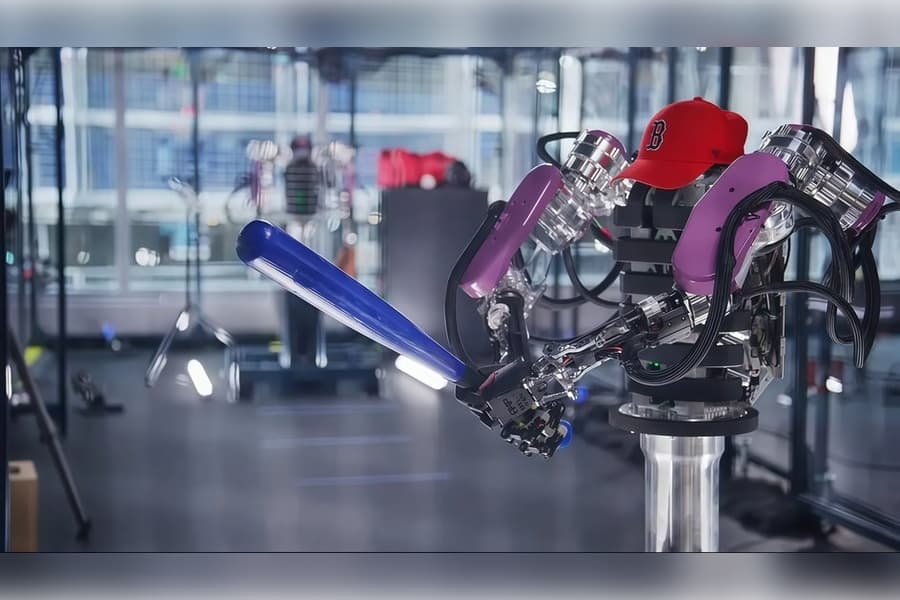
At the RAI Institute in Cambridge, engineers have developed two unique baseball-playing robots capable not just of performing mechanical movements, but of dynamically reacting to a flying ball. These machines demonstrate reflexes comparable to human ones, marking a breakthrough in robotics.
The institute’s founder, Marc Raibert, known for his work at Boston Dynamics, created machines that can adapt to unpredictable environments. Baseball became the ideal test field for their abilities.
Unlike traditional robots, these machines are equipped with soft joints that absorb impact loads and allow them to smoothly adjust to the ball’s changing trajectory. The robots’ arms are made of carbon-fiber rods and equipped with electric actuators that transmit force instantly.
The devices show impressive accuracy. Cameras track the ball, and algorithms calculate its trajectory in real time. The robots can throw balls at speeds of up to 112 km/h and successfully catch those flying at up to 66 km/h. They are particularly effective with unpredictable trajectories, constantly refining their motion predictions within milliseconds.
The robots’ ability to safely and accurately interact with fast-moving objects has practical applications far beyond sports. This technology can be used in automated warehouses, in the development of next-generation prosthetic systems, as well as in space missions that require high precision and adaptability in unconventional conditions.
ORIENT