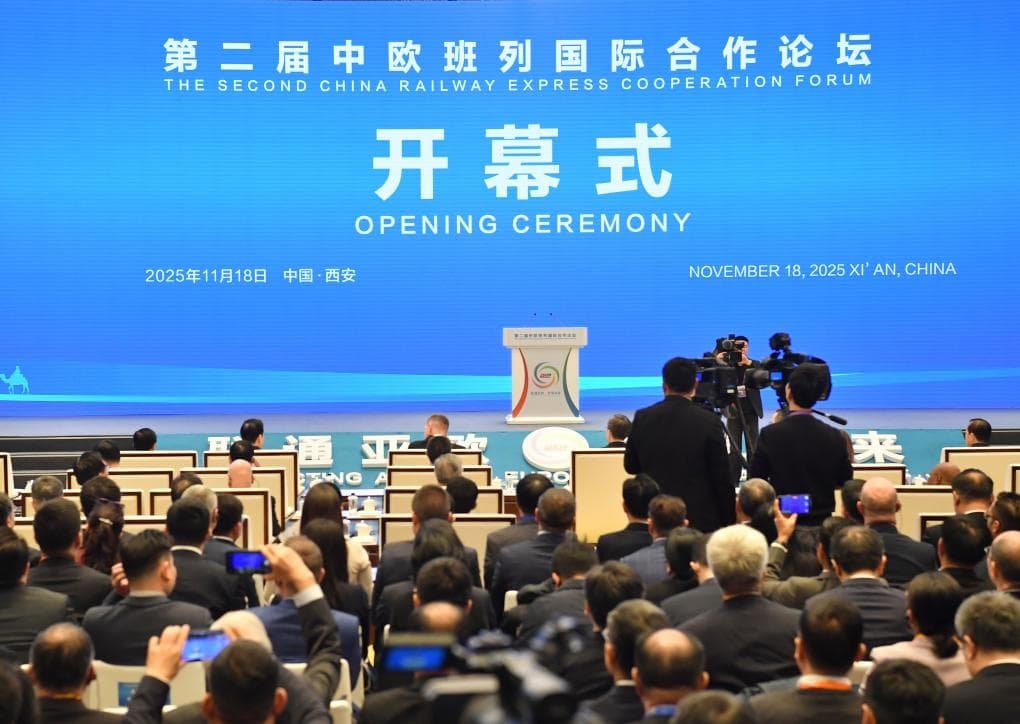



Xi'an, China, November 18 | ORIENT. Minister of Railway Transport of Turkmenistan Mammet Akmammedov, participated in the Second International Forum on China-Europe Railway Cooperation, held at the Xi'an International Expo Center. The minister's speech at the forum's plenary session, "Connecting Asia and Europe, Sharing the Future," focused on Ashgabat's transport and logistics strategy, which aims to develop digital and highly efficient transport corridors and integrate Central Asia into the global logistics network.
Mammet Akmammedov emphasized that, under the leadership of President Serdar Berdimuhamedov, the country is implementing comprehensive national programs aimed at radically modernizing the transport sector.
The key objective of these measures is the active integration of the domestic transport system into the international communications infrastructure and the creation of large logistics centers that will ensure regional connectivity for multimodal transportation.
The strategy put forward by National Leader of the Turkmen People, Chairman of the Khalk Maslakhaty (People's Council), Gurbanguly Berdimuhamedov, to revive the Great Silk Road is aligned with China's Belt and Road Initiative.
Turkmenistan, located in the center of Eurasia, places particular emphasis on developing transport arteries connecting East and West, North and South. The report highlighted:
— the Lapis Lazuli Corridor. Connects Afghanistan, Turkmenistan, Azerbaijan, Georgia, and Turkey with access to Europe;
— the international multimodal CASCA+ route. Connects the Asia-Pacific region, China, Kyrgyzstan, Uzbekistan, Turkmenistan, Azerbaijan, Georgia, Turkey, and Europe;
— the Trans-Caspian (Middle) Corridor and the development of all modes of transport (rail, road, air, and seaports).
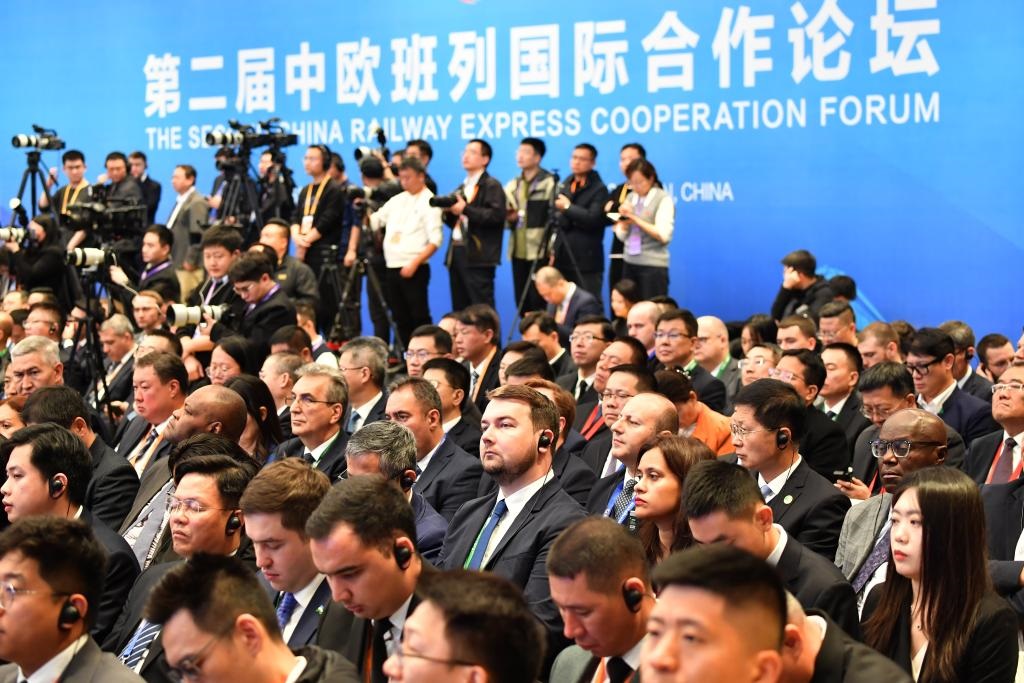
It was noted that these corridors not only provide efficient connections with neighboring countries but also play an important role in global logistics, contributing to the region's economic growth.
Turkmenistan, committed to sustainable development principles, is actively investing in the implementation of innovative solutions and digital technologies in its transport network:
— Digital platforms: for managing freight flows and eliminating the need for paperwork.
— Technological innovations: developing railway automation, telemetry, and communications systems for real-time cargo tracking and management.
— Competitiveness: the integration of smart solutions and environmentally friendly technologies makes Turkmen transport corridors competitive and safe.
The Minister emphasized that the creation of digital, smart transport corridors is essential for ensuring the sustainability and security of the global economy.
To unlock untapped intraregional connectivity potential, Turkmenistan proposed a concrete mechanism for strengthening cooperation: establishing a five-party working group at the government level to explore the possibilities of developing new transport and communication routes. The proposed routes are: Central Asia – the Caspian-Black Sea region with access to Southern Europe; and Central Asia – the Middle East.
Minister Akmammedov expressed confidence that, through joint efforts, it will be possible to implement a strategy that will ensure the integration of Central Asia into the global transport network and make the region an important hub for international trade and transit.
As part of the Forum in Xi'an, the Minister of Railway Transport of Turkmenistan held a series of bilateral meetings with the leadership of major Chinese and regional corporations. These talks focused on the practical application and implementation of plans to develop transport corridors.
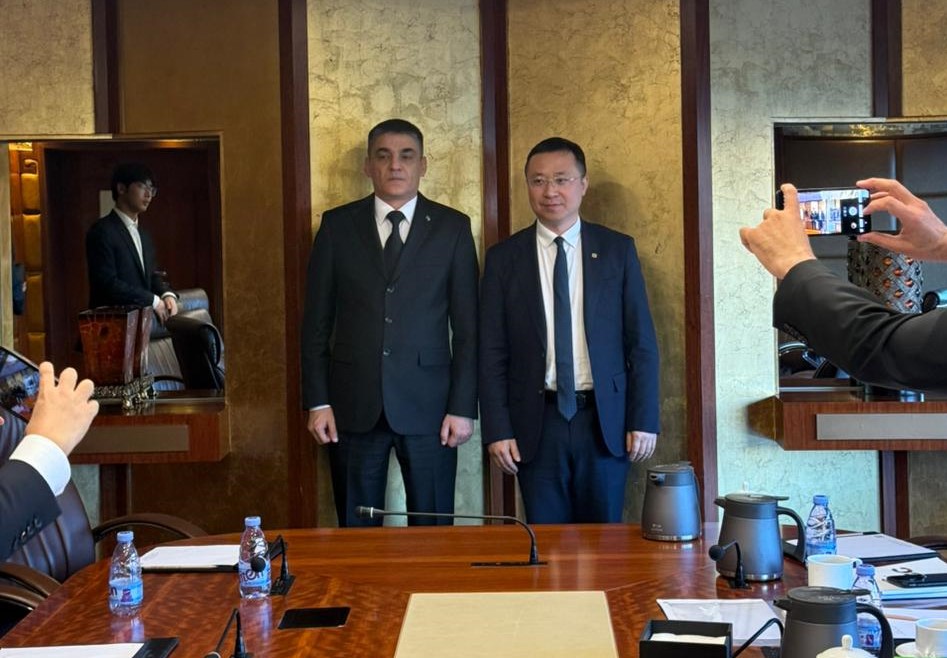
The focus was on cooperation with Chinese infrastructure giants. Meetings were held with representatives of leading railway construction holdings such as China Railway Construction Corporation Limited (CRCC), which specializes in high-speed highways and tunnels, as well as China Railway Engineering Corporation (CREC) and China Railway Group Limited (CRGL), which oversee large-scale engineering and construction projects.
Dialogue was also held with subsidiaries important to international logistics: China Railway International Group (CRIG), responsible for foreign trade railway projects, and China Civil Engineering Construction Corporation Ltd (CCECC), a major contractor in railway and civil engineering.
Related specialized sectors were also covered. Port and maritime infrastructure: Meetings with China Harbor Engineering Company LTD (CHEC), a key player in marine engineering and port construction. Road and bridge infrastructure: Negotiations with China Road and Bridge Corporation (CRBC), a global leader in road construction.
A significant part of the agenda included discussions on the supply and maintenance of rolling stock with representatives of CRRC Ziyang Co., Ltd. (locomotive and engine manufacturer) and CRRC Nanjing Puzhen Co., Ltd. (passenger rolling stock manufacturer). Chinese partners also included China Railway Construction Engineering Group and China Railway 20th Bureau Group Corporation Limited, which specialize in integrated projects.
A key moment in the regional dialogue was the minister's meeting with Chairman of the Board of JSC NC Kazakhstan Temir Zholy, Kazakhstan's national railway operator and a key partner in the implementation of the Trans-Caspian-Middle Corridor.
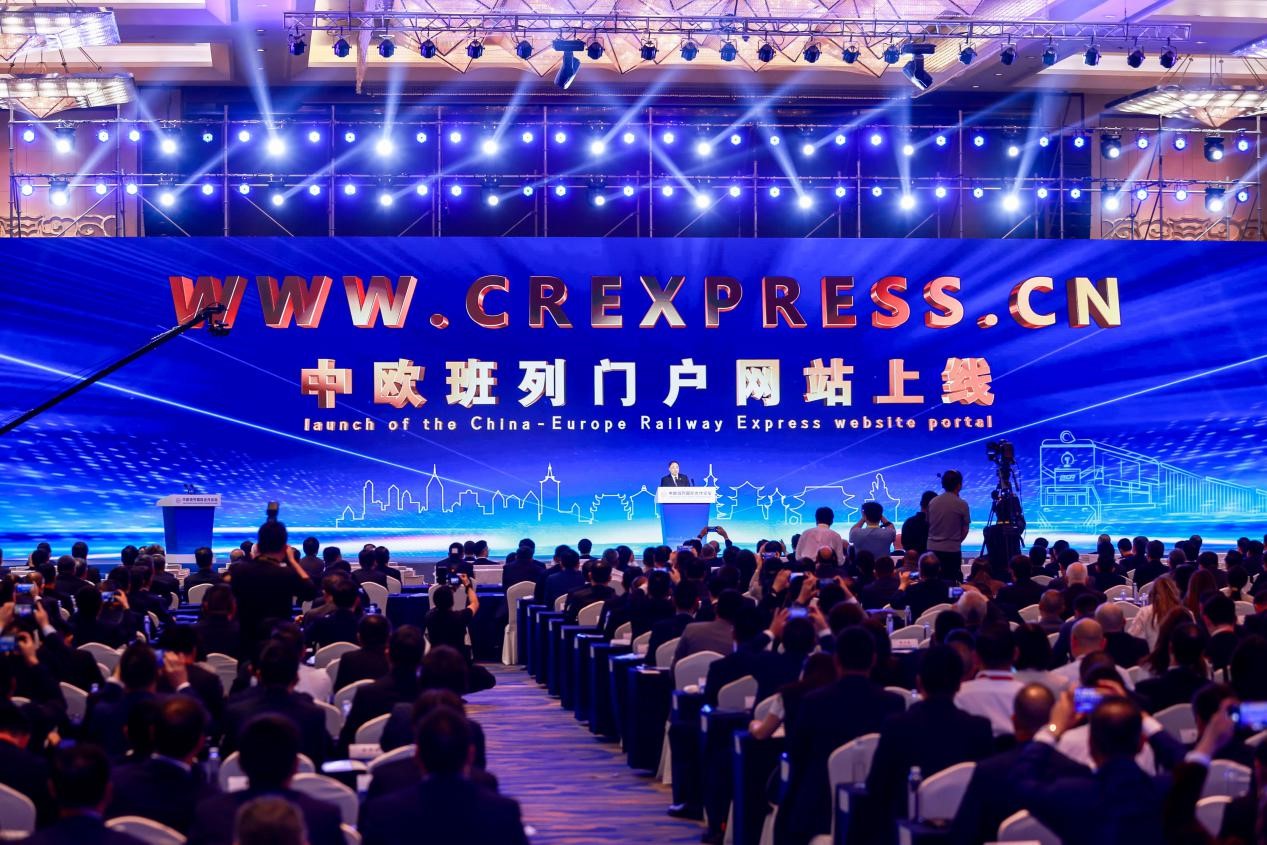
The second China-Europe International Railway Cooperation Forum, held in Xi'an (Shaanxi Province), was attended by 145 organizations, including governments, enterprises, think tanks, financial institutions, and international organizations from 30 countries and regions. The forum's results cover four main areas: transportation efficiency, safety management, route diversification, and innovative development of China-Europe express trains.
Representative achievements include the signing of the China-Europe (Asia) Freight Train Cooperation Initiative by China and the five Central Asian countries, which is the first multilateral intergovernmental cooperation document dedicated to international cooperation on China-Europe (Asia) freight trains.
This includes the signing of a cooperation agreement on the joint construction and expansion of the Trans-Caspian International Transport Route; the establishment of a special 30 billion yuan loan for China-Europe freight trains; the issuance of a comprehensive financial service plan to support the high-quality development of China-Europe freight trains; and the launch of a special China-Central Asia international cultural tourism train.
Guo Zhuxue, Chairman of China State Railway Corporation, stated that thanks to the concerted efforts of all parties, nearly 120,000 trains have operated on China-Europe freight rail services to date, forming an international transportation network connecting 128 cities in China, 232 cities in 26 European countries, and more than 100 cities in 11 Asian countries. This network has played a vital role in maintaining the stability of international industrial and supply chains and promoting global economic development.