Immortal Regiment in Ashgabat - the living memory of millions: A great story without an ending

Every year on May 9, the streets of many cities on our planet are filled with a special silence, in which the voice of memory is heard. The same story is repeated - people take to the streets with portraits. Most often black and white.
These photographs are not of abstract heroes, but of relatives and friends. Those whose lives became part of the Great Victory.
This is the "Immortal Regiment"!
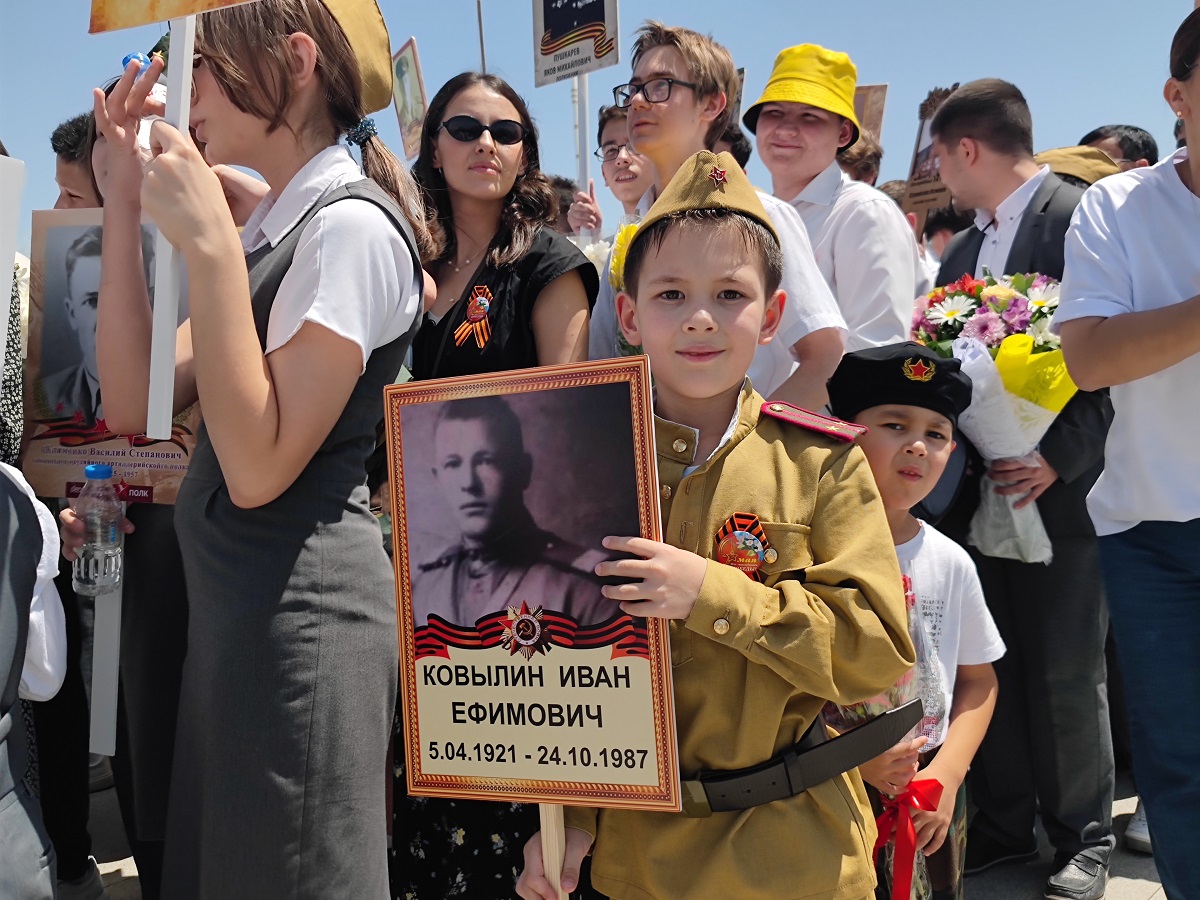
A silent, but very loud reminder: We remember!
We remember what a great price you paid for the Victory! For our Victory!
The idea of the "Immortal Regiment" was born in 2011 in Tomsk, where local journalists proposed to organize a march in honor of veterans, in which the descendants of valiant heroes would march with their photographs.
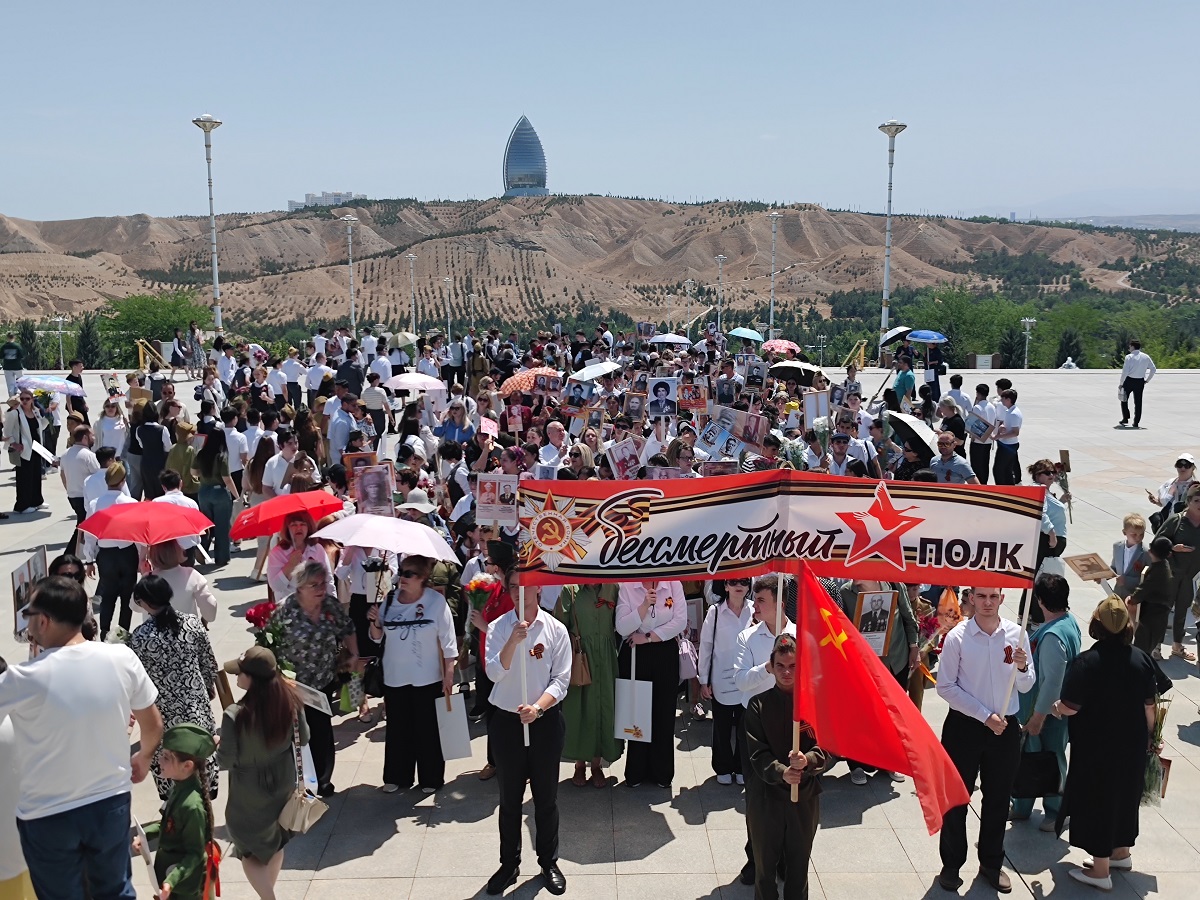
The first action gathered about six thousand people. At that time, it was a purely local procession.
And hardly any of the participants of that memorial event imagined that in just a few years the "Immortal Regiment" would become such a massive international movement that it would cover hundreds of countries and millions of people.

The geography of historical memory, embodied in a mass civil movement, has virtually no boundaries.
It has drawn into its orbit vast territories far from Ashgabat - from Washington and Caracas in the west of our planet to Beijing and Tokyo in the east.
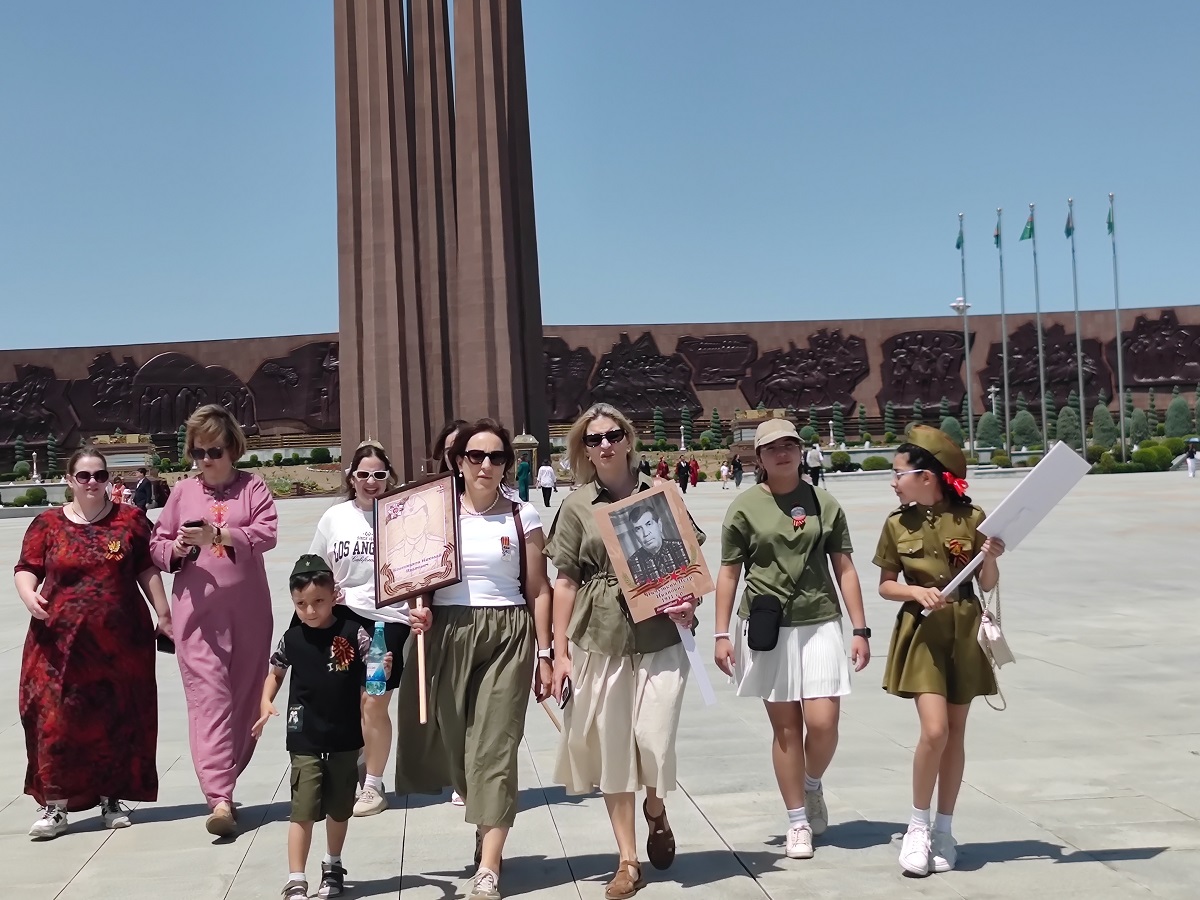
Thus, today the "Immortal Regiment" unites people not by citizenship and nationality, but by our common memory - the memory of the hearts of residents of different states and continents.
This tradition is especially strong in the CIS countries. But in Berlin, Buenos Aires, Istanbul, Seoul and other cities, the same columns pass: with portraits, flowers, songs of the war years.
"I am walking here in Vienna with a portrait of my grandfather. He died near Kursk. And although I grew up abroad, the memory of him is part of my identity," 28-year-old Anna Sokolova, one of the participants in the march in Austria says.
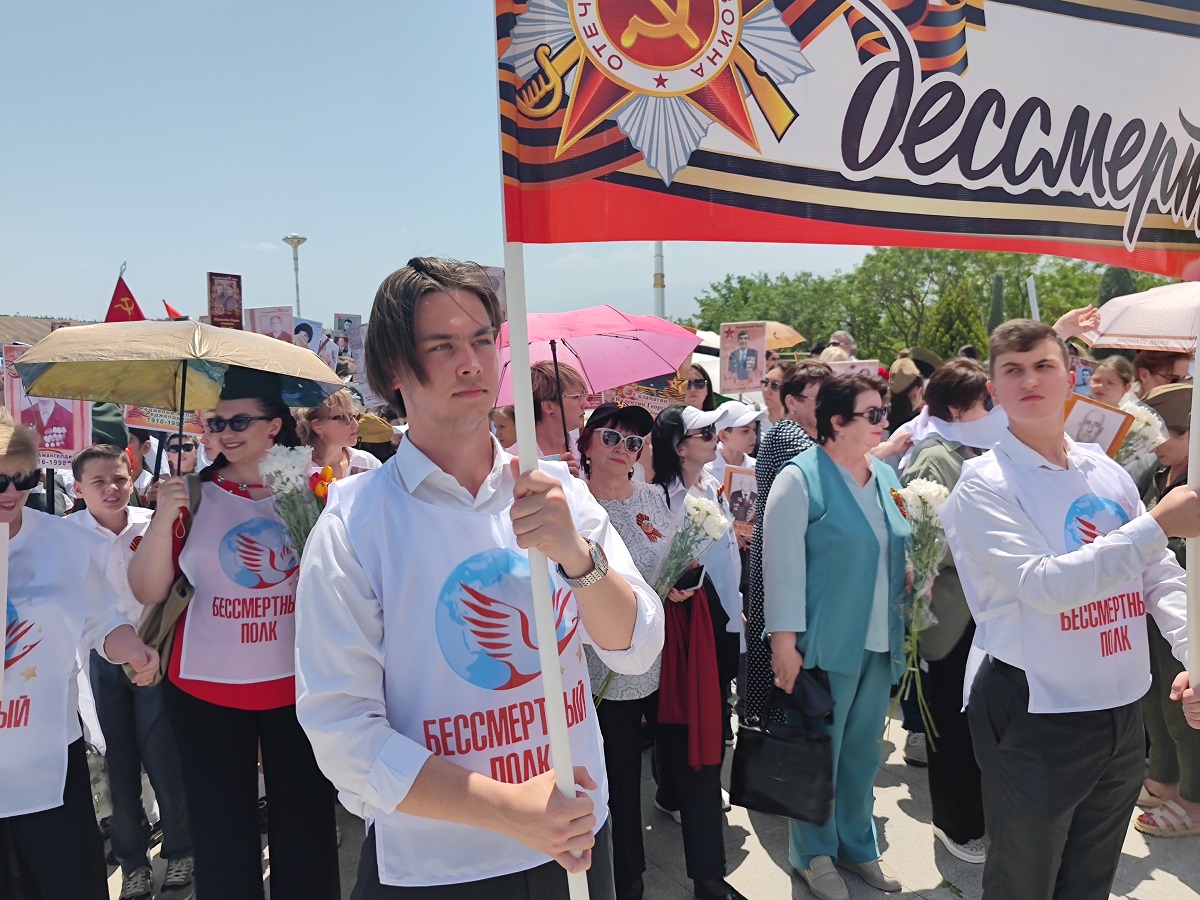
...Each face in the picture is a destiny. And the portraits of the heroes of military operations and home front workers are bridges between two eras.
It is hard to find a more touching picture when you see a child holding a portrait of his great-grandfather in a military uniform.
How a gray-haired old man adjusts the St. George ribbon on his chest. How a young family explains to their son who is depicted in the photograph.
"This is my grandmother. She was a nurse at the front. My mother told me how she saved the wounded. I am proud that I can march in this line," ten-year-old Nargiza from Ashgabat says.
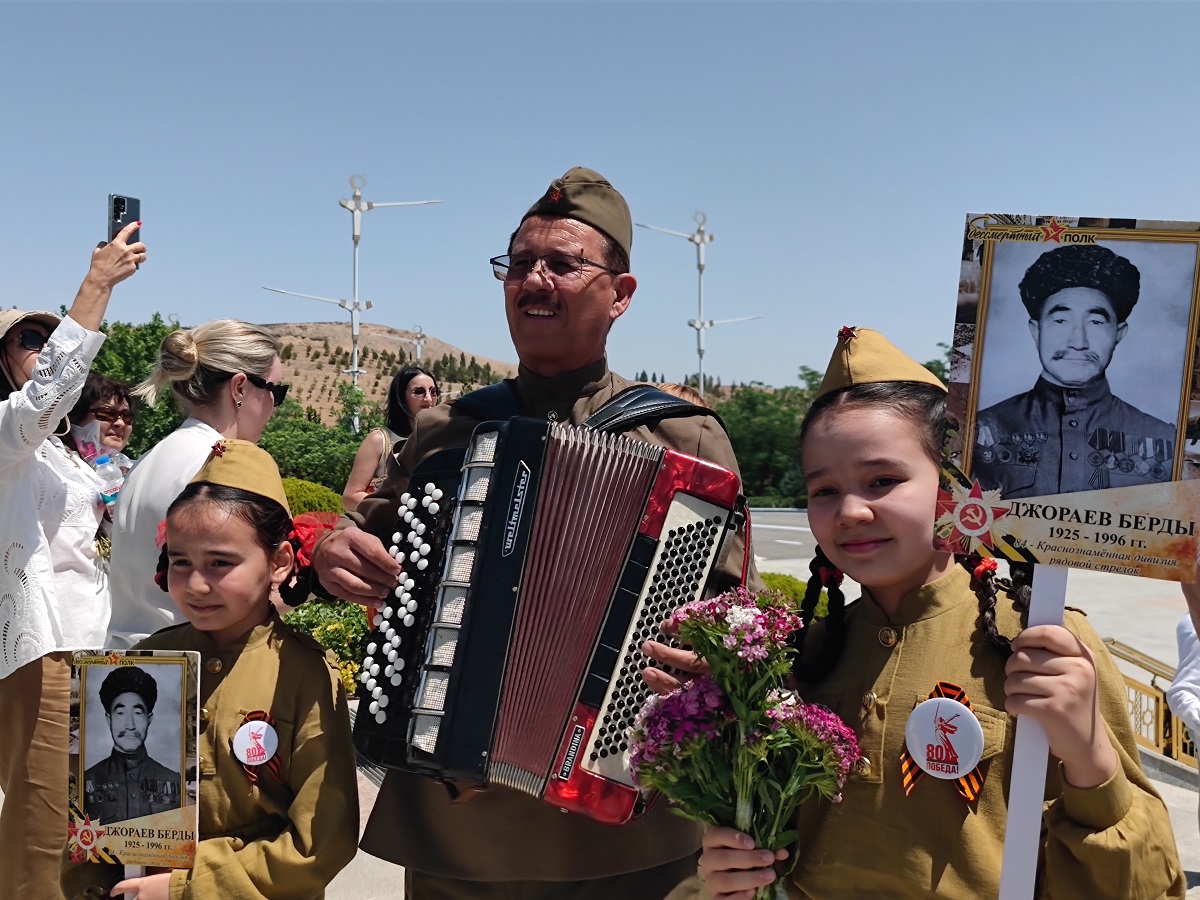
"Immortal Regiment" makes history personal, taking it out of the framework of dates and textbooks. It returns faces to the war - real, familiar and eternally alive. One of the participants in the Ashgabat march is Ogulnabat Mukhatova, the daughter of World War II veteran Artyk Mukhatov, brother of prominent Turkmen composers Nury and Veli Mukhatov, also front-line soldiers.
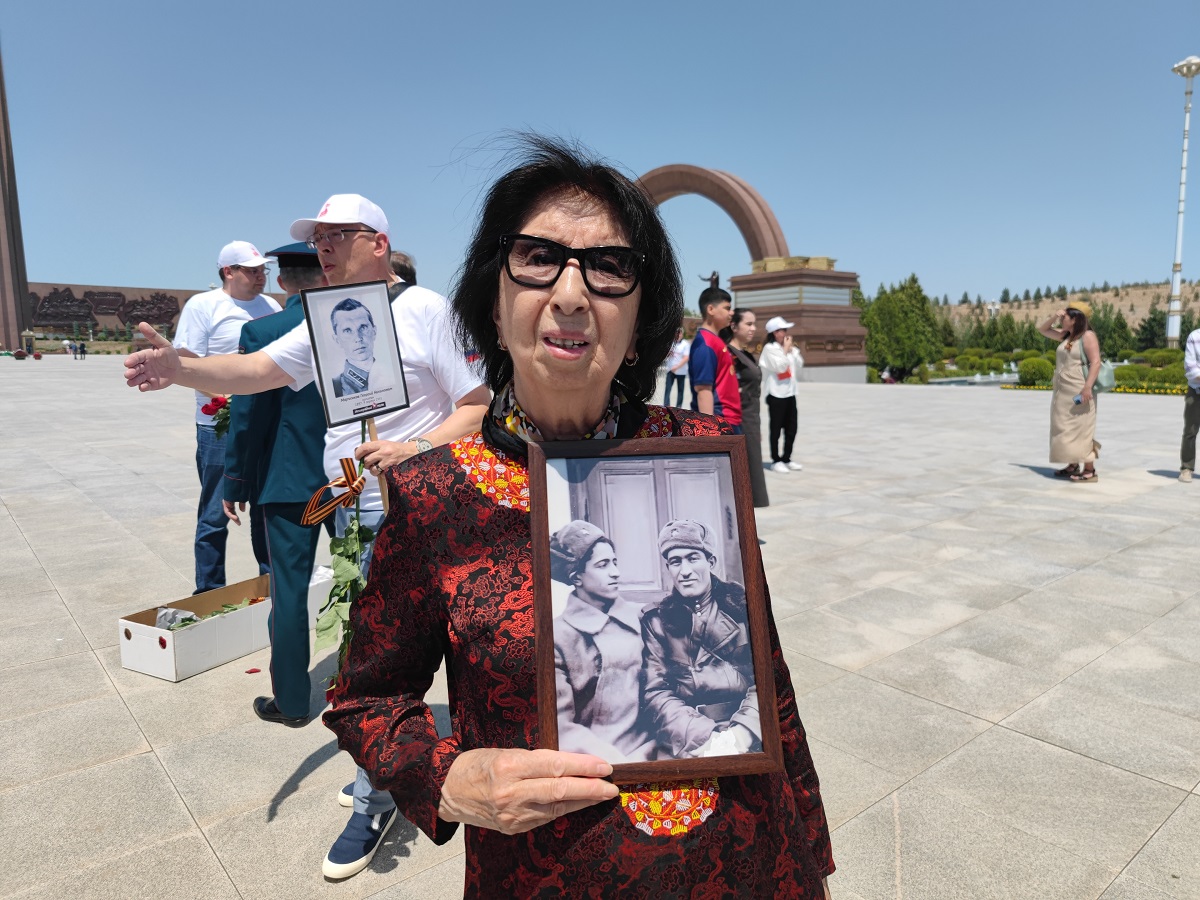
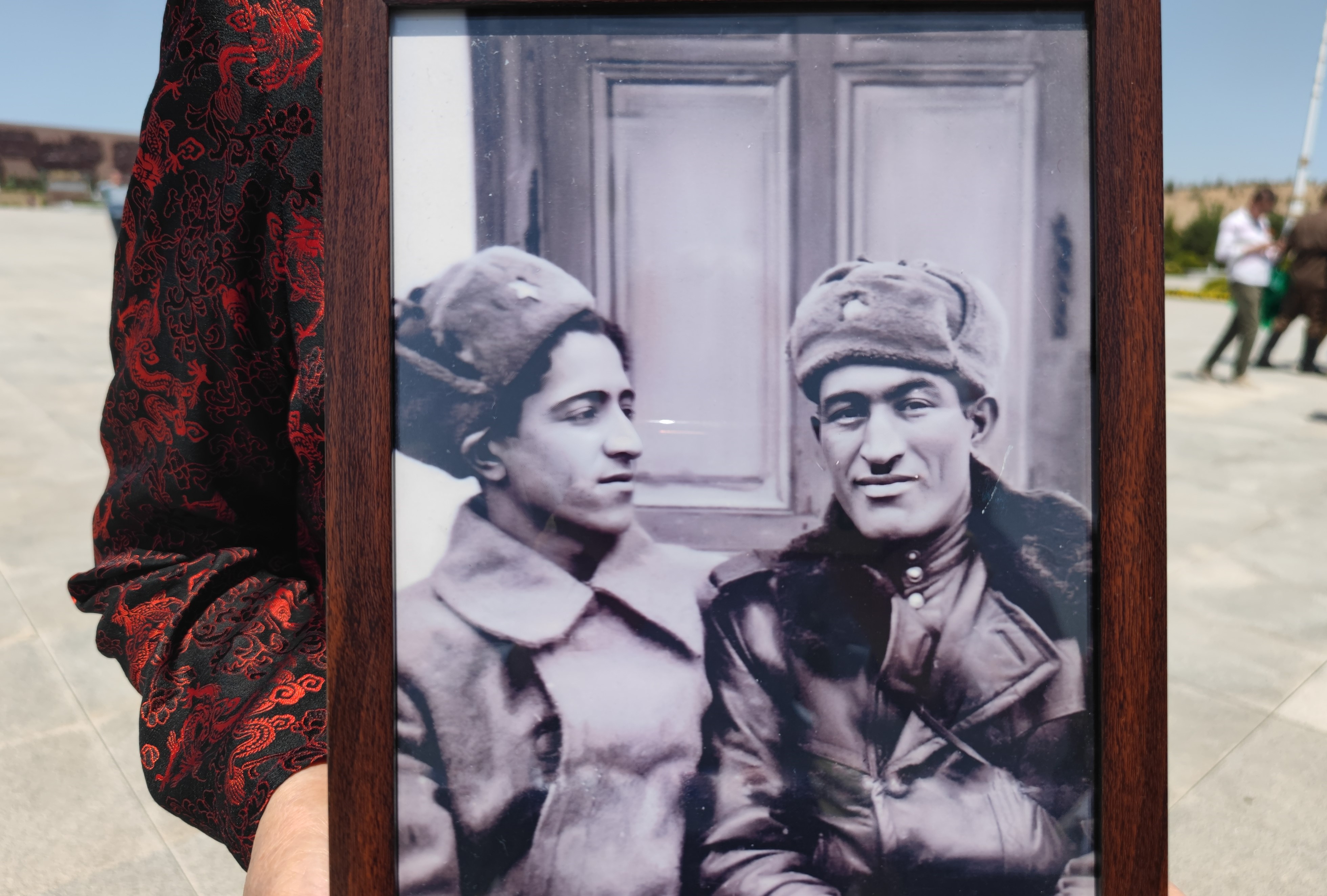
Ogulnabat told the story of how, almost towards the end of the war, her father, a sergeant-major and medal-bearer, and his brother Nury, the artistic director of the regimental orchestra, met by chance in Hungary and decided to capture this amazing meeting - thousands of kilometers from their homeland - in a photo, which took its place of honor in the ranks of the Immortal Regiment on May 9 in Ashgabat.
For young people, the Immortal Regiment is a lesson without moralizing. There are no slogans here – only respect, silence, tears and smiles. This means that the main thing remains: understanding where you are from, who your ancestors were, what they fought for.
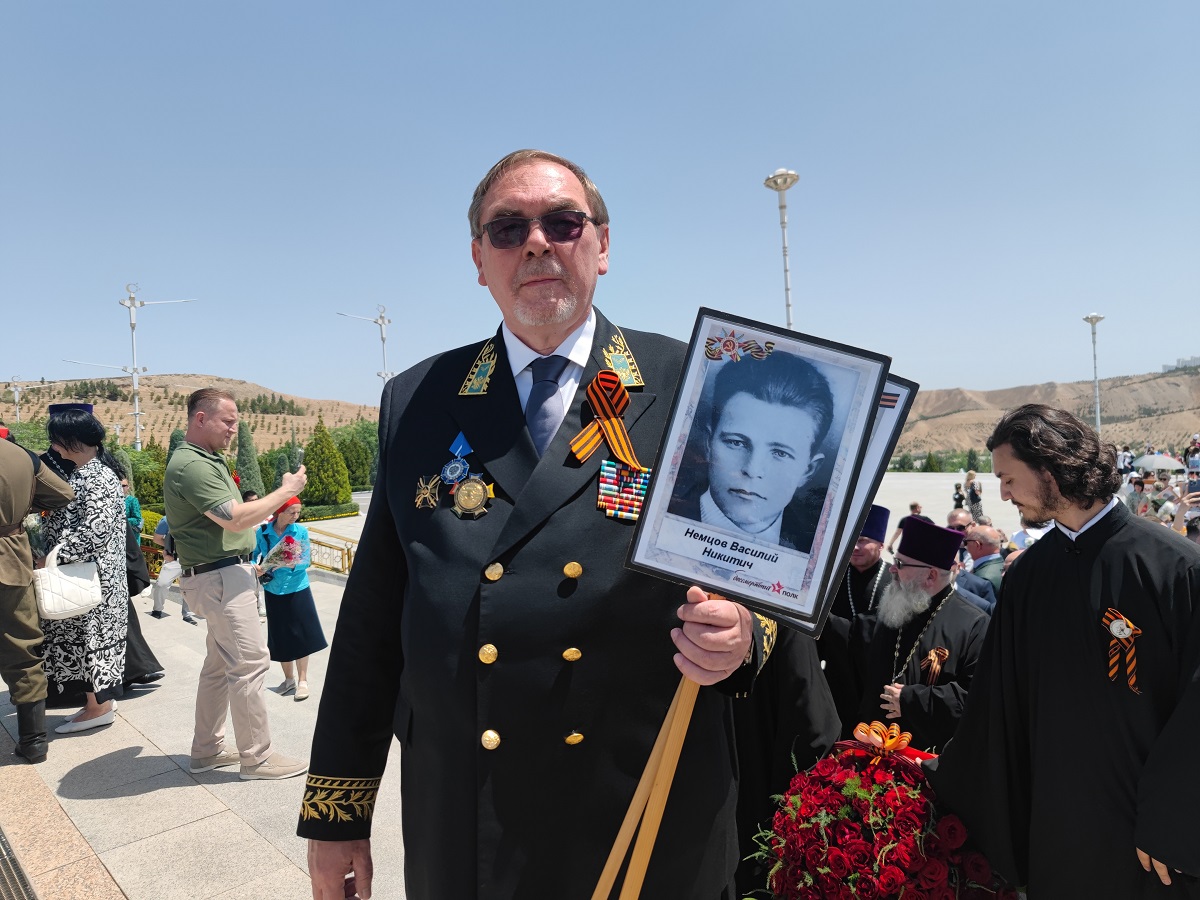
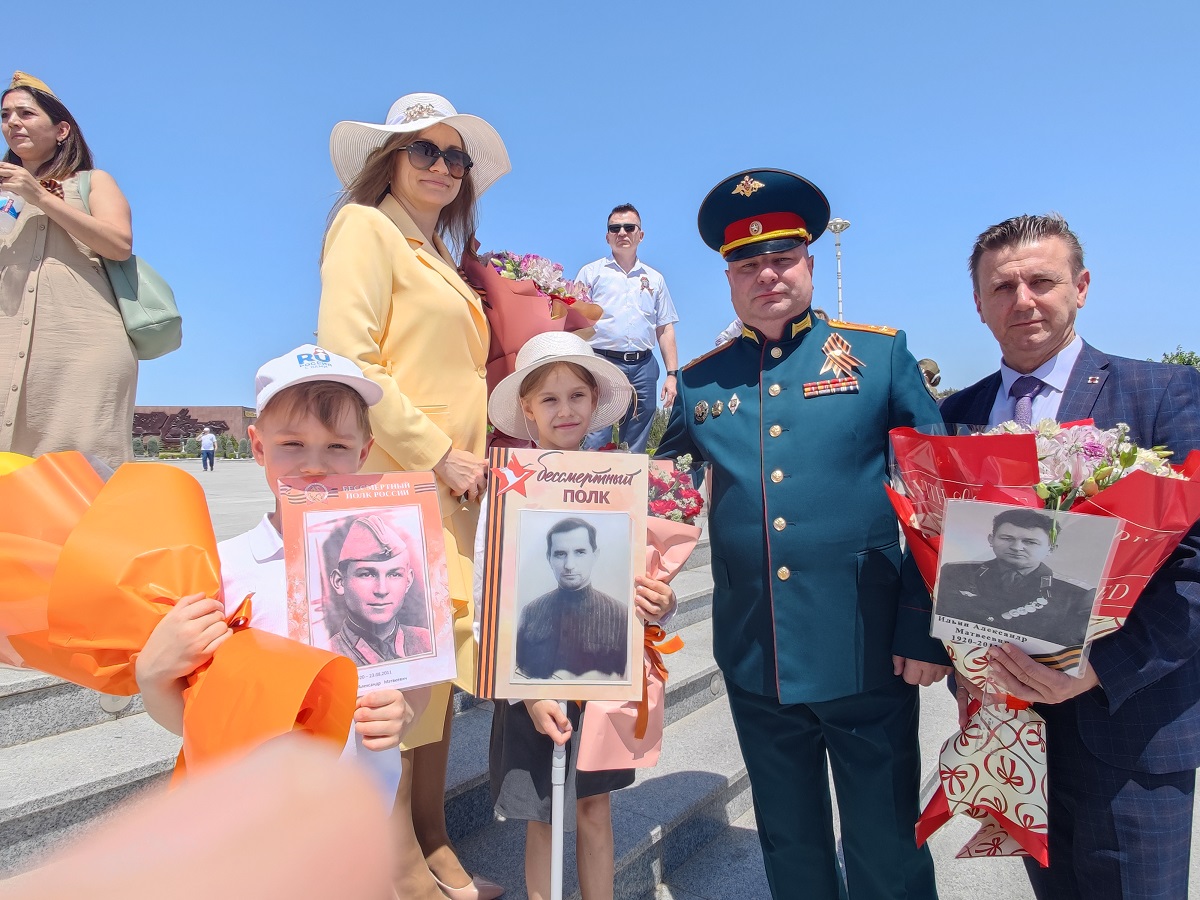
Ambassador of the Russian Federation to Turkmenistan Ivan Volynkin was at the march in Ashgabat with a photograph of his grandfather, whose burial place, according to the diplomat, has not yet been found and confirmed. "But the memory of him is alive...", Volynkin added.
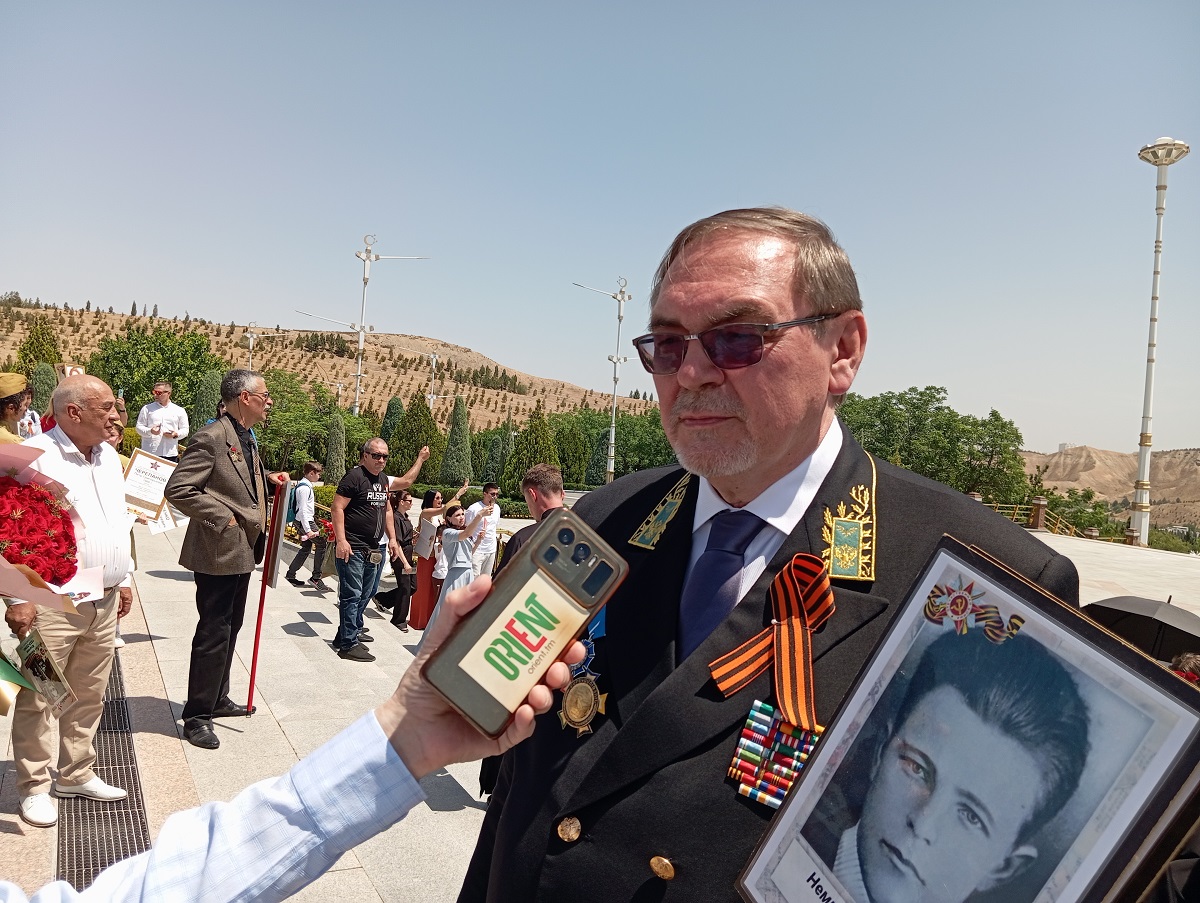
The Immortal Regiment does not require words. But it awakens the most important thing – unity. When we – those living now and those who died long ago – are together, even silence sounds loud.
On this day, there are no differences in nationality, language or country of residence. Everyone has their own hero, but everyone is united by a common gratitude and desire to preserve the memory.
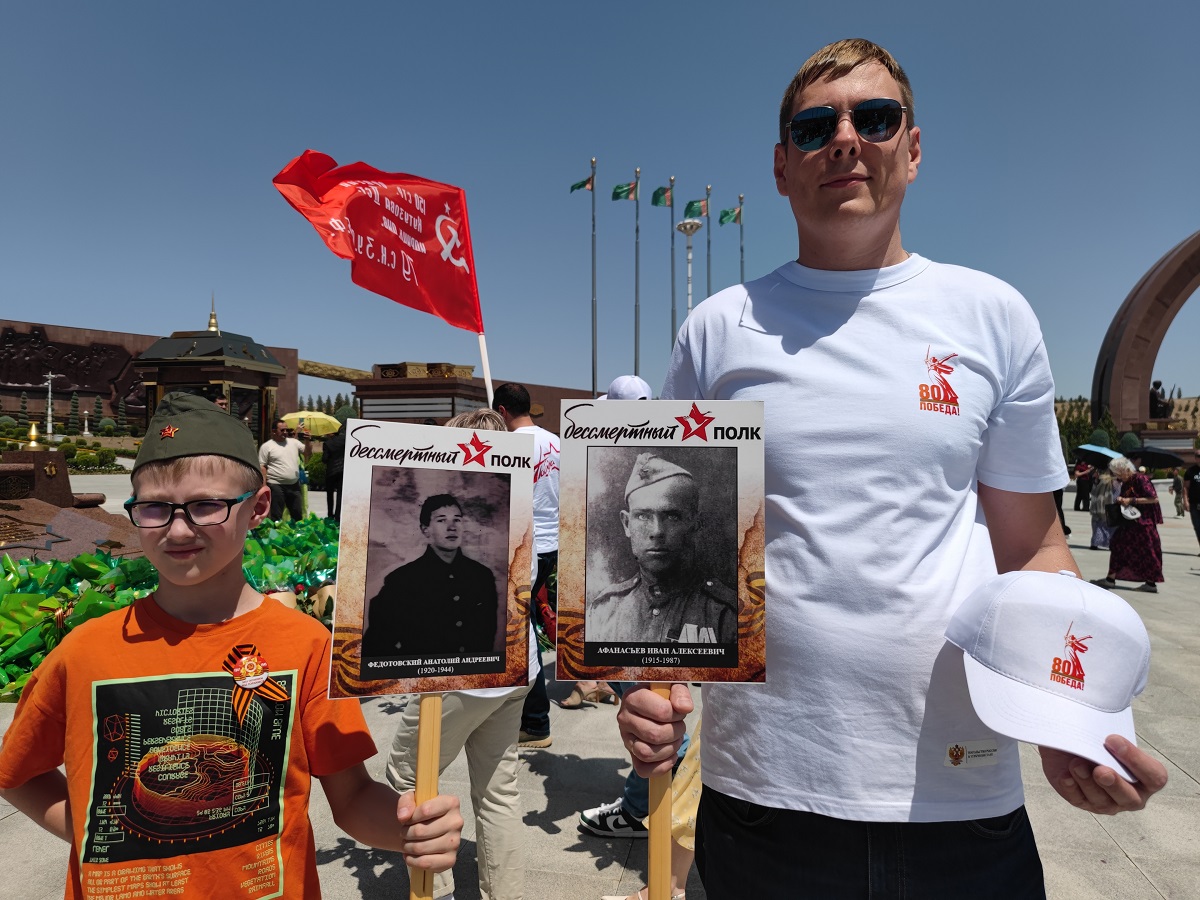
Kirill Afanasyev told about his grandfather, Ivan Afanasyev, who went through the entire war from 1941, served in a special communications regiment, delivered secret dispatches along the front line, was awarded the medals "For Courage", "For Military Merit", was wounded several times, and finished his military career in Königsberg. Behind this meager biographical information is the great fate of not only one specific person, but also his family, people, and country.
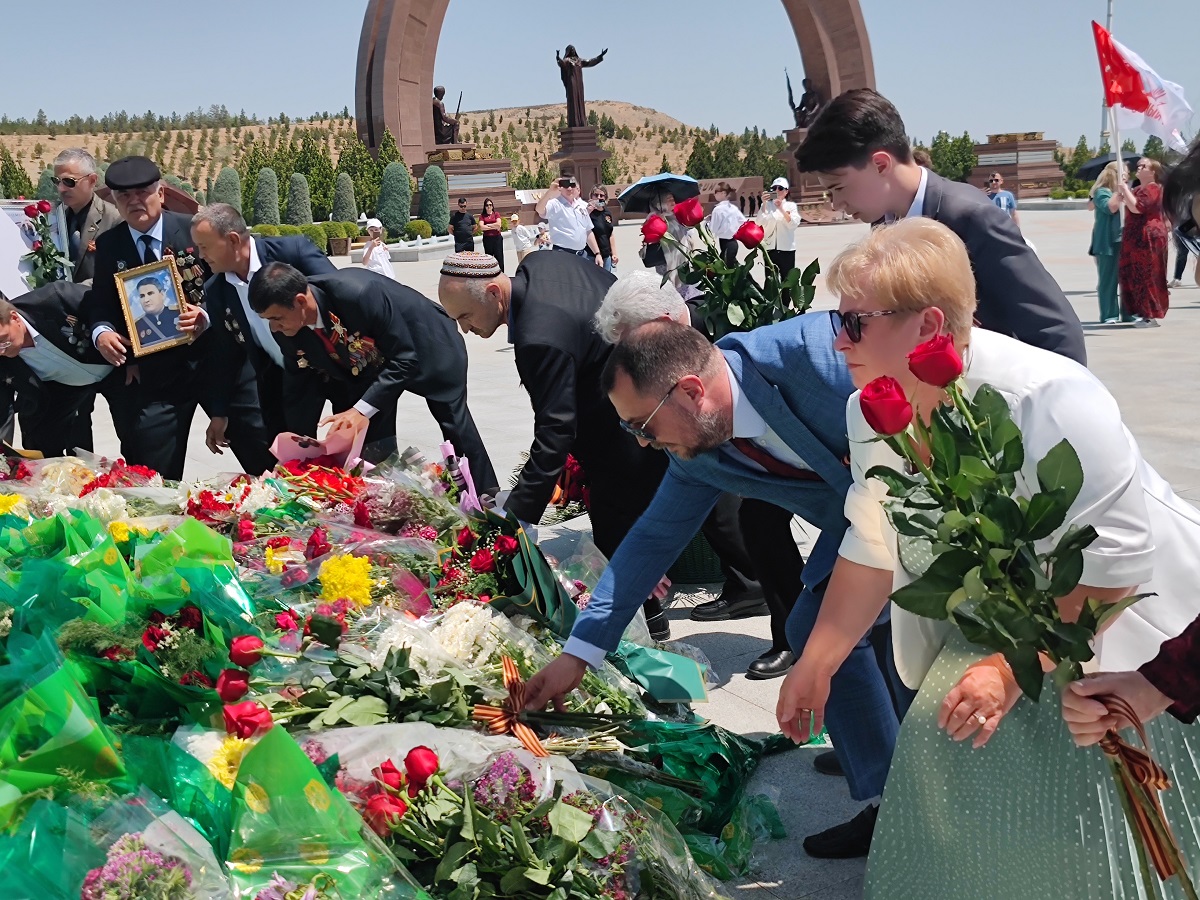
"Immortal Regiment" is not about the past. It is about the present and the future. About everyone knowing that someone paid with their life for the peace we live in. And we are obliged to remember this not once a year, but every day - in our actions, in our words, in our attitude towards each other.
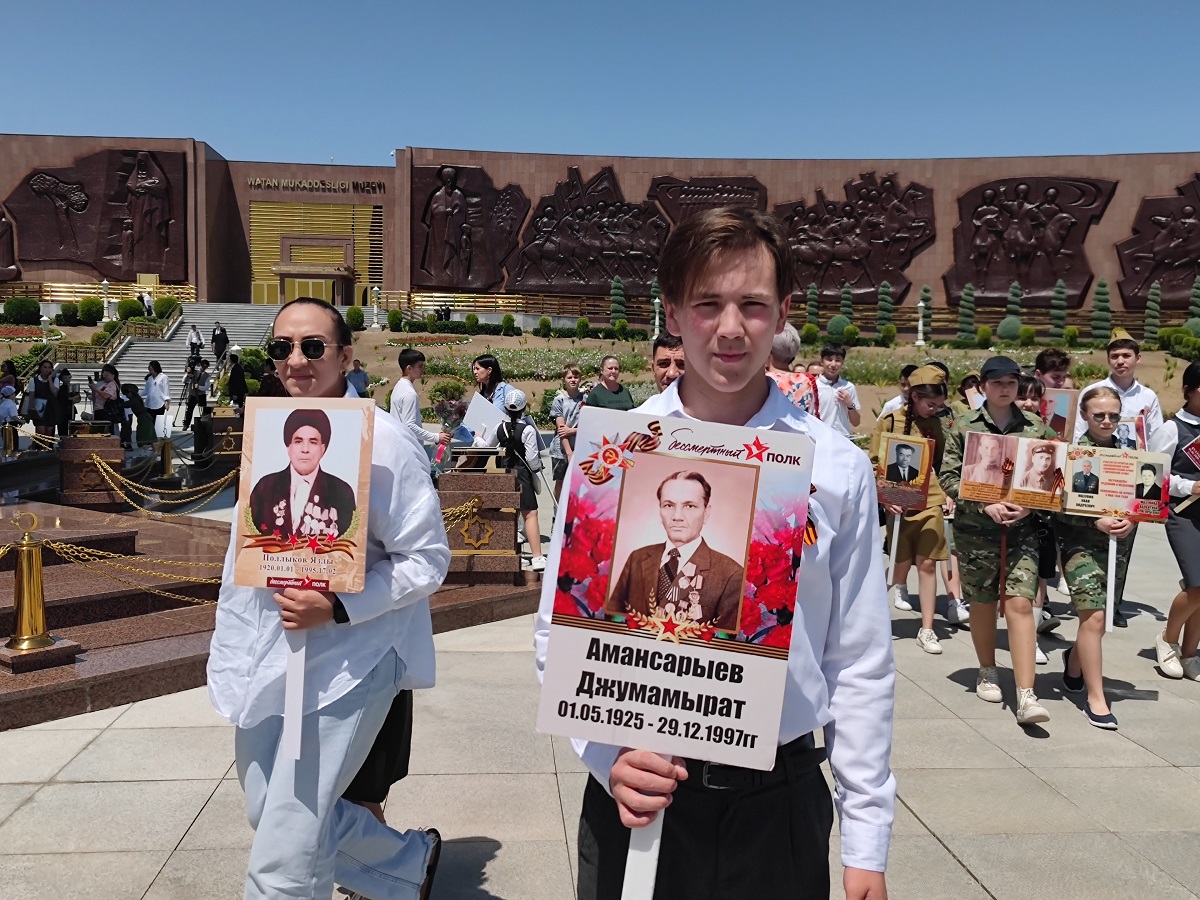
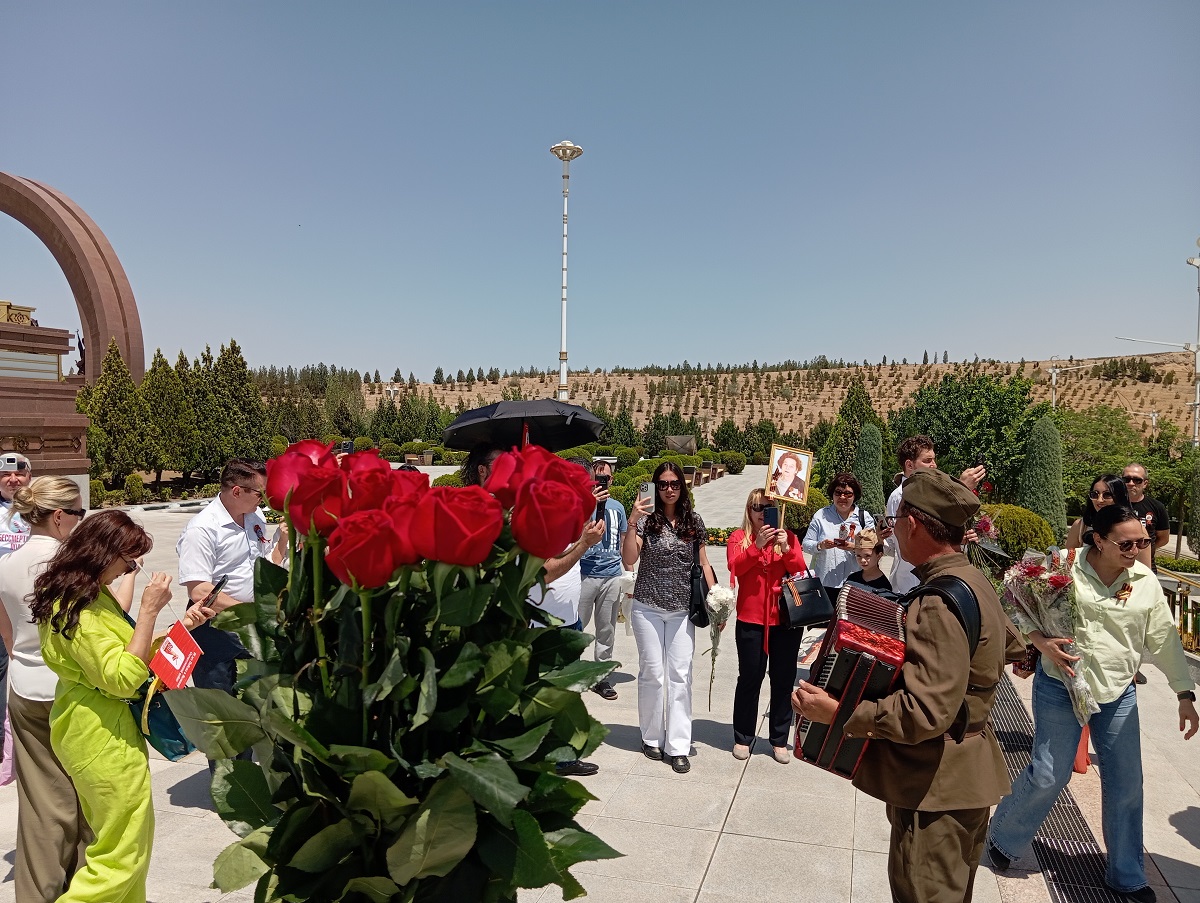
P.S. Banners, scarlet carnations, ribbons and tears... Pictures that do not require comment. Wrinkled hands, carefully holding a black and white photograph. The bright gaze of a child, looking with surprising interest at the orders and medals of his great-grandfather. A portrait of his father - very young and still alive. And brave young men in military uniform in an almost decayed photograph, on the back of which is an inscription made with a chemical pencil "Do not remember when you look, but look when you remember."
...Immortal guardsmen of the regiment! We remember! Of course, we remember what a great price you paid for the Victory! For our Victory!
And this is our story, which will have no ending.
Bekdurdy AMANSARYEV


