The delegation of Turkmenistan participated at the 74th session of ESCAP in Bangkok

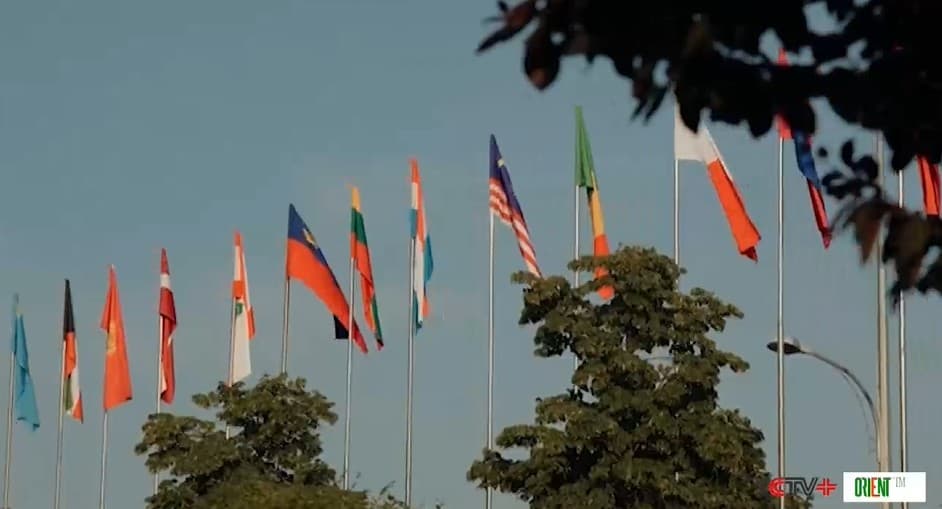
The delegation of Turkmenistan participated at the 74th Session of the United Nations Economic and Social Commission for Asia and the Pacific (ESCAP), which is taking place from 11 to 16 May in Bangkok.
The theme topic for this Session of ESCAP, which brought together representatives of all member states and associate members of the Commission, international organizations, regional financial institutions, academic and civil societies, is “Inequality in the era of the 2030 Agenda for Sustainable Development (Agenda 2030)”.
The forum participants discussed the main problems that the countries of the Asia-Pacific region face in the course of implementing the goals and objectives to reduce the inequality of the countries’ economic and social development.
On May 14, the ministerial segment of the session opened, within the framework of which discussions on promoting multilateral approaches to integrated social and economic development in the Asia-Pacific region, using the achievements of technological progress for the implementation of Agenda 2030 were held.
In this context, the forum participants discussed issues on macroeconomic policy and financing for development, trade and investment, transport, environment, information and communication technologies, science, technology and innovation, disaster risk reduction, social development, etc. The issues on identification of the main directions of economic cooperation and integration in the region were main emphasized.
Batyr Bazarov, Minister of Finance and Economy, and Y.Mammedov, Ambassador Extraordinary and Plenipotentiary to Malaysia and Thailand, represented Turkmenistan at the 74th session of ESCAP.
 Speaking at the meeting, Batyr Bazarov presented successful national experience in addressing these issues, noting that Turkmenistan is the first of the countries of Europe, CIS and other countries that has adapted the global Sustainable Development Goals (SDGs) into its strategies and practices by introducing relevant indicators and indexes into development programs.
The Government of Turkmenistan and the United Nations signed the Partnership Framework for Development 2016-2020, which outlines the main activities, including the SDGs, which was approved by President Berdimuhamedov at the end of last year.
In Turkmenistan, a two-level system for adapting the SDGs has been established: at the political and technical levels, the National High-level Steering and Coordination Committee and the Interdepartmental Technical Committee for the Implementation of the SDGs, headed by the Ministry of Finance and Economy of Turkmenistan.
The Sustainable Development Goals, including the three key strategic areas such as sustainable economic growth, social protection and environmental safety, are aligned with the priorities established in the National Programme of Turkmenistan on Socio-Economic Development for the period 2018-2024.
As to effectiveness of the Turkmen economic model, Batyrov cited the following indicators: the country’s economic growth for 2017 was 106.5 percent. Until 2024, its rates are foreseen in the range of 106.2-108.2 percent due to introduction of new processing industries and branches, improvement and modernization of mining industries (gas and oil production), export increase exports and expansion of import substitution.
As to social component: Turkmenistan, according to the World Bank, is among Upper Middle Income countries. Every year the wages of employees increase by an average of 10 percent. Over the past ten years, monetary incomes per household increased 2.6 times, the average monthly wage of those working in the economy increased 2.7 times.
Since a significant part of the country's population – over 51 percent – lives in rural areas and is engaged in various spheres of agriculture, great importance is paid to the development of the agro-industrial complex of Turkmenistan. One of the important indicators of the country's food independence is the provision of domestic needs with grain and cotton.
Currently, Turkmenistan not only fully meets domestic needs in grain and cotton fiber, but also created a strong stock of them, as well as exports a certain part of these resources, the minister said.
In the social plan, he named the development of the health care system and the strengthening of the health of citizens among the priorities of state policy. The country has created and keep developing a modern medical industry; the newest medical centers of various profiles are built.
The sphere of education is developing at a rapid pace and at a high level. The Constitution of Turkmenistan provides for compulsory free general secondary education. The state also ensures the availability of professional education for each person in accordance with his abilities.
Currently, there are 1,066 preschool institutions, 1,865 secondary schools, 42 secondary professional schools and 25 higher educational institutions in the country. Until 2024, an increase in the number of preschool institutions by more than 15 percent, and the number of secondary schools is more than 11 percent are foreseen.
As to environment: nature conservation, sustainable ecosystem development and the rational use of resources are an integral part of the country's development strategies. Turkmenistan has acceded to all UN Conventions and Agreements in the field of ecology and successfully implements state programs adopted in this direction.
The Minister stressed that Turkmenistan’s economic development is oriented towards an industrial-innovative type of growth, ensuring high competitiveness of the national economy and social welfare of the people.
With such a serious reserve in the achievement of the SDGs in the practice of national development, Turkmenistan is ready to make its successful experience a platform for regional and global cooperation on the topics of Agenda 2030, including in the Asia-Pacific region.
Speaking at the meeting, Batyr Bazarov presented successful national experience in addressing these issues, noting that Turkmenistan is the first of the countries of Europe, CIS and other countries that has adapted the global Sustainable Development Goals (SDGs) into its strategies and practices by introducing relevant indicators and indexes into development programs.
The Government of Turkmenistan and the United Nations signed the Partnership Framework for Development 2016-2020, which outlines the main activities, including the SDGs, which was approved by President Berdimuhamedov at the end of last year.
In Turkmenistan, a two-level system for adapting the SDGs has been established: at the political and technical levels, the National High-level Steering and Coordination Committee and the Interdepartmental Technical Committee for the Implementation of the SDGs, headed by the Ministry of Finance and Economy of Turkmenistan.
The Sustainable Development Goals, including the three key strategic areas such as sustainable economic growth, social protection and environmental safety, are aligned with the priorities established in the National Programme of Turkmenistan on Socio-Economic Development for the period 2018-2024.
As to effectiveness of the Turkmen economic model, Batyrov cited the following indicators: the country’s economic growth for 2017 was 106.5 percent. Until 2024, its rates are foreseen in the range of 106.2-108.2 percent due to introduction of new processing industries and branches, improvement and modernization of mining industries (gas and oil production), export increase exports and expansion of import substitution.
As to social component: Turkmenistan, according to the World Bank, is among Upper Middle Income countries. Every year the wages of employees increase by an average of 10 percent. Over the past ten years, monetary incomes per household increased 2.6 times, the average monthly wage of those working in the economy increased 2.7 times.
Since a significant part of the country's population – over 51 percent – lives in rural areas and is engaged in various spheres of agriculture, great importance is paid to the development of the agro-industrial complex of Turkmenistan. One of the important indicators of the country's food independence is the provision of domestic needs with grain and cotton.
Currently, Turkmenistan not only fully meets domestic needs in grain and cotton fiber, but also created a strong stock of them, as well as exports a certain part of these resources, the minister said.
In the social plan, he named the development of the health care system and the strengthening of the health of citizens among the priorities of state policy. The country has created and keep developing a modern medical industry; the newest medical centers of various profiles are built.
The sphere of education is developing at a rapid pace and at a high level. The Constitution of Turkmenistan provides for compulsory free general secondary education. The state also ensures the availability of professional education for each person in accordance with his abilities.
Currently, there are 1,066 preschool institutions, 1,865 secondary schools, 42 secondary professional schools and 25 higher educational institutions in the country. Until 2024, an increase in the number of preschool institutions by more than 15 percent, and the number of secondary schools is more than 11 percent are foreseen.
As to environment: nature conservation, sustainable ecosystem development and the rational use of resources are an integral part of the country's development strategies. Turkmenistan has acceded to all UN Conventions and Agreements in the field of ecology and successfully implements state programs adopted in this direction.
The Minister stressed that Turkmenistan’s economic development is oriented towards an industrial-innovative type of growth, ensuring high competitiveness of the national economy and social welfare of the people.
With such a serious reserve in the achievement of the SDGs in the practice of national development, Turkmenistan is ready to make its successful experience a platform for regional and global cooperation on the topics of Agenda 2030, including in the Asia-Pacific region.