World Media Summit in Kunming: How the media can bring the spring of the long-awaited peace closer

The V World Media Summit, which opened on December 3 in Guangzhou, Guangdong Province in southern China, completed the first part of its events, which were attended by representatives of 197 media outlets from more than 100 countries. The delegates held discussions on a wide range of topics, including the role of the media in global processes, advanced technologies in the media industry and mechanisms to strengthen media cooperation. At the summit, a joint statement was adopted by the participants on the fight against disinformation and cooperation in the field of new technologies.

Further, the organizer of the forum, Xinhua News Agency, invited journalists to Kunming, the capital of Yunnan Province.
The name of the city of Kunming, famous throughout China for its magnificent climate, translates as "The City of Eternal Spring". And the guests, being here at the beginning of winter, fully felt the accuracy of this beautiful metaphor.

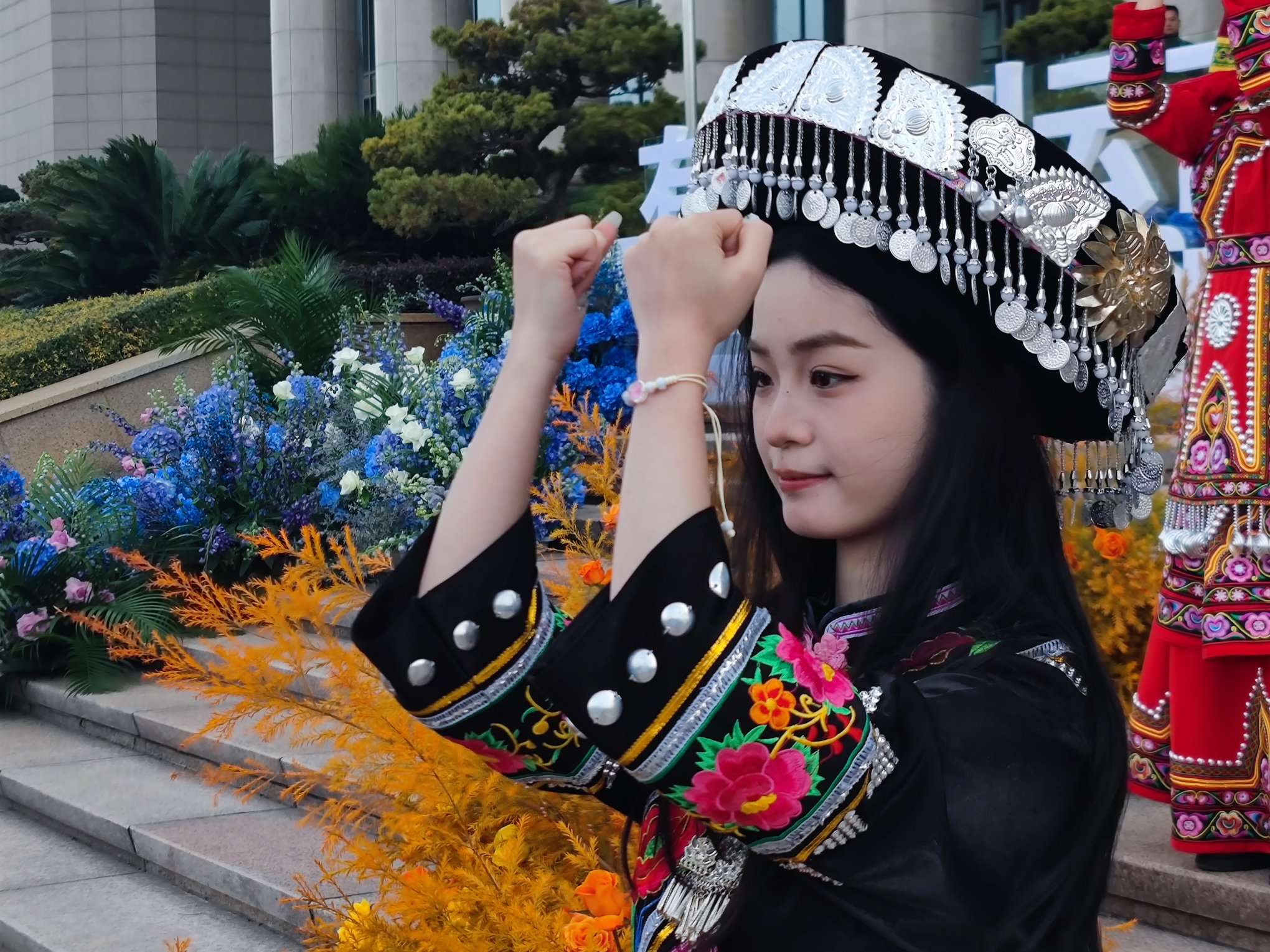
First of all, thanks to a very warm welcome. An incredibly colorful ceremony was organized in honor of the participants of the press summit, luxuriously decorated with all kinds of flowers, which are so rich in "spring" Kunming.
The bright national costumes of the dancers, representing the cultural traditions of the inhabitants of Yunnan Province, which is one of the most ethnically diverse regions of the world, argued with their diversity. With a population of over 47 million, dozens of ethnic groups live here, including those with Turkmen roots.

Those who entered the building, where the World Media Summit will continue its work, were greeted in the lobby with trays of roses. And each participant of the forum took a flower and found a place for it on a large panel, as if adding his touch to a single picture of prosperity.
Wonderful music was playing, giving a festive mood to what was happening. And before continuing a serious conversation about the future of the media sphere, the guests were offered to taste the famous Chinese tea of the best varieties.

Meanwhile, it was possible to view the exhibition of decorative and applied arts and floral installations and listen to amazing narratives about each exhibit, its symbols, legends associated with it, etc.
Then the work program of the Kunming part of the Fifth World Media Summit began, which was attended by more than 300 media representatives from about 30 countries, including Turkmenistan.

And although the technological discourse set in Guangchu remained in the focus of the speakers, the Kunming forum had a more humanistic focus, highlighting the role of the media in the exchange and interaction of different cultures.
Yes, the media should rationally use 5G, big data, cloud computing, artificial intelligence and other achievements of the information revolution, introduce innovative models for collecting and distributing news, accelerate intellectual and digital transformation and continue to contribute to the economic and social development of countries.

At the same time, it is important to promote mutual understanding and friendship, consolidation and consensus in global media cooperation to solve modern problems and achieve mutually beneficial development.
The plenary session of the Kunming forum was attended by the editor-in-chief of the Chinese Xinhua news agency, Liu Yansong, Director General of the international media group Russia Today Dmitry Kiselyov, Director General of the Bulgarian Telegraph Agency Kirill Vylchev and heads of other media.

"The media must protect international justice and impartiality, as well as respect the diversity of world civilizations and provide a platform for their equal dialogue," said Liu Yansong.
Speaking at the plenary session, the head of the Media Turkmen news agency, Bekdurdy Amansaryev, noted that the Belt and Road initiative is of great importance for promoting global development and security, exchange and mutual enrichment between different civilizations, and, of course, has a huge impact on cooperation in the field of mass media.

The national leader of the Turkmen people, Chairman of the People's Council Gurbanguly Berdimuhamedov, being at the recent 3rd Belt and Road Forum in Beijing, stressed the importance of combining Turkmenistan's strategy "Revival of the Great Silk Road" with China's "One Belt, One Road" initiative. He said this during a meeting with Chinese President Xi Jinping.
The Great Silk Road once became a factor in the development of the entire world civilization, and today it is becoming a new civilizational brand symbolizing consolidation. Restoring the Great Silk Road in the form of modern road, rail, sea and air routes is one task. But creating a "soft" infrastructure along it in the form of information connectivity is no less important.

The global center of gravity is shifting to Asia, and lines of force of the information magnetic field are also being built around it. But the Great Silk Road stretches far beyond the Asian part of the continent, and the impulses of power, charged precisely in our region, in the East, should spread along this path the spirit of peacemaking and world-building. And who, if not the media, should contribute to this in the first place, the speaker stressed.
The impact of new technologies such as artificial intelligence, cloud computing, and the meta-universe on the media industry is enormous. But how to respond to the new opportunities and challenges they bring? Digital tools create both new resources and risks. The main issue, as in all eras, remains the issue of trust. Does the audience trust the media, and does the media trust its audience?

But combining both will help technologies to create trustworthy interactive content. Innovations should not conflict with spiritual values, and some traditional principles should not prevent innovations from changing the world for the better.
– Of course, today, you can aggregate and generate news in any volume. But, frankly speaking, it is still difficult to imagine journalism without a journalist – a person, a personality, in short, without what, or rather who inspires the content," Bekdurdy Amansaryev noted in his speech.
He cited Kipling's famous lines: "The West is the West, and the East is the East. And they will never get together!" But East and West are not only and not so much geographical concepts as civilizational ones, and in order for representatives of different peoples and civilizations to get closer, they need to know each other's culture better.
It will be difficult for the students of Western civilization, the bearers of rational philosophical thought, to understand people brought up on the mystical Eastern philosophy based on intuitive knowledge of the world. For example, to comprehend the Taoist parable of Chuang Tzu, who fell asleep and dreamed that he was a butterfly who sleeps and dreams that she is Chuang Tzu. Since then, he does not know whether he is a butterfly who dreams that she is Chuang Tzu, or he is Chuang Tzu, who dreams that she is a butterfly.
And in order to somehow bring together representatives of different civilizations, the media should actively cover the topics of cultural and humanitarian cooperation.

Students from all over the world, including Turkmenistan, study in China. And here they not only study those subjects that will be useful to them in their future professional activities, but also communicating with their Chinese peers, getting acquainted with their national heritage, become goodwill ambassadors between civilizations and cultures.
And this is a good example of people's diplomacy, which always goes hand in hand with the diplomacy of states. Therefore, the cultural and humanitarian aspect is especially important in the interaction of the media of different countries, the head of the Media Turkmen news agency noted.

International journalists, in fact, should be intellectuals, knowledgeable in a variety of fields, but, first of all, they should understand the cultural specifics of the country they are writing about. At the same time, it is necessary to avoid the charm of old sources, since the culture of each country is not static, preserving traditions, it develops. Social, cultural and historical contexts are of great importance when the media write about state relations.

In this context, Bekdurdy Amansaryev stressed the relevance of the idea of President of Turkmenistan Serdar Berdimuhamedov to create a Central Asian Media Forum, as well as the establishment of the Council of Countries on New Technologies.
The new institute could take over the functions of a think tank for the formation of a joint strategy of the states of the region on innovative technologies, make appropriate recommendations and develop specific proposals, President Serdar Berdimuhamedov said, speaking with this initiative at the fifth Consultative Meeting of the Heads of Central Asian states in the capital of Tajikistan.

...Going back to the beginning of the Kunming forum, when its delegates were greeted with rosebuds, there is a reason to quote the statement of Chinese President Xi Jinping: "One flower does not make spring – spring comes when all the flowers bloom!".
And this thought became the main message of the World Media Summit in China, which called for uniting the efforts of the media to bring states closer and friendship of peoples, so that the spring of long-awaited peace would come on our planet.
ORIENT news


