British scientists have invented artificial leaves that produce energy

A team of scientists from Imperial College London has developed innovative photovoltaic panels that mimic plant leaves in their structure. These devices efficiently convert solar energy into electrical energy.
The new photovoltaic leaf technology uses inexpensive materials and can inspire a new generation of renewable energy technologies. The panels mimic the natural process of transpiration, which is the movement of water through the organs and stems of plants, and then its evaporation. At the same time, a small amount of moisture that remains on the surface of the leaves promotes photosynthesis, as well as the transfer of minerals, temperature and pressure regulation.
To create artificial photovoltaic leaves, British scientists used bamboo fibers and hydrogel as materials. The details of the energy panels imitate plant cells and vascular bundles, which contributes to the passive passage of moisture from the reservoir to the solar cells — to cool them and increase their energy efficiency.
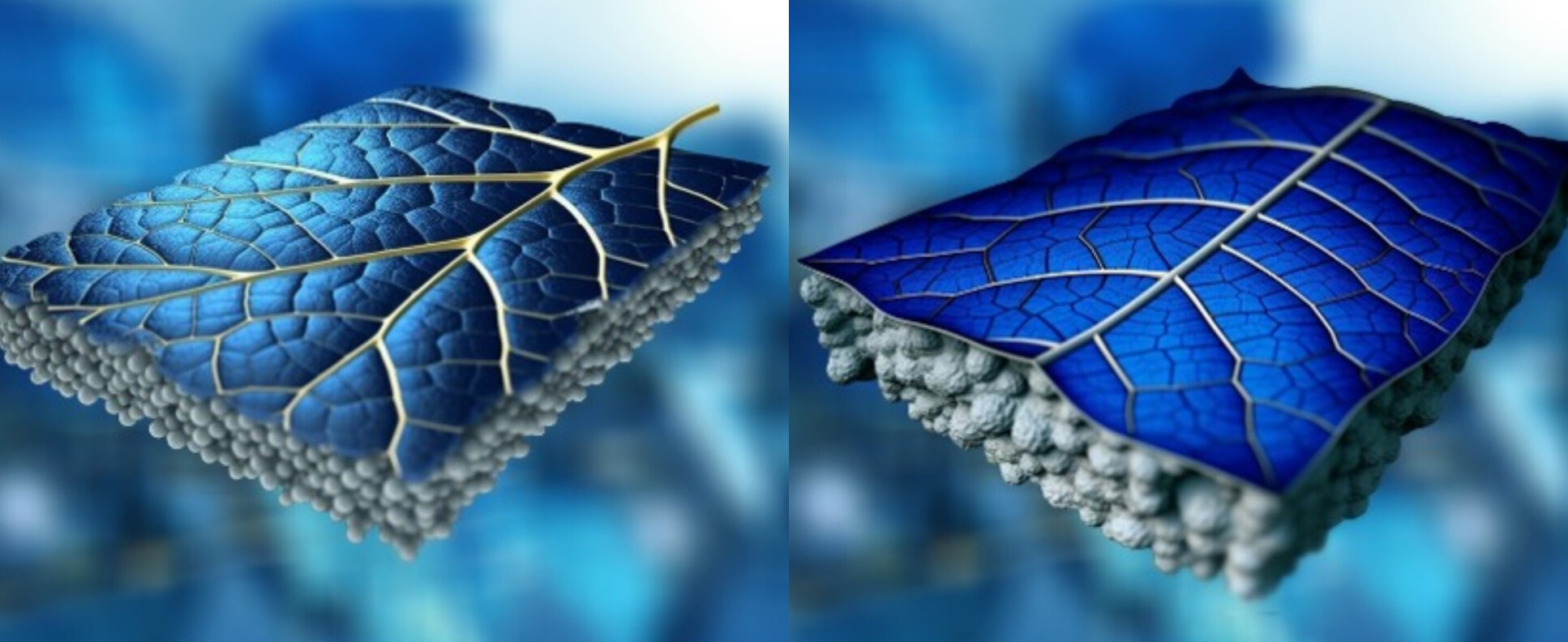
Studies have shown that, thanks to this design, artificial leaves are able to generate 10% more energy than conventional solar panels, which lose up to 70% of incoming solar energy to the environment. In addition, during operation, these devices produce clean fresh water, which makes them promising for use in regions with arid climates.
"The new design of photovoltaic shutters developed here at Imperial can also produce more than 40 billion cubic meters of fresh water per year if this technology is used to achieve the goals for the production of solar panels by 2050," the authors of the study write on the website of Imperial College London.
In their opinion, such a design eliminates the need for pumps, fans, control units and expensive porous materials, allows generating additional clean water and thermal energy, as well as adapting to changes in ambient temperature and solar conditions.
The article "Highly efficient bioinspired hybrid photovoltaic sheet of several generations" was published in the journal Nature Communications.
ORIENT news


