The famous Perseid summer starfall once again enters the celestial stage

In August 2023, the most famous meteor shower - the Perseids - will operate throughout the month. Although it takes its name from the constellation Perseus — since it seems from Earth that meteors fly out from there — this star shower is actually the "tail" of the comet, through which we pass once a year. And the "stars" are meteors, some of them the size of a grain of sand, however, flashing in our atmosphere, they arrange a bright show for earthlings.
Meteors burst into our atmosphere at high speed. Therefore, they often look really like rain jets: they draw the sky diagonally with solid or discontinuous lines. And sometimes they leave flashes or even fire "balls" in the sky.
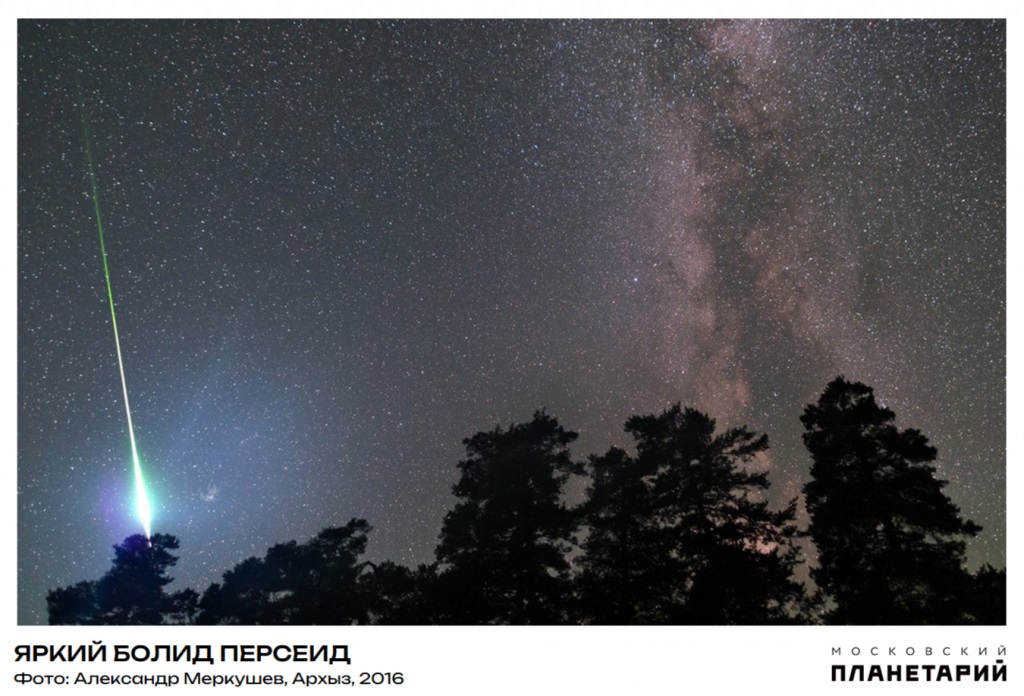
The maximum of the Perseids falls on August 11-13, about 100 meteors per hour are expected at the zenith, that is, two or more "shooting stars" can be seen per minute. The conditions for observing the Perseids in 2023 are favorable, since the Moon at the peak of the meteor shower will be newborn and will only begin to grow. Therefore, the light from it will not interfere.
Perseids have become so popular, in particular, because it is the most accessible meteor shower for a simple observer: in order to see the "star shower", telescopes, binoculars and any other special equipment are not needed. On the contrary, the best tool is the naked eye, which will allow you to cover the entire breadth of the sky, and not a narrower "lumen" of optics.
Therefore, on August nights, those wishing to make a wish or just look at the falling "stars" can turn their attention to the northeast, where the constellation Perseus will be located. If you find the little Bear, then to the right of it you can see Cassiopeia – a constellation in the form of the letter W, a little to the left under it will be Perseus. From there, bright meteors will fly out, leaving their traces in the sky.
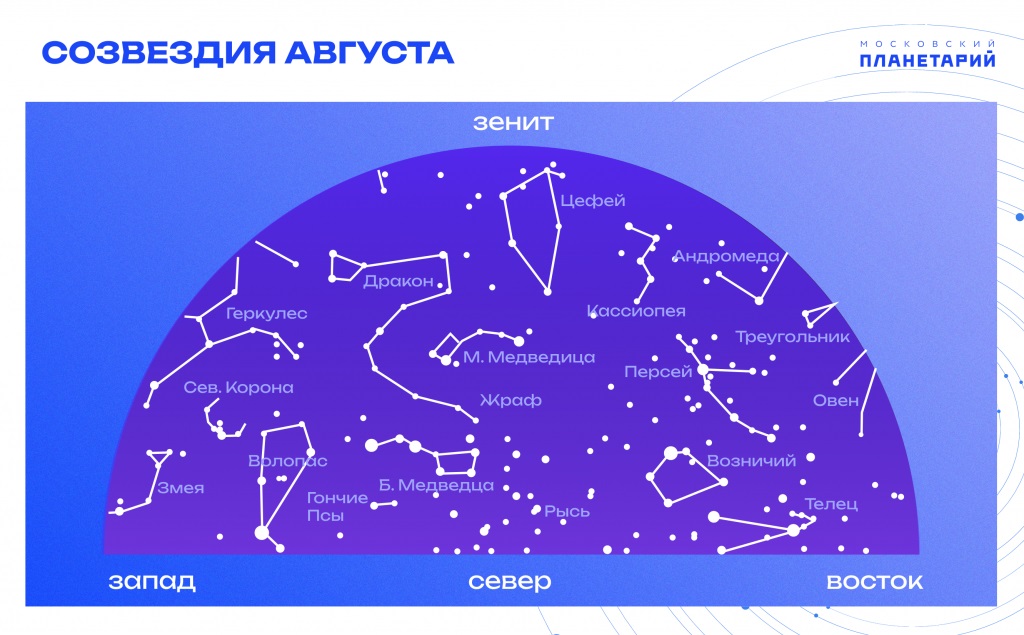
After sunset, the Perseid radiant is located above the northeastern horizon, and by midnight and by dawn, it rises high into the zenith.
And at the end of the month - on August 31, the second full moon of August will occur (the first one fell on August 1). The moon on the last day of the month is close to perigee, which means that it will be possible to observe the largest full moon of 2023.
ORIENT news


