Vegetable growing is a profitable business: prospects for Turkmen farmers
A tour of the President of Turkmenistan in the regions, which was announced by the head of state as the inspection of wheat harvest campaign organization at sites, but it actually became a wider inspection of agricultural works, was started with a working trip to Lebap province.
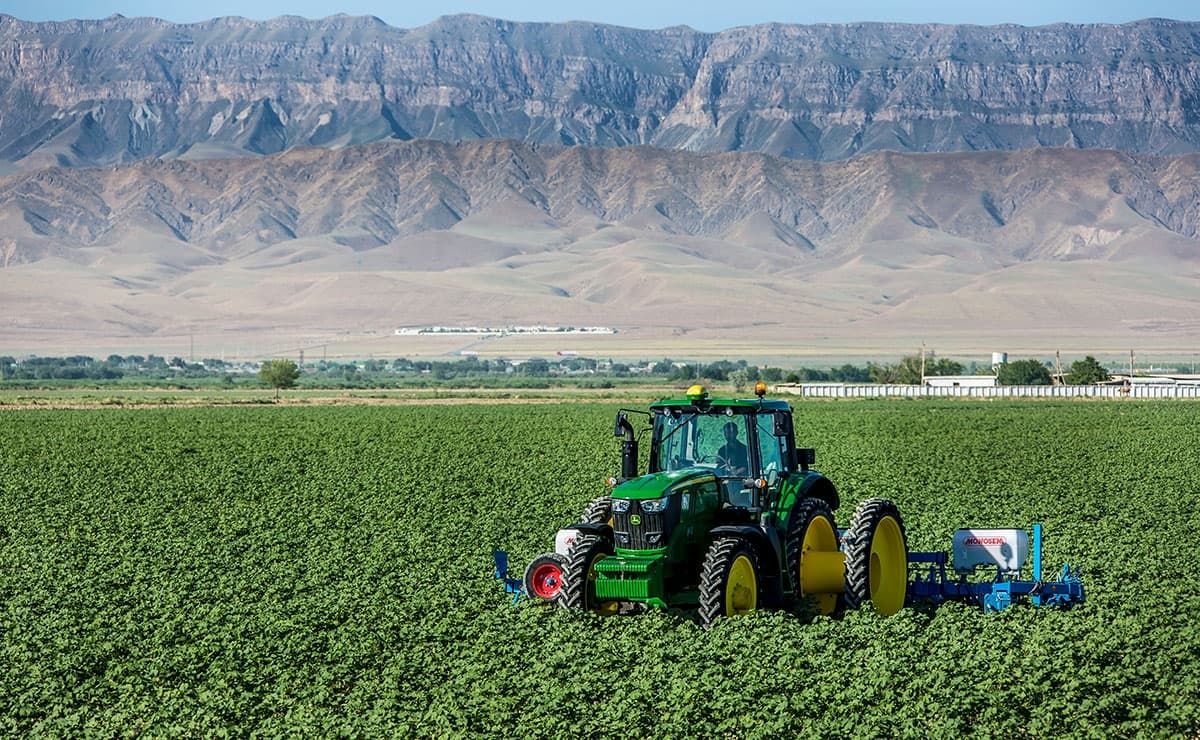
Further, Berdimuhamedov toured to Mary province. In the farms of these regions, the head of state visited the wheat fields of local tenants of the land and talked with them about the working life and concerns of farmers, looked at how the new farming machines work.
The President focused not only on wheat production, but also on the crop production as a whole – due to its expansion, both in the range of cultivated crops and in their volumes.
Systemic reforms are underway in the agriculture of Turkmenistan, including restructuring of the industry, reconsideration of the policy of state support and subsidies, improvement of crop rotation etc.
 In 2020, the country's farmers are tasked with planting vegetables of the second ripening period on a total area of 21 thousand hectares.
“This is the start of very important changes not only in the agricultural sector,” Muhtar Aliyev, ORIENT consultant on agriculture, Ph.D. in Economy, Honored Economist of Turkmenistan, said.
“A significant increase in vegetable production will not only serve the healthy nutrition of the population, but will also become a significant source of foreign currency earnings. In this context, in the near future, the export of vegetable products may reach the strategic sector – cotton growing,” Aliyev predicts.
According to the expert, in Turkmenistan, due to climatic conditions, the sowing and harvesting campaign in vegetable growing lasts 9-10 months a year. Harvesting of late cabbage ends in December, and the cropping of early cabbage begins in February-March. Only at the expense of extra early and extra late deliveries of field-grown vegetables, the country will be out of competition in the foreign market.
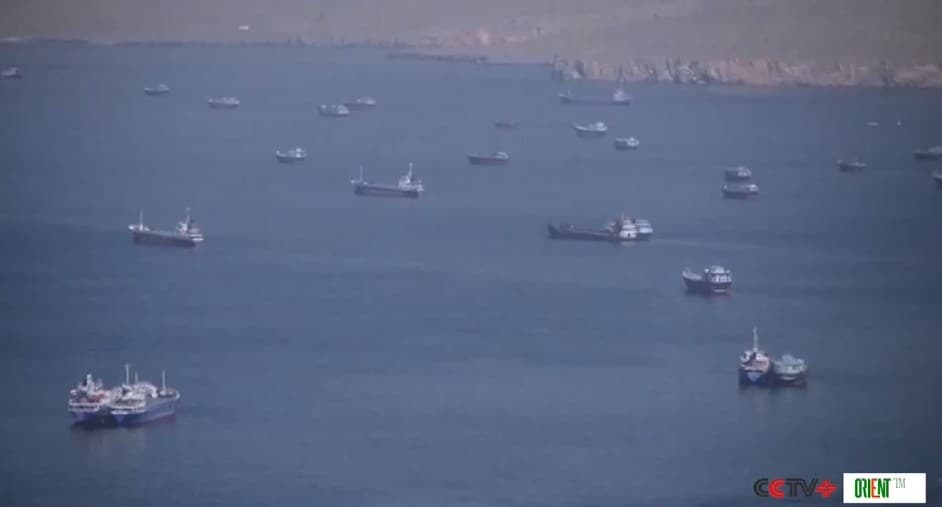
And the largest foreign market is the neighboring Astrakhan port, Russia. Cabbage is just an example; under the Turkmen sun, all vegetables are highly competitive.
In 2020, the country's farmers are tasked with planting vegetables of the second ripening period on a total area of 21 thousand hectares.
“This is the start of very important changes not only in the agricultural sector,” Muhtar Aliyev, ORIENT consultant on agriculture, Ph.D. in Economy, Honored Economist of Turkmenistan, said.
“A significant increase in vegetable production will not only serve the healthy nutrition of the population, but will also become a significant source of foreign currency earnings. In this context, in the near future, the export of vegetable products may reach the strategic sector – cotton growing,” Aliyev predicts.
According to the expert, in Turkmenistan, due to climatic conditions, the sowing and harvesting campaign in vegetable growing lasts 9-10 months a year. Harvesting of late cabbage ends in December, and the cropping of early cabbage begins in February-March. Only at the expense of extra early and extra late deliveries of field-grown vegetables, the country will be out of competition in the foreign market.
And the largest foreign market is the neighboring Astrakhan port, Russia. Cabbage is just an example; under the Turkmen sun, all vegetables are highly competitive.
 Muhtar Aliyev drew attention to another feature of vegetable growing – it is its high complexity. The cultivation of one hectare of vegetables requires up to 10 times more labor costs than in cotton growing, while increasing the employment of the population is one of the priority tasks of the state. The optimal distribution of vegetable crops, taking into account the population density in the regions, will significantly affect internal migration.
At cultivation of vegetables, a considerable by-product is produced. For example, tops and others, which are used for animal feed. In turn, animal waste is environmentally friendly fertilizer for vegetable growing. Thus, there is a very useful and profitable symbiosis,” Muhtar Aliyev sums up.
And since more profitable to sell processed products than raw materials, it is also more profitable to export meat and dairy products that are produced through processing waste from the crop industry.
There is another feature of vegetable crops – they have poor resistance to abnormally high temperatures. 2-3 days of high heat weather can make plants to cast all the fruit blossom clusters – buds, flowers and small fruits, especially under strong wind gusts. Often, after the peak temperatures of late July and early August, a 10-12-day decline in the supply of tomatoes, the most popular product, can be seen at the “green” markets in Turkmenistan.
Muhtar Aliyev drew attention to another feature of vegetable growing – it is its high complexity. The cultivation of one hectare of vegetables requires up to 10 times more labor costs than in cotton growing, while increasing the employment of the population is one of the priority tasks of the state. The optimal distribution of vegetable crops, taking into account the population density in the regions, will significantly affect internal migration.
At cultivation of vegetables, a considerable by-product is produced. For example, tops and others, which are used for animal feed. In turn, animal waste is environmentally friendly fertilizer for vegetable growing. Thus, there is a very useful and profitable symbiosis,” Muhtar Aliyev sums up.
And since more profitable to sell processed products than raw materials, it is also more profitable to export meat and dairy products that are produced through processing waste from the crop industry.
There is another feature of vegetable crops – they have poor resistance to abnormally high temperatures. 2-3 days of high heat weather can make plants to cast all the fruit blossom clusters – buds, flowers and small fruits, especially under strong wind gusts. Often, after the peak temperatures of late July and early August, a 10-12-day decline in the supply of tomatoes, the most popular product, can be seen at the “green” markets in Turkmenistan.
 Due to global warming, despite the country’s optimal geographical position, there may be noticeable temperature rises in summer days – over 400 C. To protect vegetables from high temperatures and dry winds, there is an agronomic technique – coulisse planting of tall crops like corn, sunflower, especially in some mixture with the predominance of tall varieties of silage corn.
According to Muhtar Aliyev, the coulisses are sown across the prevailing summer winds in 3-4 rows – in one pass of the seeder. Experts advise to have 30-50 meters distances between the coulisses, depending on the vegetables sown. At the same time, the areas reserved for coulisses give the same demanded vegetable products (as per classification, corncobs, for example, are related as vegetables).
Thus, the stimulation of more active development of vegetable growing, which President Berdimuhamedov implements as a set of breakthrough measures for the Turkmen agro-industrial complex, is the next and very effective step in optimizing all agricultural structures aimed at increasing the country’s economy and the well-being of the population of Turkmenistan.
Due to global warming, despite the country’s optimal geographical position, there may be noticeable temperature rises in summer days – over 400 C. To protect vegetables from high temperatures and dry winds, there is an agronomic technique – coulisse planting of tall crops like corn, sunflower, especially in some mixture with the predominance of tall varieties of silage corn.
According to Muhtar Aliyev, the coulisses are sown across the prevailing summer winds in 3-4 rows – in one pass of the seeder. Experts advise to have 30-50 meters distances between the coulisses, depending on the vegetables sown. At the same time, the areas reserved for coulisses give the same demanded vegetable products (as per classification, corncobs, for example, are related as vegetables).
Thus, the stimulation of more active development of vegetable growing, which President Berdimuhamedov implements as a set of breakthrough measures for the Turkmen agro-industrial complex, is the next and very effective step in optimizing all agricultural structures aimed at increasing the country’s economy and the well-being of the population of Turkmenistan.