Rice – from Central Asia to Europe
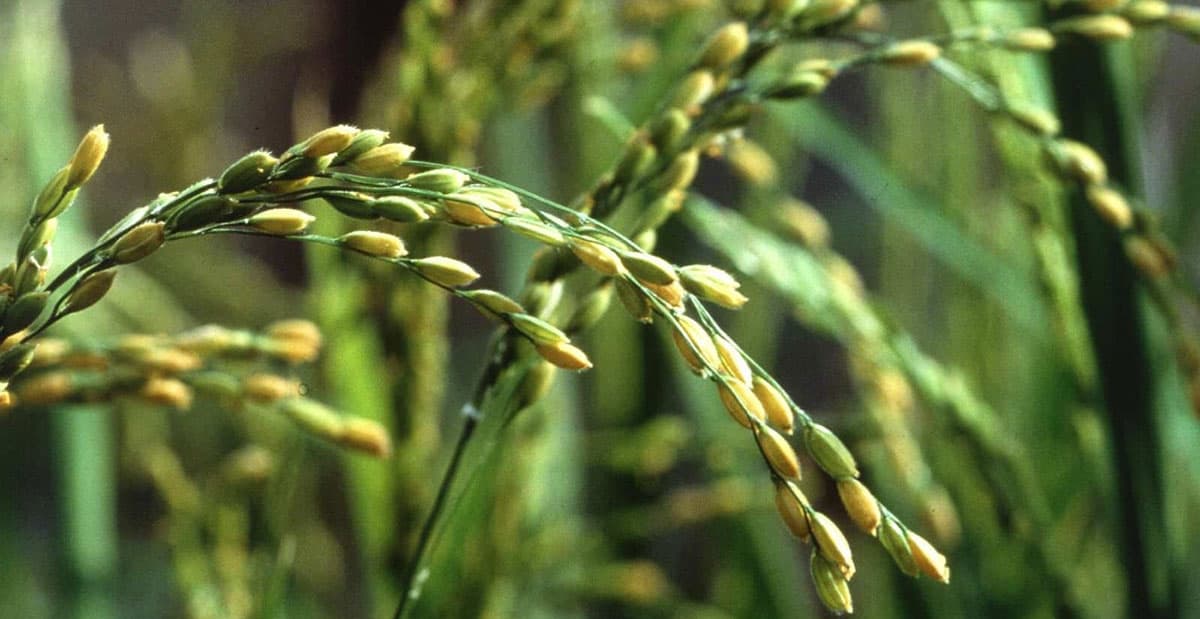
Rice is one of the most important cereals in the world. About half of the World’s population uses rice as their main food source. It is especially popular in the Asia-Pacific region. The origin, distribution, evolution and ecological adaptation of cultivated rice is of concern to scientists around the world, not only to biologists and agricultural researchers, but also to archaeologists.
Early research in archaeobotany and molecular biology has shown that rice was “domesticated” to rice japonica (Oryza sativa japonica) in the lower Yangtze region of China 10,000 years ago, and then spread to Japan, South and Southeast Asia. About 5,000-4,000 years ago, cultivated Japanese rice grown in South Asia, hybridized with local wild rice, gradually formed indica rice (Oryza sativa indica), which is now the main crop in South Asia.
This is about the spread of rice in East, Southeast and South Asia. But how did rice become one of the favorite cereals in Western Asia, Europe, and Africa?
 Science China Press believes that the Central Asian region, which is an important node of the ancient Silk road, as a “crossroads” of world civilizations, played an important role in it. Thus, studying the time and place of rice emergence in Central Asia can help scientists to restore the spread of rice in agriculture and learn more about the globalization of early crops.
Recently, the research group of Li Xiaoqiang from the Institute of Vertebrate Paleontology and Paleoanthropology, the Chinese Academy of Sciences (IVPP, CAS) and other researchers from the College of Cultural Heritage of North-Western University, China, The Institute of Archaeology of the Academy of Sciences of Uzbekistan reported on their latest research.
They explored 11 sites on the Northern Bank of the Amu-Darya from the bronze age to the Arabian period and found carbonized rice at the site of the ancient city of Khalchayan (Uzbekistan). According to scientists, this is a physical evidence of the rice spread to Western Asia and the active interaction of Eastern and Western civilizations along the ancient Silk road.
The results of AMS 14C timing showed that rice in Halchayan appeared in the Kushan period (1st-3rd centuries A.D.). In addition to the remains of rice, there were found carbonized wheat, barley, peas, millet, grapes, flax and other crops on the site. These crops comprise both West-Asian and East-Asian origin, which illustrates the diversified and complex system of growing cereals in oases.
Scientists incline to believe that rice came to Central Asia from the South – from the Kushan Empire. And it gradually integrated into the “meat” and “wheat” cuisine of local peoples. Perhaps the plov, beloved by Turkmens, Uzbeks, Kirghizs, Kazakhs and Tajiks appeared thanks to visitors from India and Afghanistan.
Science China Press believes that the Central Asian region, which is an important node of the ancient Silk road, as a “crossroads” of world civilizations, played an important role in it. Thus, studying the time and place of rice emergence in Central Asia can help scientists to restore the spread of rice in agriculture and learn more about the globalization of early crops.
Recently, the research group of Li Xiaoqiang from the Institute of Vertebrate Paleontology and Paleoanthropology, the Chinese Academy of Sciences (IVPP, CAS) and other researchers from the College of Cultural Heritage of North-Western University, China, The Institute of Archaeology of the Academy of Sciences of Uzbekistan reported on their latest research.
They explored 11 sites on the Northern Bank of the Amu-Darya from the bronze age to the Arabian period and found carbonized rice at the site of the ancient city of Khalchayan (Uzbekistan). According to scientists, this is a physical evidence of the rice spread to Western Asia and the active interaction of Eastern and Western civilizations along the ancient Silk road.
The results of AMS 14C timing showed that rice in Halchayan appeared in the Kushan period (1st-3rd centuries A.D.). In addition to the remains of rice, there were found carbonized wheat, barley, peas, millet, grapes, flax and other crops on the site. These crops comprise both West-Asian and East-Asian origin, which illustrates the diversified and complex system of growing cereals in oases.
Scientists incline to believe that rice came to Central Asia from the South – from the Kushan Empire. And it gradually integrated into the “meat” and “wheat” cuisine of local peoples. Perhaps the plov, beloved by Turkmens, Uzbeks, Kirghizs, Kazakhs and Tajiks appeared thanks to visitors from India and Afghanistan.
 Rice in Halchayan is the first well-studied find preserved in Central Asia, which is important for a deeper understanding of the interaction of the peoples in the field of agricultural activities, and also explains how rice got further the West – Iran, Europe and Africa, where now it is considered to be an integral part of the diet.
Researchers hope to find remnants of rice on other historical monuments, drawing up a balance sheet of the movement of our ancestors and their culinary preferences around the world.
Rice in Halchayan is the first well-studied find preserved in Central Asia, which is important for a deeper understanding of the interaction of the peoples in the field of agricultural activities, and also explains how rice got further the West – Iran, Europe and Africa, where now it is considered to be an integral part of the diet.
Researchers hope to find remnants of rice on other historical monuments, drawing up a balance sheet of the movement of our ancestors and their culinary preferences around the world.
Altyn ASHIROVA