Autograph on the Reichstag: “Reached Berlin from Ashgabat” – Turkmen doctors in the fronts of the Great Patriotic War
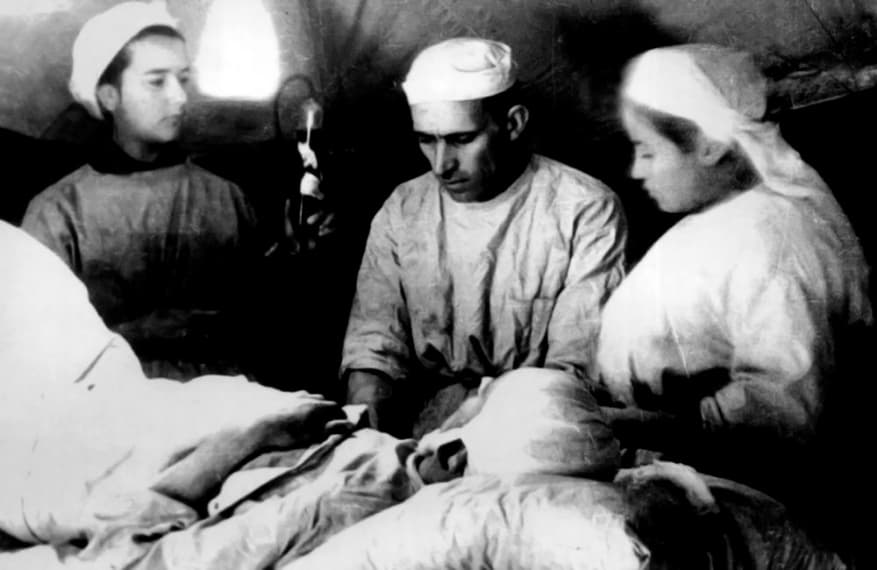
Frontline doctors ... With deep respect, we say these words. With love, we talk about people in white coats who, along with the soldiers, managed to carry on their shoulders the full brunt of incredibly severe burden of World War II. How many wounded soldiers were brought back to life by their hands that never knew what is to be tired. And how many of them did not return from the battlefields. Learn the stories of Turkmen doctors about their youth during wartime.
JUMA KURBANOV, Honored Doctor of Turkmenistan, holder of the Order of the Patriotic War II Degree, two Orders of the Red Star, Medal “For the Defense of Leningrad”:
- After the war with the Whites Finns, our unit remained in the village of Jõhvi, not far from Narva. War caught me here. Being gathered into echelons, we went to the front. Nazi planes had bombed the last train where I have been in. It was June 22, 1941. We began to step back towards Leningrad. In early November, we arrived in Leningrad from Kronstadt, and on the approach to the city, a German shell hit the barge. When the blockade began, our regiment was located in Kolpino. Here I had to go through a lot: I was wounded three times, I suffered cold and misery with the soldiers in besieged Leningrad. I celebrated the Victory on May 9 in Vyborg. After the war, I served in Kharkov and Dnepropetrovsk in a rifle regiment as a doctor.
DURJEMAL ISMAILOVA, Honored Doctor of Turkmenistan, Candidate of Medical Sciences, she was awarded with the medals “For Military Merit”, “For the Victory over Germany in the Great Patriotic War of 1941-1945”:
- When war began, I was a third-year student at the Ashgabat Medical Institute. In mid-August, I was awarded with the graduation diploma, and three days later, I received a notice to come to the military commissariat. After completing a two-month extension course in Tashkent, I went to Moscow for an assignment and met senior student Sachli Dursunova there. She has already been assigned to the Leningrad Front. I wanted to go with her, but I got an assignment to another section of the front.
 My first baptism of fire was at Bologoe station. It was crossing station, with many artillery depots and evacuation hospitals. We were charged to meet hospital trains from the Leningrad and Kalinin fronts, from the Smolensk direction, and to help the wounded. The enemy continuously bombed ambulance trains – very soon, there left only three out the seven doctors of the medical reserve. To save us, we were taken to the forest during the bombing, and when the raid ended, we were set back to our duties.
Not far from the station, two of my classmates – Lida Anikina and Lena Polyanskaya – worked for the evacuation hospital. Once I came to visit them, and there were soldiers from the division of General Yakub Kuliyev in the hospital. Upon learning that a Turkmen doctor had arrived, the soldiers almost on hands and knees, on crutches came to see me. They surrounded me and cried, giving me hugs and kisses. I tried to provide comfort them and spent nights, sitting next to the seriously wounded soldiers. We had been talking about peaceful life and dreamed of victory. No one doubted that it would come. Belief in victory gave a mental support to the fighters.
As the head of the sanitary corps, at first, of the separate transport, and then, of the railway battalion, I have walked across Belarus, reached Latvia. There I met the Victory. Soon the war with Japan began, and we were redeployed to the Far East. On the outskirts of Manchuria, Japanese aircraft bombed a train. It was necessary to crawl a distance of a half kilometer, but I could not do a leopard crawl. Then captain Makarov said: “Take off your belt, cling to mine, follow me and crawl”. Under fire of Japanese airforces, we crawled about two hundred-three hundred meters. Then we stopped. I looked at the captain – he was killed. A splinter hit him in the head. Another shell splinter hit me in the back. I hardly could crawl to reach the forest, and I asked the medical instructor to take off my tunic and to stitch up. We did it to avoid taking me to the hospital. There was no time for a hospital treatment. We should help the wounded.
My first baptism of fire was at Bologoe station. It was crossing station, with many artillery depots and evacuation hospitals. We were charged to meet hospital trains from the Leningrad and Kalinin fronts, from the Smolensk direction, and to help the wounded. The enemy continuously bombed ambulance trains – very soon, there left only three out the seven doctors of the medical reserve. To save us, we were taken to the forest during the bombing, and when the raid ended, we were set back to our duties.
Not far from the station, two of my classmates – Lida Anikina and Lena Polyanskaya – worked for the evacuation hospital. Once I came to visit them, and there were soldiers from the division of General Yakub Kuliyev in the hospital. Upon learning that a Turkmen doctor had arrived, the soldiers almost on hands and knees, on crutches came to see me. They surrounded me and cried, giving me hugs and kisses. I tried to provide comfort them and spent nights, sitting next to the seriously wounded soldiers. We had been talking about peaceful life and dreamed of victory. No one doubted that it would come. Belief in victory gave a mental support to the fighters.
As the head of the sanitary corps, at first, of the separate transport, and then, of the railway battalion, I have walked across Belarus, reached Latvia. There I met the Victory. Soon the war with Japan began, and we were redeployed to the Far East. On the outskirts of Manchuria, Japanese aircraft bombed a train. It was necessary to crawl a distance of a half kilometer, but I could not do a leopard crawl. Then captain Makarov said: “Take off your belt, cling to mine, follow me and crawl”. Under fire of Japanese airforces, we crawled about two hundred-three hundred meters. Then we stopped. I looked at the captain – he was killed. A splinter hit him in the head. Another shell splinter hit me in the back. I hardly could crawl to reach the forest, and I asked the medical instructor to take off my tunic and to stitch up. We did it to avoid taking me to the hospital. There was no time for a hospital treatment. We should help the wounded.
 After the battles in Manchuria, I was demobilized, came to Ashgabat and began working as an attending medical doctor in one of the hospitals of capital. During the earthquake of 1948, I was seriously injured. I was treated by Juma Kuliyevich Kurbanov.
MARIA KVITCHENKO, holder of the Order of the Red Star, she was awarded with the medals “For the Victory over Germany in the Great Patriotic War of 1941-1945”, “For the Victory over Japan”:
- I met the morning of June 22 in the village of Sudak on the Black Sea, where I worked in a sanatorium for military personnel. Immediately after the declaration of war, volunteer groups have started to be formed here. I went to the recruiting center, and seven days later, I was in Zaporozhye.
We arrived in the city late at night, but it seemed that it was daytime – there was a glow of fires over the city. We came to the territory of a factory turned into ruins, and there, in the blindages, we started to provide medical assistance to the wounded soldiers. All night, German bombers flew over the city and bombed non-stop.
Once, near our location, a plane was shot down and it crashed. It was our plane, with red stars. I was ordered to save the pilot. I crawled to a burning plane, I saw a pilot, a young guy, who opened a glazed cabin and became unconscious. I took it upon myself, and only managed to crawl a little away when the plane exploded. I remember, once, planes with Red Cross signs flew into the area of our medical battalion. We were happy and supposed that our planes came to take on the boards the wounded soldiers, but the planes turned around and began shelling. It was the German airforces planes.
After the battles in Manchuria, I was demobilized, came to Ashgabat and began working as an attending medical doctor in one of the hospitals of capital. During the earthquake of 1948, I was seriously injured. I was treated by Juma Kuliyevich Kurbanov.
MARIA KVITCHENKO, holder of the Order of the Red Star, she was awarded with the medals “For the Victory over Germany in the Great Patriotic War of 1941-1945”, “For the Victory over Japan”:
- I met the morning of June 22 in the village of Sudak on the Black Sea, where I worked in a sanatorium for military personnel. Immediately after the declaration of war, volunteer groups have started to be formed here. I went to the recruiting center, and seven days later, I was in Zaporozhye.
We arrived in the city late at night, but it seemed that it was daytime – there was a glow of fires over the city. We came to the territory of a factory turned into ruins, and there, in the blindages, we started to provide medical assistance to the wounded soldiers. All night, German bombers flew over the city and bombed non-stop.
Once, near our location, a plane was shot down and it crashed. It was our plane, with red stars. I was ordered to save the pilot. I crawled to a burning plane, I saw a pilot, a young guy, who opened a glazed cabin and became unconscious. I took it upon myself, and only managed to crawl a little away when the plane exploded. I remember, once, planes with Red Cross signs flew into the area of our medical battalion. We were happy and supposed that our planes came to take on the boards the wounded soldiers, but the planes turned around and began shelling. It was the German airforces planes.
 I will never forget the terrible battle in the forest near Zaporozhye. Our unit suffered losses; I was contused in the head. However, I continued to work. In 1943, I was appointed a surgical technician in the 260 medical-and-sanitary battalion of the 361 Amur Rifle Division of the 15 Army of the Far Eastern Front. Our battalion, after the victory over Germany, was deployed to Manchuria. In the city of Sansin, where the hospital was organized, the doctors used to spend for several days at the operating tables.
Once, at the evening, during the operation, there was a ding of broken glass and machine guns were put through the window. The Japanese spies quietly reached into the location of the hospital and opened fire. Two surgeons, who have been performing surgery on a patient, were killed. Later, our soldiers destroyed saboteurs.
MURAD KAKAJIKOV, Honored Doctor of Turkmenistan, holder of two Orders of the Red Star:
- In 1941, as a junior doctor of the regiment, I served in the 30 Tank Division, which was located near Brest. On June 22 at seven o’clock in the morning, the war began. According to the charter, it was supposed to deploy a medical-and-sanitary battalion, but there was no time for this. Our division has been engaged in battle with units of the tank group of the Nazis near the village of Vidomlya. The forces were unequal: for one of our tank – five German ones. For three hours, the village passed from side to another, then we had to step back towards the village of Kamenka. The battalion doctor did not have time to return from vacation, and me and feldsher were responsible for the whole medical job. There were many wounded, we barely had time to bandage them, and sent them to the rear in passing vehicles.
I will never forget the terrible battle in the forest near Zaporozhye. Our unit suffered losses; I was contused in the head. However, I continued to work. In 1943, I was appointed a surgical technician in the 260 medical-and-sanitary battalion of the 361 Amur Rifle Division of the 15 Army of the Far Eastern Front. Our battalion, after the victory over Germany, was deployed to Manchuria. In the city of Sansin, where the hospital was organized, the doctors used to spend for several days at the operating tables.
Once, at the evening, during the operation, there was a ding of broken glass and machine guns were put through the window. The Japanese spies quietly reached into the location of the hospital and opened fire. Two surgeons, who have been performing surgery on a patient, were killed. Later, our soldiers destroyed saboteurs.
MURAD KAKAJIKOV, Honored Doctor of Turkmenistan, holder of two Orders of the Red Star:
- In 1941, as a junior doctor of the regiment, I served in the 30 Tank Division, which was located near Brest. On June 22 at seven o’clock in the morning, the war began. According to the charter, it was supposed to deploy a medical-and-sanitary battalion, but there was no time for this. Our division has been engaged in battle with units of the tank group of the Nazis near the village of Vidomlya. The forces were unequal: for one of our tank – five German ones. For three hours, the village passed from side to another, then we had to step back towards the village of Kamenka. The battalion doctor did not have time to return from vacation, and me and feldsher were responsible for the whole medical job. There were many wounded, we barely had time to bandage them, and sent them to the rear in passing vehicles.
 When our tank division took the first blow of the enemy, and we rushed from one wrecked tank to another with sanitary bags, I had to bandage the commander of the burning tank Tkachenko. With anger at the Nazis, with pain for the dead soldiers, tears came to the eyes. “Hold on, brother,” the commander said, “They will never live on our land. Remember that well.” And I memorized these words for ever.
Participating in battles in the Moscow Region, on the Western Front, we were at the forefront almost all the time. Often had to carry out not only the medical duties. Over seven kilometers, despite rain and mud, we carried ammunition on the hands to the destination pointss. Once, near Velikiye Luki, the enemy severely shelled our positions. The shell hit our dugout. I was wounded, but there was nothing to think about the hospital – the front line only. I helped wounded comrades; I took a little time for recovery and again got back for work.
CHARY HALLYEV, Honored Doctor of Turkmenistan, holder of two Orders of the Red Star, Order of the Patriotic War II Degree:
- In December 1942, I was sent to the disposal of the Ural Military District in Sverdlovsk, where the 175 Infantry Division was formed. There I was appointed commander of the sanitary rota of the 275 Infantry Regiment. I received my first baptism of fire in March 1943 on the Central Front. As a military doctor, I took part in the Battle of Kursk, the Kursk Bulge. Those who were there could not forget these fiery days and nights. It was really fiery days, because sometimes it was impossible to differ if where a day or a night. The battles were heavy, there were many injured. But we managed not only to help them, but also to dig trenches.
When our tank division took the first blow of the enemy, and we rushed from one wrecked tank to another with sanitary bags, I had to bandage the commander of the burning tank Tkachenko. With anger at the Nazis, with pain for the dead soldiers, tears came to the eyes. “Hold on, brother,” the commander said, “They will never live on our land. Remember that well.” And I memorized these words for ever.
Participating in battles in the Moscow Region, on the Western Front, we were at the forefront almost all the time. Often had to carry out not only the medical duties. Over seven kilometers, despite rain and mud, we carried ammunition on the hands to the destination pointss. Once, near Velikiye Luki, the enemy severely shelled our positions. The shell hit our dugout. I was wounded, but there was nothing to think about the hospital – the front line only. I helped wounded comrades; I took a little time for recovery and again got back for work.
CHARY HALLYEV, Honored Doctor of Turkmenistan, holder of two Orders of the Red Star, Order of the Patriotic War II Degree:
- In December 1942, I was sent to the disposal of the Ural Military District in Sverdlovsk, where the 175 Infantry Division was formed. There I was appointed commander of the sanitary rota of the 275 Infantry Regiment. I received my first baptism of fire in March 1943 on the Central Front. As a military doctor, I took part in the Battle of Kursk, the Kursk Bulge. Those who were there could not forget these fiery days and nights. It was really fiery days, because sometimes it was impossible to differ if where a day or a night. The battles were heavy, there were many injured. But we managed not only to help them, but also to dig trenches.
 I remember, once, during one of the shelling of enemy, the neighboring medical center was hit. Without a moment’s thought, we urgently organized assistance to the wounded of this regiment, and carried them out of the battlefield. We were ready to drop with fatigue, but a duty to the front-line brothers was brought us to our senses. There, on Kursk, I was wounded and contused.
It was not easy when crossing the Oder in 1945. Our troops irresistibly advanced to Berlin. The task of doctors is constant: in spite of everything, it is necessary to organize a regimental medical center. As soon as you organize it, it’s time to move to a new place. But we were even glad of this as with every new step we were closer to the Victory.
I met the Victory on May 9 in Berlin. There, on a wall of the Reichstag, I left my autograph: “I reached Berlin from Ashgabat. Ch. Hallyev.” After the end of war, up to 1950, I worked in the GDR, helping to restore the health care system.
I remember, once, during one of the shelling of enemy, the neighboring medical center was hit. Without a moment’s thought, we urgently organized assistance to the wounded of this regiment, and carried them out of the battlefield. We were ready to drop with fatigue, but a duty to the front-line brothers was brought us to our senses. There, on Kursk, I was wounded and contused.
It was not easy when crossing the Oder in 1945. Our troops irresistibly advanced to Berlin. The task of doctors is constant: in spite of everything, it is necessary to organize a regimental medical center. As soon as you organize it, it’s time to move to a new place. But we were even glad of this as with every new step we were closer to the Victory.
I met the Victory on May 9 in Berlin. There, on a wall of the Reichstag, I left my autograph: “I reached Berlin from Ashgabat. Ch. Hallyev.” After the end of war, up to 1950, I worked in the GDR, helping to restore the health care system.
 These are they, doctors of the war years – the guard of the medical service. In peacetime, they are the knights of their profession, and in the war, they are also fearless warriors. They did not count the lives they saved. They simply returned them to service. Honor, Glory and Eternal Memory to them!