Caspian Corridor simplifies transport operations in the pandemic situation - ministerial meeting
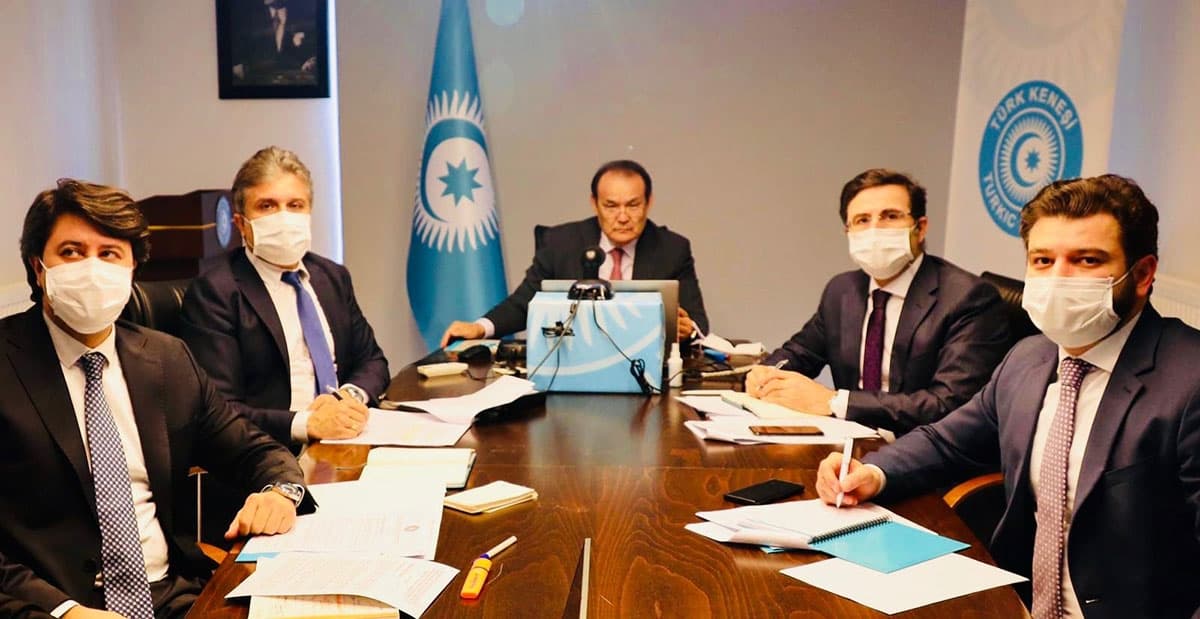
On Thursday, the Ministers of Transport of the Turkic Council member states discussed by videoconferencing the implementation of decisions made at the organization’s emergency video summit on April 10.
The Turkmen leader Gurbanguly Berdimuhamedov was invited to participate in the summit of the heads of state on solidarity and cooperation in combating the COVID-19 pandemic. He drew the attention of colleagues to the importance of maintaining freight traffic in the region to mitigate the pandemic aftereffects and the key role of the Caspian Corridor in this regard.
 During the current meeting, the Ministers of Transport of Azerbaijan, Kyrgyzstan, Kazakhstan, Turkey, Uzbekistan and Hungary exchanged information on measures taken on the national level to support the transport sector in crisis, and discussed a practical solution to the problems that our countries are facing when transporting cargoes at present.
Particular attention was paid to the issue of facilitating transport operations along the Trans-Caspian East-West International Transport Corridor. An agreement was reached to assist in simplifying the passage of freight vehicles through border checkpoints in order to deliver humanitarian supplies, essentials, medicines and medical equipment. The meeting participants came to a full understanding of the need for mutual support in providing quotas, simplification of visas and fees for issuing travel permits to borderlands.
During the current meeting, the Ministers of Transport of Azerbaijan, Kyrgyzstan, Kazakhstan, Turkey, Uzbekistan and Hungary exchanged information on measures taken on the national level to support the transport sector in crisis, and discussed a practical solution to the problems that our countries are facing when transporting cargoes at present.
Particular attention was paid to the issue of facilitating transport operations along the Trans-Caspian East-West International Transport Corridor. An agreement was reached to assist in simplifying the passage of freight vehicles through border checkpoints in order to deliver humanitarian supplies, essentials, medicines and medical equipment. The meeting participants came to a full understanding of the need for mutual support in providing quotas, simplification of visas and fees for issuing travel permits to borderlands.
 One of the important outcomes of the meeting was the decision to create an operational group under the Turkic Council called “Transport Coordinating Committee” at the level of deputy transport ministers of member states to effectively coordinate transportation and logistics. The first meeting of the committee will be held in mid-May.
Another important decision in the current conditions will be the creation of a “Green Corridor” between the Turkic Council member states for the quick transit of food, medical, humanitarian and essential goods.
One of the important outcomes of the meeting was the decision to create an operational group under the Turkic Council called “Transport Coordinating Committee” at the level of deputy transport ministers of member states to effectively coordinate transportation and logistics. The first meeting of the committee will be held in mid-May.
Another important decision in the current conditions will be the creation of a “Green Corridor” between the Turkic Council member states for the quick transit of food, medical, humanitarian and essential goods.