ArmInfo about ancient Marv - a view from outside
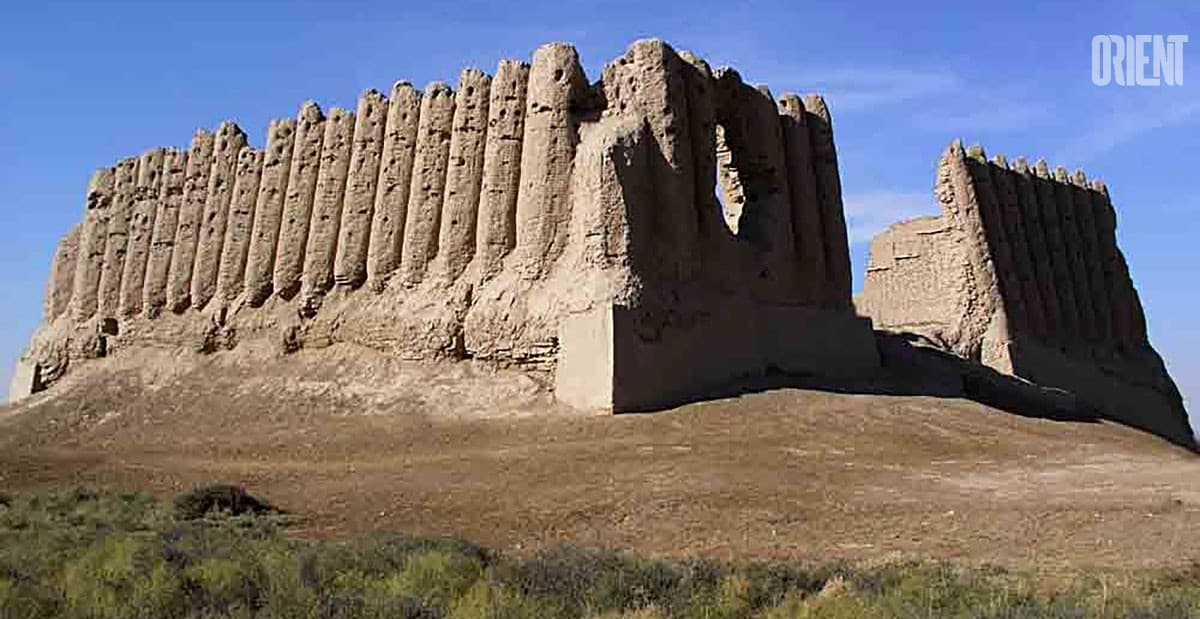
Historical monuments of Turkmenistan draw the attention of not only tourists and fans of history, but also world centres of science. One of the Turkmen monuments of history most famous in the world is «Ancient Marv» State Historical and Cultural Reserve. This city, along with Constantinople and Bagdad, was considered as Middle Ages megacity. Interest in it does not decrease even today; many foreign mass-media often publish materials about ancient Marv. One of the latest publications is placed on the site of information portal of ArmInfo.
The interest of the Armenian mass-media in historical monuments in the territory of Turkmenistan is not casual. In the past there were periods when the history of the Turkmen and Armenian people was closely bound. In the territory of Armenia there are many historical monuments connected with Turkmens. That there is the so-called mausoleum of Turkmen emirs constructed by the Emir Pir-Hussein 1413 in honour of his father Emir Saad. To this monument in the village of Argavand near to Yerevan in November, 2012 president of Turkmenistan visited Gurbanguly Berdimuhamedov during his official visit to Armenia.
 The editorial of the site of Orient, considering a high interest in the world in historical and cultural monuments in Turkmenistan, has decided to publish an article of information portal of ArmInfo about ancient Marv with some reductions. The view from outside is always interesting.
The Armenian site writes that the great Central Asian city for a long time known as Maru-Shahu-Jahan grew on the fertile soil of the oasis of the river Murgab. Its uniqueness consists that it represents a system of nearby sites of ancient settlements belonging to different epochs while in other ancient cities it was accepted to erect new settlements directly on the place of the old. Sites of ancient settlements of ancient Marv occupy today the territory of thousand hectares! And today it is the real archaeological paradise for scientists who come here from different countries of the world and conduct excavation at ancient Turkmen land, continuing scientific traditions of predecessors studying Marv from the end of the 19th century.
The editorial of the site of Orient, considering a high interest in the world in historical and cultural monuments in Turkmenistan, has decided to publish an article of information portal of ArmInfo about ancient Marv with some reductions. The view from outside is always interesting.
The Armenian site writes that the great Central Asian city for a long time known as Maru-Shahu-Jahan grew on the fertile soil of the oasis of the river Murgab. Its uniqueness consists that it represents a system of nearby sites of ancient settlements belonging to different epochs while in other ancient cities it was accepted to erect new settlements directly on the place of the old. Sites of ancient settlements of ancient Marv occupy today the territory of thousand hectares! And today it is the real archaeological paradise for scientists who come here from different countries of the world and conduct excavation at ancient Turkmen land, continuing scientific traditions of predecessors studying Marv from the end of the 19th century.
 In view of the exclusive importance of evidence of the remote past located here, by the governmental resolution of Turkmenistan «Ancient Marv» State Historical and Cultural Reserve was established and in 1999 all complex of these invaluable monuments was included in the UNESCO World Heritage List.
Once Marv like Bagdad, Cairo or Damascus, was considered as one of the most important capitals of the Islamic world. In those days Marv was one of the finest cities of the East. Deputy of Arabian Caliphate al-Mamun, son of Caliph Harun ar-Rashid in Khurasan lodged in the beginning of the 9th century in it. In 813 al-Mamun himself became Caliph, but still for a long time after that lived in Marv.
Historians specify that during this period Marv actually played the role of the capital of the Caliphate - all instructions and appointments by the entire all Arabian dominion went therefrom. At that time the city experienced short, but a brilliant period in history. However, original blossoming of Marv belonged to 11-12th centuries, during the rule of great Seljuq Turkmens, whose empire stretched from the lower reaches of the Amu Darya to the Mediterranean. There came the epoch of the real cultural Renaissance when to Marv the best minds of the Muslim world, poets, artists and architects, who have left imperishable works to descendants, came.
In view of the exclusive importance of evidence of the remote past located here, by the governmental resolution of Turkmenistan «Ancient Marv» State Historical and Cultural Reserve was established and in 1999 all complex of these invaluable monuments was included in the UNESCO World Heritage List.
Once Marv like Bagdad, Cairo or Damascus, was considered as one of the most important capitals of the Islamic world. In those days Marv was one of the finest cities of the East. Deputy of Arabian Caliphate al-Mamun, son of Caliph Harun ar-Rashid in Khurasan lodged in the beginning of the 9th century in it. In 813 al-Mamun himself became Caliph, but still for a long time after that lived in Marv.
Historians specify that during this period Marv actually played the role of the capital of the Caliphate - all instructions and appointments by the entire all Arabian dominion went therefrom. At that time the city experienced short, but a brilliant period in history. However, original blossoming of Marv belonged to 11-12th centuries, during the rule of great Seljuq Turkmens, whose empire stretched from the lower reaches of the Amu Darya to the Mediterranean. There came the epoch of the real cultural Renaissance when to Marv the best minds of the Muslim world, poets, artists and architects, who have left imperishable works to descendants, came.
 Marv under the Seljuqs was intensively expanded, becoming the greatest city of Central Asia and one of the largest in the entire Muslim East (together with suburbs its area reached 1800 hectares, and population - 150 thousand people ). Considering that the great bulk of cities during that epoch had 2-5 thousand inhabitants, it is possible to imagine the scale of Seljuqian Marv. In 1118 the last Seljuq sultan Sanjar made Marv as capital of his extensive empire.
In the centre Sultan-kala – a Seljuqian part of the city of Marv, towers the ancient construction largest in Turkmenistan - the mausoleum of sultan Sanjar. On the earth few monuments of architecture which would so often be mentioned in medieval manuscripts have remained.
The very first data on the mausoleum of Sanjar are contained in works of medieval authors. Famous Arabian traveller, geographer and historian Yaqut al-Khamavi, who saw Marv in the early 13th century, before the Mongolian invasion, wrote the following of this construction: “over it the dome of blue colour which is visible in the distance of one day of travelling towers”.
Marv under the Seljuqs was intensively expanded, becoming the greatest city of Central Asia and one of the largest in the entire Muslim East (together with suburbs its area reached 1800 hectares, and population - 150 thousand people ). Considering that the great bulk of cities during that epoch had 2-5 thousand inhabitants, it is possible to imagine the scale of Seljuqian Marv. In 1118 the last Seljuq sultan Sanjar made Marv as capital of his extensive empire.
In the centre Sultan-kala – a Seljuqian part of the city of Marv, towers the ancient construction largest in Turkmenistan - the mausoleum of sultan Sanjar. On the earth few monuments of architecture which would so often be mentioned in medieval manuscripts have remained.
The very first data on the mausoleum of Sanjar are contained in works of medieval authors. Famous Arabian traveller, geographer and historian Yaqut al-Khamavi, who saw Marv in the early 13th century, before the Mongolian invasion, wrote the following of this construction: “over it the dome of blue colour which is visible in the distance of one day of travelling towers”.
 And in 1880 reporter of the London newspaper «Daily news» Edmond O’Donovan who, visited here, in particular, marked: «the tomb of sultan Sanjar is a place of pilgrimage and not a single Turkmen passes by without having expressed his respect of sanctity of the last lord».
The remained structures scattered in the entire huge territory of the State Historical and Cultural Reserve, testify to the bygone greatness of this land.
Researchers scientifically proved the fact of existence of large building associations and even independent architectural schools which developed their original style, in the Turkmen-Seljuqian kingdom. The inscription in the interior of the mausoleum of sultan Sanjar has kept the name of architect - Mohammed ibn Atsyz as Serahs. It follows from this that he came from Serahs and, certainly, belonged to the once famous Serahs artel. The monuments constructed during that epoch by Serahs masters, have remained not only in Turkmenistan, but also in neighbouring countries.
One and a half dozen years ago serious restoration of the mausoleum took place and in its course the external dome was restored and the form of the exterior part of the drum under dome was changed, and also the bypass gallery of the top circle was completely restored. Thus, at the very beginning of the 21st century its new shape was recreated by all canons and requirements of scientific restoration. Here all was made so that not to let loss of an invaluable relict. Turkmen restorers also adhere to such strategy in other projects, aspiring to keep the spirit of a monument, its attractive aura of authenticity.
And in 1880 reporter of the London newspaper «Daily news» Edmond O’Donovan who, visited here, in particular, marked: «the tomb of sultan Sanjar is a place of pilgrimage and not a single Turkmen passes by without having expressed his respect of sanctity of the last lord».
The remained structures scattered in the entire huge territory of the State Historical and Cultural Reserve, testify to the bygone greatness of this land.
Researchers scientifically proved the fact of existence of large building associations and even independent architectural schools which developed their original style, in the Turkmen-Seljuqian kingdom. The inscription in the interior of the mausoleum of sultan Sanjar has kept the name of architect - Mohammed ibn Atsyz as Serahs. It follows from this that he came from Serahs and, certainly, belonged to the once famous Serahs artel. The monuments constructed during that epoch by Serahs masters, have remained not only in Turkmenistan, but also in neighbouring countries.
One and a half dozen years ago serious restoration of the mausoleum took place and in its course the external dome was restored and the form of the exterior part of the drum under dome was changed, and also the bypass gallery of the top circle was completely restored. Thus, at the very beginning of the 21st century its new shape was recreated by all canons and requirements of scientific restoration. Here all was made so that not to let loss of an invaluable relict. Turkmen restorers also adhere to such strategy in other projects, aspiring to keep the spirit of a monument, its attractive aura of authenticity.