Central Asia is a global leader in the number of women and girls in science
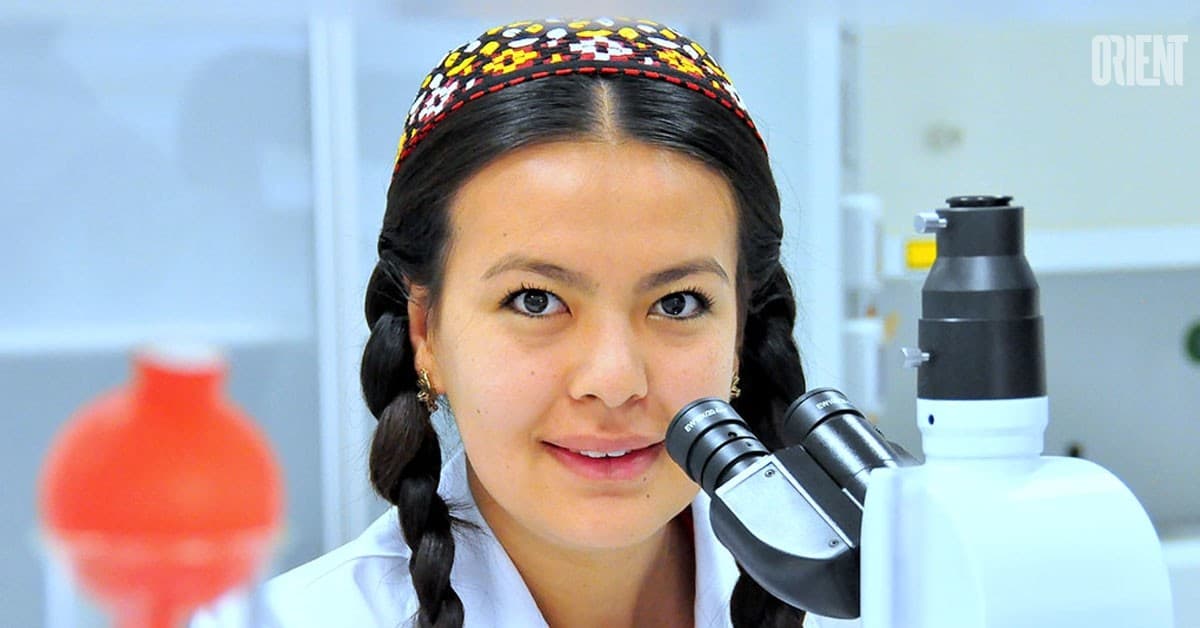
February 11 marks the International Day of Women and Girls in Science, established by the UN General Assembly Resolution of December 22, 2015.
According to TASS, the UN General Assembly in the Resolution called upon governments of the world, non-governmental organizations and research institutes to provide favorable opportunities for girls and women to receive education and carry out scientific activities. The share of women in science is today an important indicator for any state showing how gender equality issues are being addressed in the country.
It is generally accepted that Muslim countries face the most acute gender problems. However, statistics in this area provide evidence to the contrary. According to UNESCO, in mid-2018, the share of female researchers was 28.8% of the total number of researchers in the world, and a region with the highest share of female researchers is Central Asia (48.1%). Nonetheless, the vast majority of the population in the Central Asian region practices Islam.
 Central Asia is followed by Latin America and the Caribbean (45.4%), Arab states (39.8%), and Central and Eastern Europe (39.5%). At the same time, education, healthcare, social sciences and humanities remain the “female” areas.
Of course, the share of women is still small in the fields of natural sciences, mathematics, engineering, industry and construction. In addition, women were ever awarded only 3% of Nobel Prizes in science. This means that there is still something to strive for.
Central Asia is followed by Latin America and the Caribbean (45.4%), Arab states (39.8%), and Central and Eastern Europe (39.5%). At the same time, education, healthcare, social sciences and humanities remain the “female” areas.
Of course, the share of women is still small in the fields of natural sciences, mathematics, engineering, industry and construction. In addition, women were ever awarded only 3% of Nobel Prizes in science. This means that there is still something to strive for.