“Adam’s” Tree is now on the banks of the Amu-Darya: what is the plant interesting with?
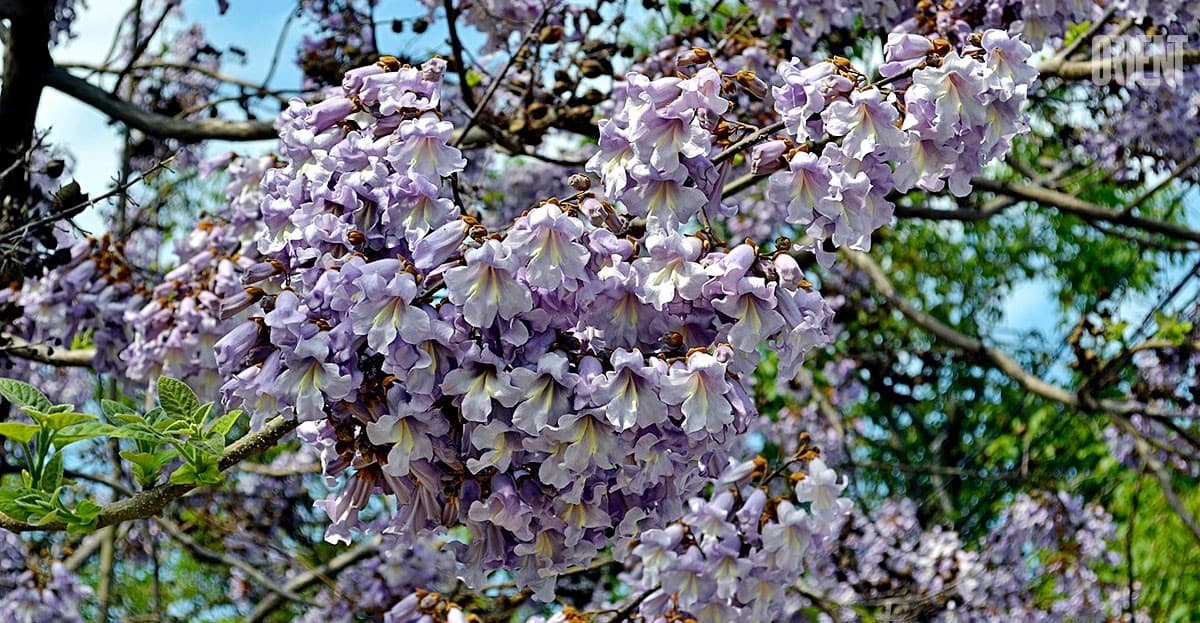
“Adam’s” Tree or, as it is also called, Paulownia – of East Asian ancestry. In addition to its many other unique characteristics, this plant is a good honey plant. One hectare of Paulownia can produce up to 800 kg of honey.
Individual entrepreneur Chary Shamuradov is the only one who grows Paulownia in Turkmenistan, in Seidi on the Amu Darya coast.
- Paulownia is a fast-growing light-wood tree that is used in the manufacture of pressed materials, furniture and musical instruments. Economically, this raw material is very profitable, given the fact that the tree has taken root well in our climatic conditions.
 Chary Shamuradov notes that the leaves of one Paulownia tree can daily absorb up to 22 kg of carbon dioxide, purifying the environment air, and exhibit dust-proof properties. Splendid blossom of this tree in spring lasts up to 8 weeks, in summer it gives a dense shade, and all this makes it irreplaceable for urban parks and squares, creating leisure areas and “green” belts.
Just in 8-9 years, one tree can produce a cubic meter of wood which is easy to process. In addition, if you saw down the trunk, another full-fledged tree will eventually grow from a stub.
Chary Shamuradov notes that the leaves of one Paulownia tree can daily absorb up to 22 kg of carbon dioxide, purifying the environment air, and exhibit dust-proof properties. Splendid blossom of this tree in spring lasts up to 8 weeks, in summer it gives a dense shade, and all this makes it irreplaceable for urban parks and squares, creating leisure areas and “green” belts.
Just in 8-9 years, one tree can produce a cubic meter of wood which is easy to process. In addition, if you saw down the trunk, another full-fledged tree will eventually grow from a stub.
 Paulownia is propagated by seeds and vegetative means, through root and stem cuttings. In order to couch the seeds, it is necessary an intensive care for them during 5-6 weeks.
It is worth emphasizing that its leaves are used for feeding livestock (cows, sheep, goats). In terms of nutritional properties, Paulownia is close to alfalfa. Its green foliage contains useful substances and is easily digested by animals.
Chary Shamuradov plans to master the planting of “Adam’s” Tree near Amu Darya River, on 1000 hectares of land. If the result is positive, then in May and June he will deal with new areas.
Paulownia is propagated by seeds and vegetative means, through root and stem cuttings. In order to couch the seeds, it is necessary an intensive care for them during 5-6 weeks.
It is worth emphasizing that its leaves are used for feeding livestock (cows, sheep, goats). In terms of nutritional properties, Paulownia is close to alfalfa. Its green foliage contains useful substances and is easily digested by animals.
Chary Shamuradov plans to master the planting of “Adam’s” Tree near Amu Darya River, on 1000 hectares of land. If the result is positive, then in May and June he will deal with new areas.