Turkmenistan attended a Health Forum in New York
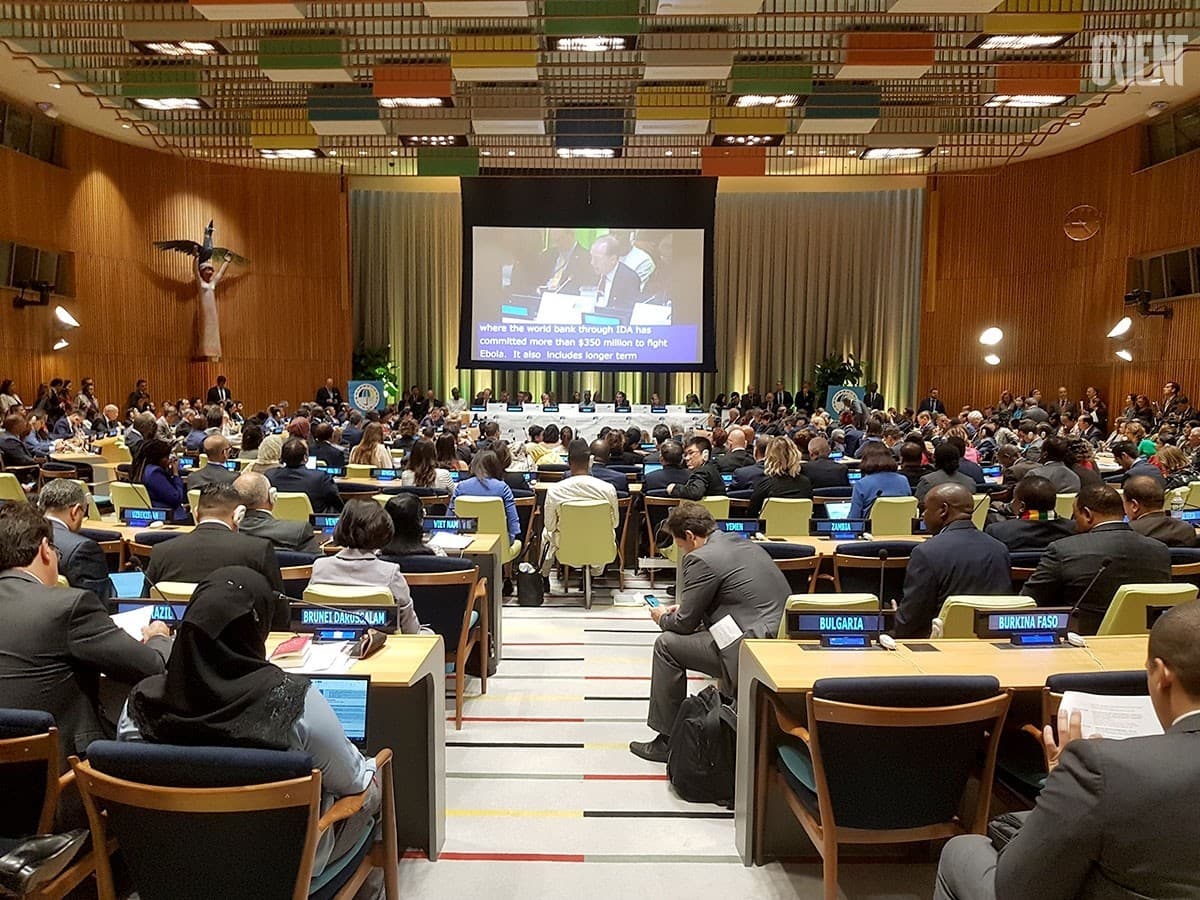
The delegation of the Ministry of Health and Medical Industry of Turkmenistan took part in the High-Level Meeting on universal health services coverage, held at the UN General Assembly on September 23.
As WHO Director General Dr. Tedros Gébreus said in his statement, the meeting was a historic opportunity for the world leaders to ensure that no one who is in need is denied access to health services.
The report on Turkmenistan that was delivered at the meeting included a brief overview of the main areas of healthcare development and ensuring universal access to its modern technologies through expanding the medical infrastructure, modernizing diagnostic equipment, updating treatment methods, etc.
 Development of primary health care, family and preventive medicine, training and retraining medical personnel are among the priorities of the State Programme “Health” (2015–2025). The construction of a number of hospitals, rural health centers and clinics was financed as part of the program for regional transformations, being implemented in the country to improve the living conditions of the rural population.
Turkmenistan pays much attention to expanding the universal health services coverage, including the infectious diseases burden and risk factors reduction, improving the health of mothers, children and adolescents, and effective immunization. In recent years, several new vaccines have been added to the national list of vaccinations. These are vaccines against Hib, human papillomavirus, rotavirus, pneumococcus and hepatitis A. Currently, 13 vaccines against infections are included in the national vaccination schedule.
The representative of Turkmenistan also pointed out in his speech the fact that on September 23 the World Health Organization in Ashgabat awarded a certificate of recognition of the virology laboratory of the Center for Public Health and Nutrition of the country as the National Center for Influenza.
Development of primary health care, family and preventive medicine, training and retraining medical personnel are among the priorities of the State Programme “Health” (2015–2025). The construction of a number of hospitals, rural health centers and clinics was financed as part of the program for regional transformations, being implemented in the country to improve the living conditions of the rural population.
Turkmenistan pays much attention to expanding the universal health services coverage, including the infectious diseases burden and risk factors reduction, improving the health of mothers, children and adolescents, and effective immunization. In recent years, several new vaccines have been added to the national list of vaccinations. These are vaccines against Hib, human papillomavirus, rotavirus, pneumococcus and hepatitis A. Currently, 13 vaccines against infections are included in the national vaccination schedule.
The representative of Turkmenistan also pointed out in his speech the fact that on September 23 the World Health Organization in Ashgabat awarded a certificate of recognition of the virology laboratory of the Center for Public Health and Nutrition of the country as the National Center for Influenza.
 The results of large-scale and effective preventive measures at the state level have led to a decrease in the level of non-communicable diseases, including those associated with iodine deficiency and hypoferric anemia.
Turkmenistan has also adopted a strategy for the development of digital healthcare in Turkmenistan for 2019-2025.
Strong and effective public health services are a prerequisite for achieving the objectives set for the government, and therefore, thanks to coordinated interagency efforts, Turkmenistan is actively working to ensure universal health services coverage for every citizen of the country.
The results of large-scale and effective preventive measures at the state level have led to a decrease in the level of non-communicable diseases, including those associated with iodine deficiency and hypoferric anemia.
Turkmenistan has also adopted a strategy for the development of digital healthcare in Turkmenistan for 2019-2025.
Strong and effective public health services are a prerequisite for achieving the objectives set for the government, and therefore, thanks to coordinated interagency efforts, Turkmenistan is actively working to ensure universal health services coverage for every citizen of the country.