NewsArticlesAnnouncementAbout UsContacts
About us Contact

We are guided by what unites people

News
Articles
Announcement
About Us
Contacts

Copyright 2017-2026 ORIENT - NEWS AGENCY

About us | Contact |

UNDP Expert - How to ensure effective financing for the SDGs and avoid the middle-income trap

June 21, 2018 | 20:23 |261
Source:

The implementation of the Global Development Agenda 2030 or the Sustainable development Goals (SDGs) will require not even billions, but trillions of US dollars, says UNCTAD (UN Conference on trade and development). How to mobilize such vast resources, and what role in this process can play a public-private cooperation - these and other questions were answered by Ben Slay, Senior Advisor UNDP Regional Bureau for Europe and the CIS in the interview to Ashgabat office of UNDP. He also attended the International conference “Partnership for Development Financing at the Heart of the Great Silk Road”. According to the expert, for the effective implementation of the SDGs, it is vital to design and implement policies that encourage private sector/commercial investments in sustainable, inclusive, integrated investment projects and technologies. Another important impetus for the implementation of the SDGs will be public-private cooperation, investments in connectivity—particularly in transport and telecommunications infrastructure—are central to prospects for economic growth and diversification and sustainable development along the Silk Road. “There are many frameworks/bases for promoting such cooperation, involving public/private partnerships; the Belt and Road Initiative and the Central Asia Regional Economic Cooperation (CAREC) programme come to mind in particular”, Slay said.

Public-private partnership for SDGs in Turkmenistan

In the context of Turkmenistan, discussing public-private partnership, the specialist of the UNDP Regional Bureau highlighted three main levels of such interaction: At the domestic level: Whereas the Union of Industrialists and Entrepreneurs unites individual entrepreneurs and private companies, its status is close to the national ministry which is good for partnership development with the government, but changes the nature of the public-private cooperation concept, Slay said, adding that the key question is how to ensure that corporate governance and management systems within these companies are “fit for purpose” in responding to large commercial challenges. At the regional level: The largest connectivity questions concern energy and transport corridors, examples include pipelines like TAPI, but also potentially LNG/CNG infrastructure. Traditional PPP approaches may not be so helpful in helping to appropriately conceptualize these issues and the relevant policy challenges because the nature of decision making and investment if peculiar to the region. Therefore, in the case of TAPI, Turkmenistan and other regional actors are engaged into the process on the level of the government with the exception of some foreign suppliers. Decisions are made at very high political levels, and are implemented (primarily) by state-owned companies. In cooperation with international institutions: As Slay noted, Major transport corridor investments can generate important opportunities (e.g., in tourism, small business development, etc.) and risks such as unexpected loads on water, land resources, biodiversity. However, the interests of local communities may not always be sufficiently taken into account in addressing key investment objectives. UNDP (and other UN agencies) can help central governments, businesses, and local communities to take advantage of these opportunities and manage these risks.

Middle-income trap - obstacle to achieving the SDGs

In the next part of his interview, Ben Slay spoke about the phenomenon of the middle-income trap, that is, when the countries experience stagnation of economic growth and at times a decline in growth, which hinders implementation of the Agenda 2030. Avoiding the middle-income country trap is about replacing (or at least supplementing) development models based on the extraction and simple processing of natural resources with models that generate value added and create employment, the expert believes. For this purpose, education, training and human capital are the priority areas of investment. At the same time, market and governance reforms are being implemented, that increase the attractiveness of countries as sites for foreign direct investment in order to acquire/accelerate the diffusion of knowledge-intensive technologies. Another necessary measure is the promotion of small business. The expert also recommends to participate in global and regional economic platforms (where justified), for example, the WTO, in order to avoid the middle-income trap. Such platforms can promote integration into trans-national value chains, thereby improving access to knowledge-intensive technologies and to export markets for manufactured products.

More news

tmcell
TNGIZD
toyota banner
orient mobil gosyndy
orient mobile ios
Bilelik HUB
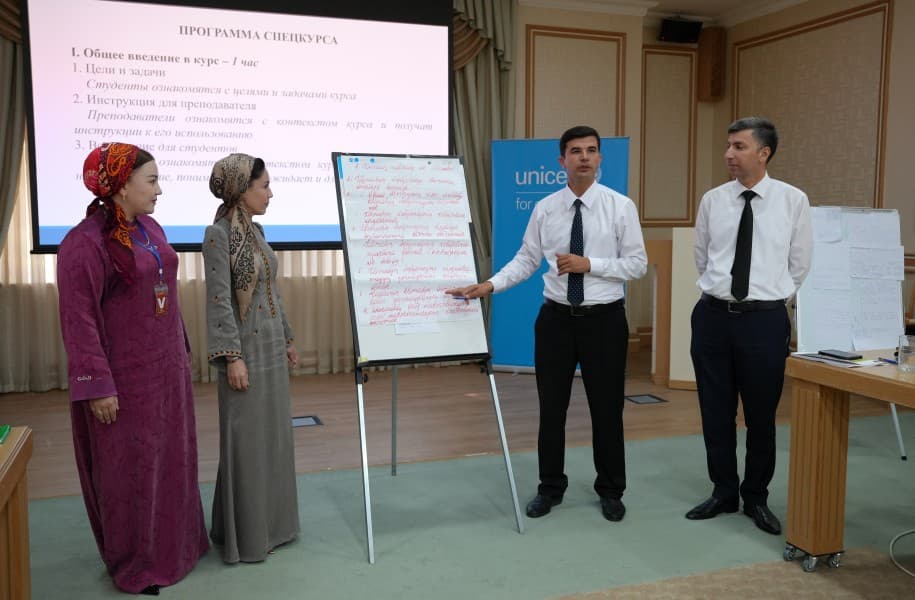
Turkmenistan Launches Specialized Climate Change Curriculum for Higher Education Institutions

Turkmenistan Launches Specialized Climate Change Curriculum for Higher Education Institutions

01:56 June 20, 2026
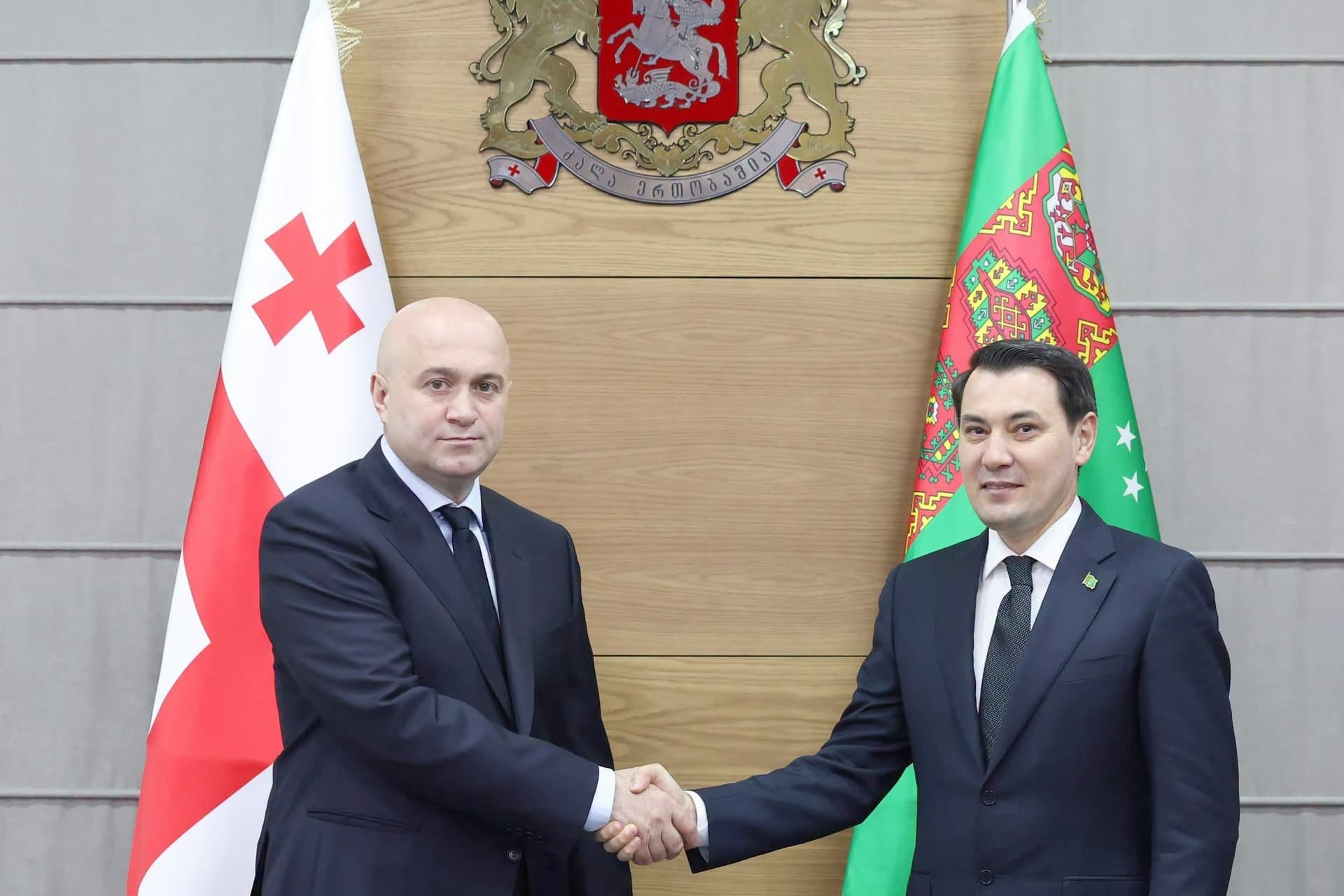
Meeting of Ambassador of Turkmenistan to Georgia with Minister of Internal Affairs of Georgia

Meeting of Ambassador of Turkmenistan to Georgia with Minister of Internal Affairs of Georgia

23:50 June 19, 2026
About Football Beyond Politics, but with a Sense of Central Asian Patriotism

About Football Beyond Politics, but with a Sense of Central Asian Patriotism

23:09 June 19, 2026