


ORIENT / ANALYTICS. Amid global instability in the Red Sea and the Persian Gulf, the Caspian region is demonstrating exceptional resilience. In 2026, the Caspian will no longer be perceived as a mere backup option, becoming a strategic digital bridge connecting the markets of Asia and Europe. Business analysts are declaring the beginning of a Caspian Renaissance, where the digitalization of the ports of Turkmenbashi, Baku, and Anzali is radically changing the rules of the game in foreign economic activity.
The acute situation in the macroregion dictates new requirements for supply security. While traditional ocean routes face the risk of blocking key straits and unpredictable increases in insurance costs, the Caspian is de facto becoming a protected land and maritime enclave. The global crisis of confidence in open sea routes became the catalyst that elevated the Caspian Corridor from a regional project to a critical artery, physically removed from areas of active turbulence.
Under these conditions, the route's technological readiness has become its primary insurance policy. The stability of the Caspian Sea is now reinforced not only by geography but also by digital transparency, which minimizes human error risks at borders.
The widespread implementation of the e-TIR and e-CMR systems has reduced cargo clearance times at the ports of Turkmenistan and Azerbaijan by almost half. Thanks to a unified digital platform, sellers on major marketplaces, including Ozon, Wildberries, and the regional giant Uzum, now track container movements in real time throughout the entire journey from Turkmenbashi to the final warehouse.
This "digital breakthrough" has transformed complex cross-border logistics into a transparent and manageable process, where every kilometer contributes to profitability.
...Experts from the international agency Transport Intelligence emphasize that the Caspian Sea has paradoxically found itself in a safe haven, protected from the risks of the open ocean. Unlike transoceanic routes, which are critically dependent on bottlenecks like the Suez Canal or the Strait of Hormuz (where a single incident can paralyze the movement of hundreds of giant container ships), the Caspian Sea represents an autonomous and protected perimeter. Here, businesses are protected from the unpredictable rise in insurers' "war premiums" and sudden route changes by global mega-carriers.
The inland sea has become a zone of predictable rates and physical invulnerability to external threats. This has led to a one-third increase in demand for trans-Caspian shipping since the beginning of the year, as companies seek to avoid delays in the Suez Canal.
The regionalization of trade and the demand for security make the Caspian the key logistics hub of the decade. The unit economy of 2026 also favors this route. Delivery via the Caspian Sea takes approximately two weeks, while the sea route bypassing Africa takes six weeks.
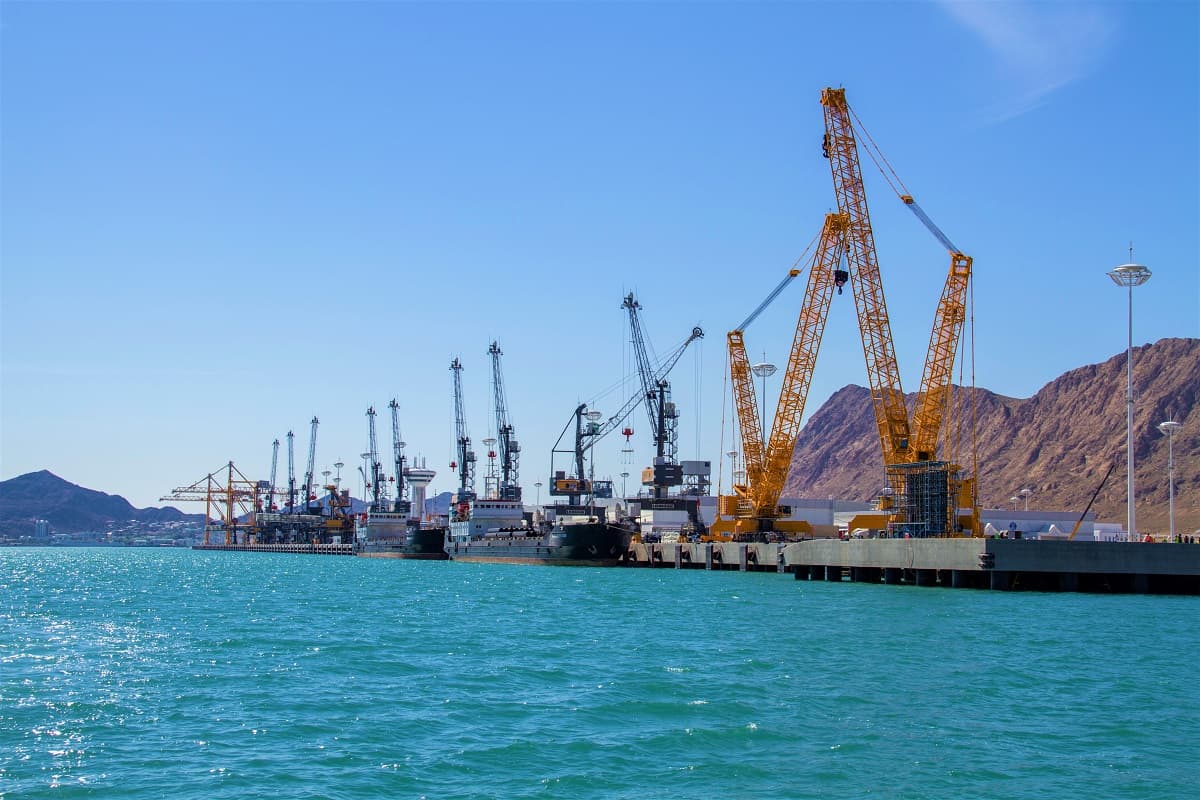
Given rising insurance premiums for ocean shipping, Caspian tariffs have become not only competitive but also, in many cases, more favorable. A key link in this system is the Turkmenbashi International Seaport, technological potential of which allows it to handle up to 17 million tons of cargo per year.
Pragmatic cooperation with Iran through the ports of Anzali and Amirabad ensures the stable operation of the North-South corridor, opening access to the markets of India and the Gulf states.
The Caspian corridor today is not a temporary route change, but a new reality for foreign trade and a functioning high-speed elevator for global trade. For Turkmenistan, this means the status of a key operator in the North-South and East-West directions, where geographic location becomes a competitive advantage and, combined with advanced technologies, creates optimal conditions for reliable and rapid deliveries.