||
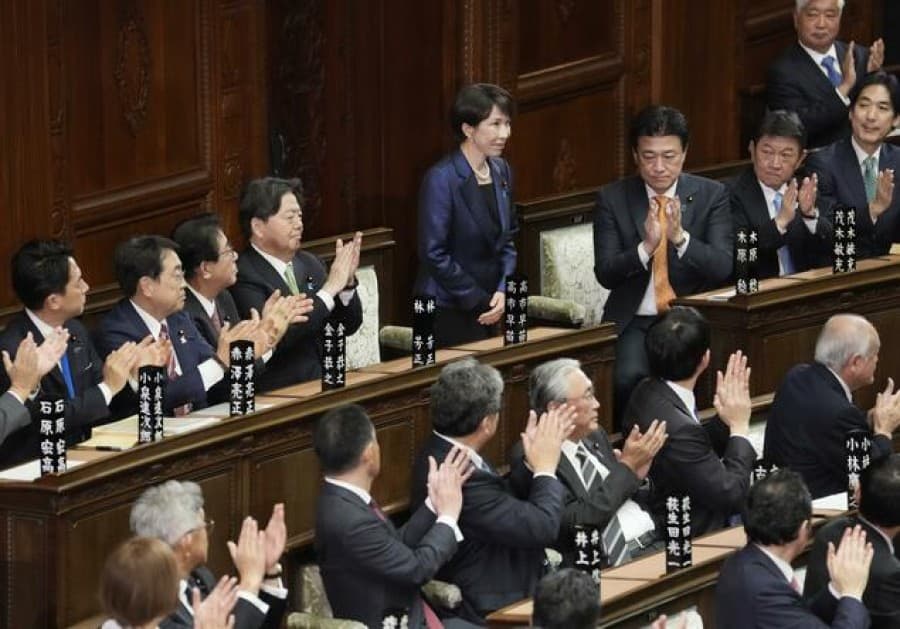
Prime Minister Sanae Takaichi has been re-elected as the head of the Japanese government during a special session of the parliament following the historic victory of her party in the Lower House elections. This was reported by the Kyodo news agency.
The vote took place on February 18 in the country's parliament — the National Diet of Japan — after the Liberal Democratic Party (LDP), led by Takaichi, secured a convincing victory in the House of Representatives elections on February 8. In the lower house, she received 354 votes, securing a majority thanks to the support of the ruling coalition.
In the upper house — the House of Councillors — where the ruling bloc does not hold a majority, Takaichi was elected in a second round, garnering 125 votes against 65 for opposition leader Junya Ogawa.
New Cabinet Without Reshuffle
After her re-election, Takaichi formed a new cabinet, retaining all ministers from the previous government, which had enjoyed a high level of public support since October.
Foreign affairs' Minister Toshimitsu Motegi, Finance Minister Satsuki Katayama, and Defense Minister Shinjiro Koizumi retained their posts. The government faces the tasks of reducing the tax burden on households amid inflation, responding to deteriorating relations with China, and strengthening security measures.
Meanwhile, the party is considering appointing former industry minister Yasutoshi Nishimura as the head of the LDP's election strategy committee.
Tax Policy and Constitutional Reform
Speaking at a press conference, Takaichi emphasized that she does not view the mandate received as a "blank check," despite the LDP securing more than two-thirds of the seats in the lower house — a majority that allows it to overcome upper house opposition when passing laws.
The Prime Minister reaffirmed her commitment to a "responsible but active" fiscal policy. Among the initiatives is a discussion on a two-year suspension of the consumption tax on food items. Currently, the rate on food products is 8%, and both ruling and opposition parties have previously proposed reducing it, either temporarily or permanently.
This parliamentary session will last 150 days, until July 17. During this period, the government aims to advance priority initiatives, including revising the post-war pacifist Constitution — a long-standing goal of the LDP. Amendments require the support of two-thirds of the members in both houses and approval in a national referendum.
Security Issues and Foreign Policy
Takaichi, known for her tough stance on defense matters, also announced plans to strengthen the country's intelligence capabilities, including the creation of a national intelligence committee and the enactment of an anti-espionage law.
Simultaneously, the government will need to navigate relations with China amid tensions arising from her statements regarding potential Japanese actions in the event of an attack on Taiwan.
Election Results
According to the election results, the LDP secured a record 316 out of 465 seats in the House of Representatives — marking the first time in post-war history that a single party has achieved such a significant majority. The centrist Japan Innovation Party increased its representation to 36 seats.
The opposition bloc, which united several parties, significantly reduced its presence in parliament. Its new leader, Junya Ogawa, stated his intention to counter "pressure from the giant ruling majority."
Thus, Takaichi's re-election ushers in a phase of actively promoting the government's agenda — from tax changes to constitutional reform — amidst persistent challenges in the economic and security spheres.




 Chinese New Year