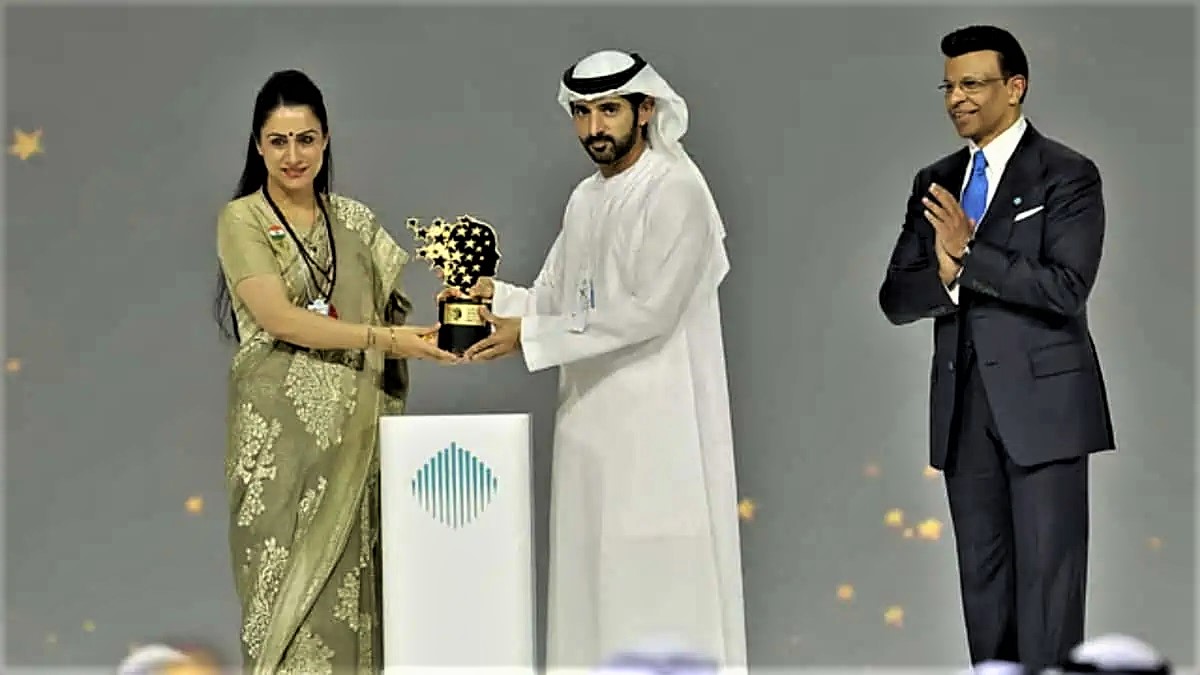
One of the most anticipated awards ceremonies of the year took place at the World Government Summit in Dubai (WGS 2026) — the presentation of the Global Teacher Prize, often referred to as the “Nobel Prize for educators.” The grand prize of one million US dollars was awarded to Indian artist and social reformer Rouble Nagi. Her project proved to the world that teaching a child to read does not always require school walls — sometimes all it takes is bright paint and a desire for change.
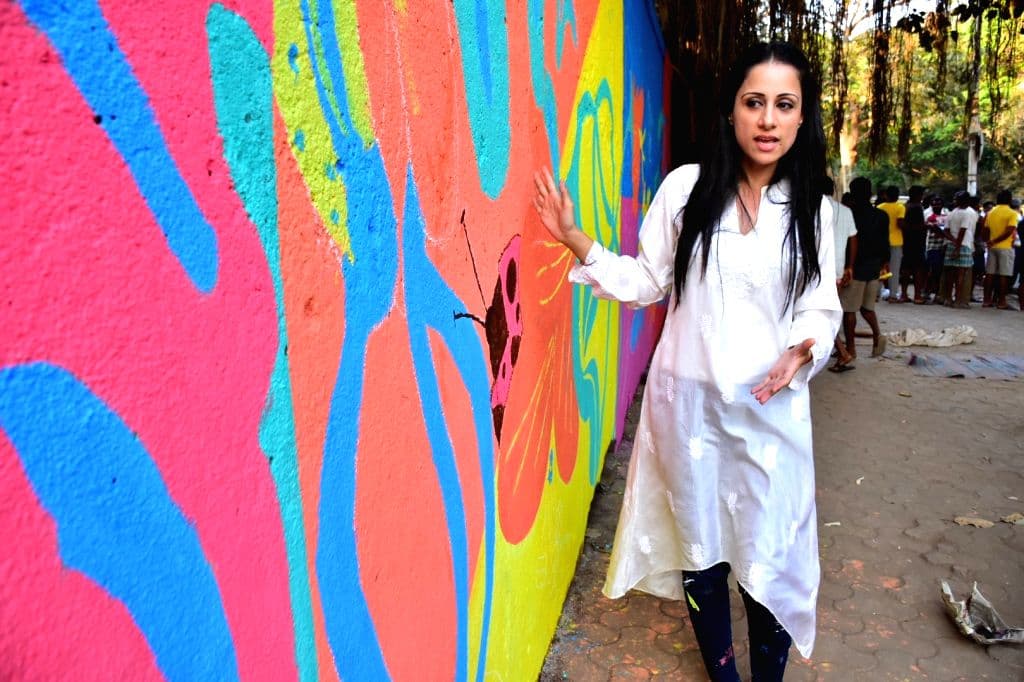
Rouble Nagi’s project, titled “Misaal India,” began with a simple idea: painting the grey slums of Mumbai. However, the artist went far beyond decoration. She transformed building facades into giant educational tools. Alphabets, mathematical formulas, and geographical maps appeared on the walls of shanties. For thousands of children from the poorest neighborhoods, these murals became their very first textbooks.
Rouble Nagi’s method is based on the effect of visual imprinting. Research in neuropsychology confirms that the human brain processes visual images tens of thousands of times faster than textual symbols. Such “visual reinforcement” can increase learning efficiency by up to 60 percent, turning education from a tiring routine into a natural interaction with the surrounding environment. This approach incorporates the mechanism of incidental learning, in which information is absorbed without psychological pressure or rote memorization.
Today, the activities of Rouble Nagi’s foundation encompass more than 800 educational sites and art initiatives across India. The one-million-dollar prize will be invested in the creation of an international educational center, aimed at providing free vocational training to young people from socially vulnerable backgrounds, giving them a real chance to build a worthwhile career in the global digital world.